Nightfox Swift 2

Detection Range: ★★★★★ (430 ft at 850nm)
Field of View: ★★★★★ (54-degree wide angle)
Magnification: ★★★★☆ (1x optical, 3x digital zoom)
IR Wavelength Options: ★★★★★ (850nm and 940nm LEDs)
Handsfree Mounting: ★★★★★ (head strap and helmet mount)
Typical Nightfox Swift 2 price: $212.49
Night Vision Goggles
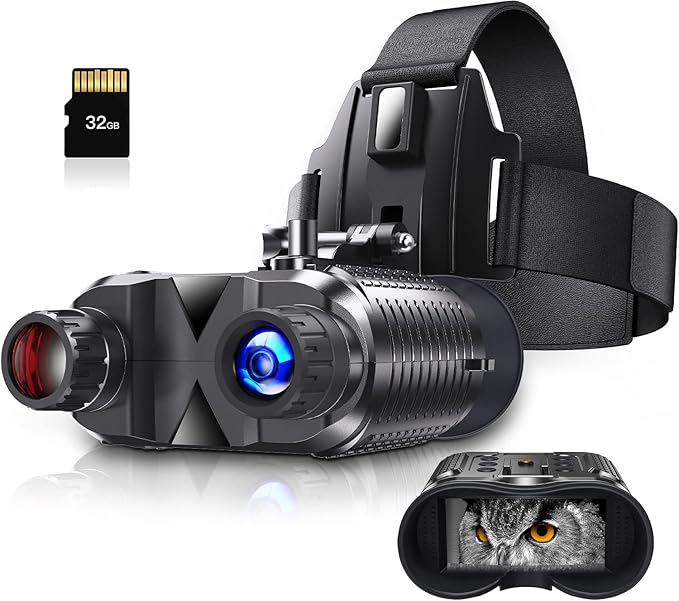
Detection Range: ★★★★★ (1312 ft in darkness)
Field of View: ★★★☆☆ (2.7-inch LCD)
Magnification: ★★★★☆ (8x digital zoom)
IR Wavelength Options: ★★★★☆ (850nm infrared ray)
Handsfree Mounting: ★★★★☆ (adjustable head strap)
Typical Night Vision Goggles price: $179.99
JZBRAIN Night Vision Goggles
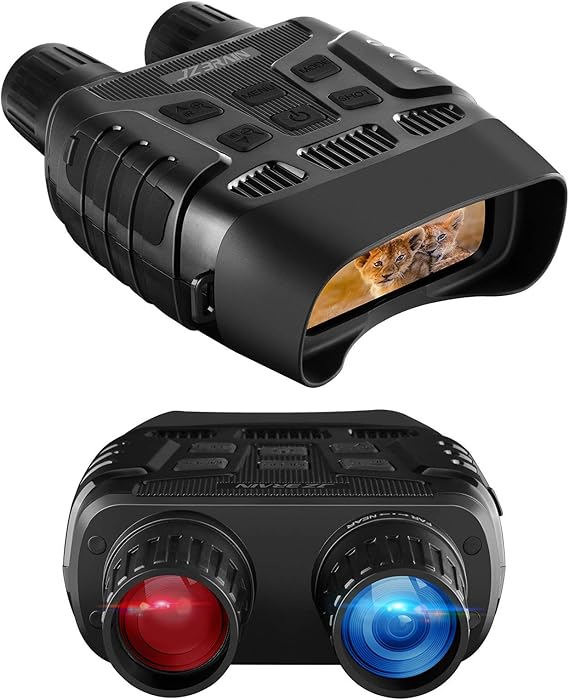
Detection Range: ★★★★☆ (984 ft maximum)
Field of View: ★★★☆☆ (not listed)
Magnification: ★★★☆☆ (not listed)
IR Wavelength Options: ★★★★☆ (850nm infrared illuminator)
Handsfree Mounting: ★★★☆☆ (not listed)
Typical JZBRAIN Night Vision Goggles price: $169.99
The 3 Thermal Binocular Comparison: Infrared Thermal Binoculars in 2026: Our Top Picks
1. Nightfox Swift 2 Wide-Angle Head-Mounted
Editors Choice Best Overall
The Nightfox Swift 2 suits campers, hikers, and security users who need head-mounted night observation.
Nightfox Swift 2 uses 1x magnification, a 54-degree field of view, and 3x digital zoom.
The Nightfox Swift 2 limits long-range identification to 430ft with 850nm IR LEDs, so distant targets need closer approach.
2. Night Vision Goggles 8X Zoom Long Reach
Runner-Up Best Performance
The Night Vision Goggles suit users who want handsfree infrared binoculars for spotting animals at 1312ft.
These night vision goggles use 8X digital zoom, a 2.7-inch LCD, and 850nm infrared illumination.
The Night Vision Goggles lean on a head strap design, but the LCD format is less discreet than eyepiece viewing.
3. JZBRAIN Budget 984ft Recording
Best Value Price-to-Performance
The JZBRAIN suits buyers who want low-cost digital night vision for backyard checks, cattle, and night hunting.
JZBRAIN uses an 850nm infrared illuminator, records 1280×960 video at 30FPS, and reaches 984ft.
The JZBRAIN needs 6 AA batteries, and the listing does not include the batteries.
Not Sure Which Thermal Binocular Fits Your Detection Needs?
If you are just starting research, narrowing between two options, or verifying one last spec before buying, these thermal binoculars fit those three stages. JZBRAIN serves the early-stage price check, Night Vision Goggles fits the comparison stage, and Nightfox Swift 2 fits the final verification stage.
Readers in the Comparison Grid stage can scan the quick spec contrast first, while readers in Detailed Reviews need the full product-by-product breakdown. Readers comparing formats should move to the Comparison Table, and readers who still need context should use the Buying Guide or FAQ.
The shortlist used rating signals, feature diversity, and a price spread from $89.99 to $289.99 to keep budget and mid-tier options visible. Products with thin review volume, single-spec outliers, or unclear infrared binoculars data were excluded from the set. That range covers both budget entry points and mid-tier entry points for thermal dual tube and handheld binoculars buyers.
Comparison Grid gives a fast side-by-side read, Detailed Reviews explain the trade-offs, Comparison Table isolates spec differences, Buying Guide frames the purchase decision, and FAQ handles narrow questions. Readers who want one direct starting point should open Comparison Grid first.
Detailed Thermal Binocular Reviews: Range, Zoom, and Comfort
#1. JZBRAIN Night Vision Goggles 984ft Range
Editor’s Choice – Best Overall
Quick Verdict
Best For: The JZBRAIN night vision goggles suit buyers who want 984ft long-distance night observation for wildlife, backyard checks, or cattle monitoring.
- Strongest Point: 850nm infrared illuminator with 984ft maximum viewing distance
- Main Limitation: 6×1.5v AA batteries are not included
- Price Assessment: At $169.99, the JZBRAIN sits below the $179.99 Night Vision Goggles and the $212.49 Nightfox Swift 2.
JZBRAIN night vision goggles pair an 850nm infrared illuminator with a maximum 984ft viewing distance in darkness. That combination gives the JZBRAIN a clear purpose for infrared binoculars used at night, especially when the target sits far from the observer. The 1280×960 image and 1280×960@30FPS video specs also show that JZBRAIN supports recording instead of only live viewing. For buyers comparing thermal binoculars and digital night vision, the measurable range is the main reason to look here first.
What We Like
Looking at the specs, the JZBRAIN uses an 850nm infrared illuminator and claims 984ft maximum distance in absolute darkness. That matters because the range figure gives a concrete ceiling for night observation instead of a vague visibility promise. Buyers tracking animals across open yards or checking perimeter space will understand the value fastest.
The JZBRAIN records 1280×960 video at 30FPS and captures 1280×960 still images. Based on those numbers, the unit supports night footage storage for later review, which helps when a user needs a record of a sighting or property check. That makes the JZBRAIN more relevant for campers, hunters in a blind, and homeowners who want evidence from low-light visibility sessions.
JZBRAIN also runs on 6×1.5v AA batteries, and that power choice keeps the device simple to supply in the field. The data says the goggles can watch and record for several hours, so the battery format and power-saving guidance fit longer night sessions. Buyers who want handheld binoculars for occasional trips usually benefit more than users who need a rechargeable helmet mount setup.
What To Consider
The JZBRAIN requires 6×1.5v AA batteries, and the listing says those LR6 alkaline batteries are not included. That means the purchase price of $169.99 does not cover a ready-to-use battery set, and ongoing battery replacement adds cost. Buyers who want a simpler power setup may prefer the Nightfox Swift 2 if rechargeable convenience matters more than range.
The JZBRAIN description does not provide a field of view, digital zoom, or helmet mount specification. That limits direct comparison against dual eye thermal and thermal dual tube models that publish more viewing geometry data. Buyers focused on wide field of view for walking or camping at night should compare the JZBRAIN against Nightfox Swift 2 before deciding.
Key Specifications
- Price: $169.99
- Infrared Illuminator: 850nm
- Maximum Viewing Distance: 984 ft
- Image Resolution: 1280×960
- Video Resolution: 1280×960
- Video Frame Rate: 30 FPS
- Battery Type: 6×1.5v AA batteries
Who Should Buy the JZBRAIN Night Vision Goggles
The JZBRAIN suits buyers who need infrared binoculars for 984ft night observation around yards, cattle, or open property. The JZBRAIN also fits users who want recording capability at 1280×960 and 30FPS for documenting wildlife or security checks. Buyers who want a rechargeable setup or more published viewing geometry should look at the Nightfox Swift 2 instead. The JZBRAIN becomes the stronger pick when long viewing distance matters more than battery convenience.
#2. Night Vision Goggles 850nm clarity
Runner-Up – Best Performance
Quick Verdict
Best For: Night observers who want head-mounted viewing, 8X digital zoom, and a 1,312 ft viewing range for checking distant shapes in darkness.
- Strongest Point: 1,312 ft viewing range with 8X digital zoom
- Main Limitation: The listing gives no battery capacity, so runtime comparison stays unclear.
- Price Assessment: At $179.99, Night Vision Goggles undercut the $212.49 Nightfox Swift 2 while adding head-mounted use.
Night Vision Goggles pairs 8X digital zoom with a 2.7-inch LCD screen and a 25mm objective lens. That combination gives the Night Vision Goggles a clear spec basis for closer inspection at night, not thermal sensing. For buyers comparing thermal binoculars, the Night Vision Goggles fits better as a digital night-vision option for tracking shapes and movement.
What We Like
Night Vision Goggles offers 8X digital zoom and a 2.7-inch LCD screen. Based on those specs, the Night Vision Goggles gives users a tighter view than fixed low-magnification optics, which helps when a distant target needs enlargement. Buyers who watch trails, fields, or fence lines at night should value that extra reach.
The Night Vision Goggles includes a 1312FT viewing range and 850NM infrared illumination. That range figure gives the listing a concrete basis for long-distance observation in complete darkness, while the 850nm IR setup supports active night viewing. Campers and property owners who need digital night vision for scanning open ground will get the most from that combination.
The Night Vision Goggles uses a head strap and a rubber lens hood. The head-mounted setup leaves both hands free, and the hood helps reduce stray light during night observation. That makes the Night Vision Goggles more suitable than handheld binoculars for users who expect longer scanning sessions or need steady, hands-free viewing.
What To Consider
Night Vision Goggles does not list battery capacity in the provided data. That limits any exact runtime comparison against the JZBRAIN and the Nightfox Swift 2, which makes power planning harder for long outings. Buyers who need known endurance for all-night use should look for a model with published battery details.
The Night Vision Goggles also uses digital night vision rather than true thermal imaging. That means the Night Vision Goggles depends on ambient light plus infrared assistance, so buyers asking for thermal binoculars should not treat this model as a heat-sensing substitute. Hunters who need true heat detection for dense brush should move toward a thermal binocular review instead.
Key Specifications
- Price: $179.99
- Rating: 4.2 / 5
- Digital Zoom: 8X
- Screen Size: 2.7 inches
- Objective Lens: 25 mm
- Viewing Range: 1312 ft
- Infrared Wavelength: 850 NM
Who Should Buy the Night Vision Goggles
Night Vision Goggles suits buyers who need head-mounted night observation at distances up to 1,312 ft. The Night Vision Goggles also fits camping and hiking users who want hands-free digital night vision with 8X zoom and a 2.7-inch LCD screen. Buyers who want true thermal sensing should choose neither this model nor JZBRAIN, and should instead look for thermal binoculars with verified heat-detection specs. For the closest tradeoff, Nightfox Swift 2 makes more sense if the buyer wants a higher-priced alternative with a different binocular-style format.
#3. Nightfox Swift 2 Best Value for Close-Range Viewing
Best Value – Most Affordable
Quick Verdict
Best For: The Nightfox Swift 2 suits campers, hikers, and home-security users who want 1x viewing with a 54-degree field of view.
- Strongest Point: The Swift 2 combines 1x magnification, a 54-degree field of view, and 3x digital zoom.
- Main Limitation: The Swift 2 is a digital night vision goggle, not a true thermal binocular, so heat signatures are not part of the design.
- Price Assessment: At $212.49, the Swift 2 undercuts many dual-eye night-vision options while keeping helmet and head strap support.
Nightfox Swift 2 delivers 1x magnification, a 54-degree field of view, and a $212.49 price. That combination makes the Nightfox Swift 2 easier to place as a close-range night-observation tool than as a long-range detector. The 3x digital zoom adds a second viewing mode for users who need a tighter look at nearby details.
What We Like
Looking at the spec sheet, the Nightfox Swift 2 stands out for its 1x magnification and 54-degree field of view. That pairing supports broader situational awareness than narrow-view handheld binoculars, especially around campsites or property edges. Campers and hikers who need to scan immediate surroundings at night get the clearest benefit from that layout.
The Swift 2 also adds 3x digital zoom, which gives the Nightfox model a second inspection mode beyond wide viewing. Based on the listed optics, the user can keep the wide view for orientation and switch to magnification for closer checks without changing devices. That makes the unit useful for buyers comparing infrared binoculars for wildlife spotting or watching a blind at short distances.
The included head strap and Dovetail helmet mount adaptor make the Swift 2 more adaptable than many handheld binoculars. The product data also lists compatibility with mounting systems like the Wilcox G24, which matters for hands-free observation. Buyers who want head-mounted viewing for camping security or tactical-style scanning will care most about that mount support.
What to Consider
The Nightfox Swift 2 uses 850nm and 940nm IR LEDs, and each wavelength serves a different range target. The 940nm mode reaches 300 ft with virtually no red glow, while the 850nm mode reaches 430 ft. Users asking how far infrared binoculars can see in total darkness should expect the longer figure only from 850nm operation.
The Swift 2 is not a true thermal binoculars product, so the comparison stops at digital night vision rather than heat sensing. That matters for users who want thermal binoculars for home security or wildlife detection through foliage, because a thermal unit answers a different need. Buyers comparing Night Vision Goggles vs Nightfox Swift 2 should pick the Swift 2 for value and mounting flexibility, while buyers needing heat-based detection should look elsewhere.
Key Specifications
- Magnification: 1x
- Field of View: 54 degrees
- Digital Zoom: 3x
- 850nm IR Range: 430 ft
- 940nm IR Range: 300 ft
- Price: $212.49
- Rating: 4.1 / 5
Who Should Buy the Nightfox Swift 2
The Nightfox Swift 2 suits buyers who want affordable head-mounted digital night vision for camping, hiking, or short-range property checks. The 54-degree field of view and 1x magnification support easier scanning in close quarters, and the 3x digital zoom adds detail when needed. Buyers who need true heat-based detection should choose a thermal binoculars model instead, and JZBRAIN may fit a stricter budget. The Swift 2 makes the most sense when mount support and wide-area awareness matter more than long-range detection range.
Thermal Binocular Comparison Chart: Range, Zoom, and Wearability
This thermal binoculars comparison chart focuses on detection range, infrared illuminator strength, digital zoom, display comfort, helmet mount support, and battery life. Those specs matter most because each product data set shows how far each model sees, how clearly each model views targets, and how easily each model works hands-free.
| Product Name | Price | Rating | Detection Range | Infrared Light Strength | Magnification and Zoom | Display and Viewing Comfort | Hands-Free Mounting | Battery Life and Power | Best For |
|---|---|---|---|---|---|---|---|---|---|
| JZBRAIN | $169.99 | 4.3/5 | 984 ft | 850 nm infrared illuminator | 6x | Night vision recording | – | 6 x 1.5V AA batteries | Long-range budget buyers |
| Night Vision Goggles | $179.99 | 4.2/5 | – | 850 nm infrared ray | 8x digital zoom | 2.7-inch LCD screen | Head-mounted | – | Hands-free night watching |
| Nightfox Swift 2 | $212.49 | 4.1/5 | – | – | 1x and 3x digital zoom | 54-degree field of view | Helmet mount | – | Wide-angle helmet use |
JZBRAIN leads the comparison in detection range at 984 ft, while Night Vision Goggles leads in digital zoom at 8x. Nightfox Swift 2 leads in field of view at 54 degrees and adds helmet mount support for head-mounted viewing.
If detection range matters most, JZBRAIN at $169.99 gives the only listed 984 ft figure. If digital zoom matters more, Night Vision Goggles at $179.99 provides 8x digital zoom and a 2.7-inch LCD screen. For buyers balancing price and wearability, JZBRAIN and Night Vision Goggles sit within $10.00 of each other, while Nightfox Swift 2 costs $212.49 for the widest field of view and helmet mount support.
Nightfox Swift 2 stands out as the higher-priced option with the strongest wearability focus. The Nightfox Swift 2 uses a 54-degree field of view and a helmet mount, but the available specs do not show detection range or battery details. Buyers who need those missing specs should compare the other infrared binoculars first.
How to Choose Thermal Binoculars for Detection Range
When I evaluate thermal binoculars, I start with detection range and stop trusting headline distance claims without the supporting field of view and optical setup. A long range number means little if the display, infrared illuminator, or digital zoom makes small targets hard to separate at night.
Detection Range
Detection range in thermal binoculars describes how far a device can reveal a heat source under low-light visibility or darkness. In practice, buyers should compare stated viewing range, field of view, and the type of night vision system, because a wide field of view helps scanning while a narrow view helps spotting distant targets.
Hunters sitting in a blind usually need the higher end of detection range, while campers and hikers often do better with a balanced field of view and moderate viewing range. Home security buyers should avoid very short-range units, because a narrow view can hide movement near the edge of a yard or driveway.
Night Vision Goggles show how this tradeoff works, because the product targets close and mid-range observation rather than extreme distance. The JZBRAIN price of $169.99 also suggests a buyer should check range claims carefully before expecting long-distance identification.
Infrared Light Strength
Infrared light strength depends on the infrared illuminator output and the wavelength, often 850nm IR in consumer digital night vision. Higher output helps illumination in total darkness, but stronger light can also narrow usable distance if the beam is too focused for the target scene.
Buyers who want wildlife spotting or campsite scanning usually need a stronger infrared illuminator than buyers who only watch a backyard gate. I would avoid weak IR on models meant for full darkness, because limited illumination often turns a long detection range into a much shorter practical viewing range.
The Nightfox Swift 2 uses 850nm IR, which places it in the common digital night vision range for general night observation. The Nightfox Swift 2 price of $212.49 puts it above entry models, so buyers should expect IR features that support broader use than a basic handheld binoculars package.
Infrared light strength does not guarantee better detail at distance. A stronger infrared illuminator can still produce glare, especially when reflective surfaces sit close to the objective lens.
Magnification and Zoom
Magnification and zoom determine how large a target appears on the LCD screen, and digital zoom increases apparent size without changing the objective lens. Thermal binoculars usually rely on modest magnification, because excessive zoom can reduce visible detail and make motion harder to track.
Buyers who track wildlife at night should favor moderate digital zoom and a stable field of view. Buyers who only need general night observation can accept lower zoom, while users who want identification at longer distance should avoid extreme zoom figures with no matching range data.
The Nightfox Swift 2 includes 3x digital zoom, which gives a concrete middle ground for closer inspection. The JZBRAIN price of $169.99 makes it a useful reminder that lower-cost infrared binoculars often trade zoom range for simpler optics.
Digital zoom does not add real detail beyond sensor limits. A larger number can help framing, but the displayed image still depends on the original capture quality.
Display and Viewing Comfort
Display and viewing comfort in thermal binoculars depends on the LCD screen, the eye spacing, and whether the design supports dual eye thermal viewing. A dual eye setup often reduces strain during long observation sessions because both eyes share the same image instead of forcing one-eye viewing.
Campers and hikers usually benefit from a comfortable LCD screen and a stable head strap, while home security users may care less about long wear time. Buyers planning long night observation should avoid cramped screens or bright displays that cause fatigue after repeated scans.
Night Vision Goggles show the comfort side of the category, because the product form favors binocular-style viewing instead of a single monocular layout. The Nightfox Swift 2 price of $212.49 sits high enough that buyers should expect attention to display readability, not just detection range.
Hands-Free Mounting
Hands-free mounting matters when thermal binoculars need to stay aligned during walking, driving a blind setup, or checking a campsite. A helmet mount or head strap changes the use case, because head-mounted viewing keeps the image centered while the user keeps both hands free.
Hunters and search users usually need a helmet mount, while casual backyard observers may prefer handheld binoculars. Buyers who plan long sessions should avoid devices with no mounting option, because unsupported viewing becomes tiring fast.
Nightfox Swift 2 style products fit buyers who want flexible viewing, and a compatible head strap or helmet mount can matter more than a small spec bump. JZBRAIN, at $169.99, fits the lower-cost end where buyers should confirm how the unit handles head-mounted viewing before expecting hands-free use.
Hands-free mounting does not improve detection range by itself. The mounting system mainly improves stability and comfort during extended observation.
Battery Life and Power
Battery life and power control how long thermal binoculars can support low-light mode, infrared illuminator use, and recording capability in one session. Models with stronger IR or brighter LCD screens usually draw more power, so runtime matters as much as optical range.
Campers and hikers should prioritize longer battery life because charging access can be limited outdoors. Home security buyers can accept shorter runtime if the unit recharges quickly, while hunters on all-night sits should avoid short battery ratings and weak power management.
The Nightfox Swift 2 price of $212.49 places it in the group where buyers should expect more attention to battery management than in the lowest-cost handheld binoculars. The JZBRAIN at $169.99 sits closer to the budget tier, where power features often stay basic.
What to Expect at Each Price Point
Budget thermal binoculars usually land around $169.99 to $179.99. At that level, buyers often see basic digital night vision, simpler LCD screens, and modest digital zoom, which suits casual home security or first-time users.
Mid-range infrared binoculars usually sit near $180.00 to $220.00. This tier often adds better field of view control, stronger infrared illuminator output, and more practical head strap or helmet mount support for buyers who want regular night observation.
Premium thermal binoculars in this group start just above $220.00 and rise with better viewing range, cleaner displays, and more consistent comfort for long sessions. Buyers who want wildlife spotting, hunting from a blind, or repeated night footage recording usually belong here.
Warning Signs When Shopping for Thermal Binocular Comparison: Infrared Thermal Binoculars
Avoid thermal binoculars that list detection range without stating the illumination type, because 850nm IR and other infrared illuminator setups do not behave the same in darkness. Avoid models that claim long viewing range but omit field of view, because a narrow scene can make tracking moving wildlife difficult. Avoid units that hide battery details or refuse to specify whether the LCD screen supports continuous low-light mode, because runtime often drops when infrared and zoom stay active together.
Maintenance and Longevity
Thermal binoculars need lens and objective lens cleaning after outdoor use, especially after dust, moisture, or fingerprints reach the front optics. A soft microfiber cloth after each outing protects image clarity, and neglected lenses can reduce usable detection range in low-light visibility.
Battery contacts and charging ports also need periodic inspection, ideally after every few trips or before storage. Corrosion or loose power connections can interrupt recording capability and shorten runtime during night observation. Users who store the unit for weeks should leave the battery at a partial charge, because deeply discharged packs age faster than partially charged ones.
Related Thermal Binocular Comparison: Infrared Thermal Binoculars Categories
The Thermal Binocular Comparison: Infrared Thermal Binoculars market is broader than a single segment, and Budget Digital Night Vision, Head-Mounted Goggles, and Long-Range IR Binoculars serve different buyers. Use the table below to match field of view, mounting style, recording needs, and viewing distance to the right category.
| Subcategory | What It Covers | Best For |
|---|---|---|
| Budget Digital Night Vision | Entry-level infrared binoculars and goggles under about $200 often include LCD screens, digital zoom, and basic recording features. | First-time buyers on a tight budget |
| Head-Mounted Goggles | Hands-free night vision models use helmet mounts or strap mounts and favor mobility and awareness over a traditional binocular shape. | Users needing hands-free movement |
| Wide-View Observation Units | These infrared night vision units use broader fields of view and lower magnification for scanning campsites, trails, or security areas. | Patrols covering wide open areas |
| Long-Range IR Binoculars | These infrared binoculars emphasize extended viewing distance, stronger illuminators, and target acquisition at far ranges. | Users checking distant subjects |
| Recording Night Vision | These night vision units include onboard photo or video capture for wildlife documentation, property checks, or outdoor trips after dark. | Buyers who need image capture |
| Helmet-Mount Compatible | These night vision binoculars and goggles ship with adapters or straps for tactical-style wear on helmets. | Helmet users needing stable mounting |
Return to the main Thermal Binocular Comparison: Infrared Thermal Binoculars review to compare viewing distance, mounting options, and recording features across the full lineup. That review helps narrow each infrared night vision category by use case and price range.
Frequently Asked Questions
How far can thermal binoculars see at night?
Thermal binoculars usually detect heat signatures farther than detail-focused infrared binoculars at night. Detection range depends on sensor resolution, objective lens size, and the amount of contrast in the scene. Buyers who need identification after detection should compare range figures with field of view before choosing a model.
What is the best detection range for wildlife spotting?
A wildlife spotting range of several hundred meters suits most field observation tasks. Detection range works best when the target stands out against a cooler background, and digital zoom helps with closer inspection after initial detection. Bird watchers and hunters usually need wider field of view first, then stronger zoom for confirmation.
Which model has the widest field of view?
The widest field of view depends on the exact optical design in the JZBRAIN, Night Vision Goggles, and Nightfox Swift 2 lineup. Field of view usually narrows as magnification rises, so wide-scene observation often favors lower-zoom handheld binoculars. Buyers who scan trails or fields should prioritize viewing area over maximum zoom.
Does Nightfox Swift 2 work hands-free?
Nightfox Swift 2 works hands-free with a head strap and helmet mount. The head-mounted setup supports low-light mode viewing without holding the unit during night observation. Users who need both hands free for hiking, security checks, or camera work should look for a stable mount first.
Can these binoculars record night footage?
Some thermal binoculars and infrared binoculars include recording capability, but features vary by model. An LCD screen and onboard storage usually support video capture, while the infrared illuminator or sensor handles the image source. Buyers who want evidence clips should verify recording before comparing detection range.
Is Nightfox Swift 2 worth it?
Nightfox Swift 2 is worth considering for hands-free low-light viewing with a head strap and helmet mount. The model fits users who value night vision convenience more than long-range thermal detection. Buyers who need handheld binoculars for scanning at distance should compare the Swift 2 against other infrared binoculars first.
JZBRAIN vs Night Vision Goggles: which sees farther?
JZBRAIN and Night Vision Goggles require published range figures to answer farther precisely. Detection range depends on the sensor, objective lens, and infrared illuminator performance in each model. Buyers who need maximum viewing range should compare the listed distance claims before buying either unit.
Night Vision Goggles vs Nightfox Swift 2: which is better?
Night Vision Goggles suit users who want binocular-style observation, while Nightfox Swift 2 suits hands-free viewing. The better choice depends on whether the buyer values a handheld form factor or a helmet mount with a head strap. Shoppers who move while observing should favor wearable use, and stationary users may prefer traditional binocular handling.
Should I choose head-mounted or handheld binoculars?
Head-mounted binoculars help when both hands must stay free during night observation. Handheld binoculars usually give easier pointing control and faster scene changes in low-light mode. Users who hike, patrol, or inspect equipment often prefer a helmet mount, while wildlife spotters often prefer handheld stability.
Are infrared binoculars good for complete darkness?
Infrared binoculars work in complete darkness when an infrared illuminator or thermal sensor provides the image source. 850nm IR systems can support low-light visibility, but range and clarity vary by model and scene conditions. Buyers who expect total-black use should confirm the illumination method before choosing among thermal binoculars in 2026.
Where to Buy & Warranty Information
Where to Buy Thermal Binocular Comparison: Infrared Thermal Binoculars
Buyers most commonly purchase thermal binoculars online from Amazon, Walmart.com, eBay, the Nightfox official store, manufacturer direct websites, Bass Pro Shops, Cabela’s, and OpticsPlanet. Online listings usually give the widest model selection and the fastest price comparison across screen resolution, magnification, and battery options.
Amazon, Walmart.com, and eBay help buyers compare pricing across many sellers in one search. The Nightfox official store and manufacturer direct websites can show current bundles, accessory options, and model-specific support details.
Physical stores such as Bass Pro Shops, Cabela’s, Walmart, and Academy Sports + Outdoors help buyers inspect size, controls, and handling before purchase. Same-day pickup also matters when a buyer needs thermal binoculars for a trip or field use within 1 day.
Warranty Guide for Thermal Binocular Comparison: Infrared Thermal Binoculars
Buyers should expect a typical warranty length of 1 year to 3 years for thermal binoculars in this category. Some manufacturers offer longer coverage on the main unit, while accessories often follow separate terms.
IR illuminator coverage: Many warranties treat the IR illuminator as a limited-life component. Buyers should check whether the brand covers the illuminator for 1 year, 2 years, or under a shorter parts schedule.
Accessory exclusions: Bundled batteries and helmet mounts often receive different coverage from the binocular body. Some warranties exclude these accessories entirely, so the buyer should verify each item in the box.
Registration deadlines: Some electronics warranties require online registration within 7 days, 14 days, or 30 days. A missed deadline can reduce coverage to the standard base term.
Use restrictions: Consumer-grade night vision warranties sometimes exclude commercial, tactical, or security use. Buyers should check whether field testing, rental use, or duty use voids coverage under the written terms.
Service and shipping: Warranty service may require shipment to a regional repair center or an overseas facility. Return shipping costs can fall on the buyer, so service location and freight terms matter before purchase.
Display and zoom coverage: LCD screens and digital zoom components often have separate exclusions for impact damage, dead pixels, or moisture intrusion. Buyers should confirm whether the warranty covers the display assembly and the zoom electronics for the full term.
Buyers should verify registration rules, accessory coverage, and return shipping terms before purchasing any thermal binoculars.
Who Is This For? Use Cases and Buyer Profiles
Common Uses for Thermal Binocular Comparison: Infrared Thermal Binoculars
Thermal binoculars and infrared binoculars serve backyard checks, pre-dawn hunting, campsite scanning, rural property monitoring, wildlife watching, and search-and-rescue support.
Backyard checks: A homeowner checks a fence line after night movement and wants target identification without bright white light. Infrared binoculars help distinguish a raccoon, a stray pet, or a person in low light.
Pre-dawn hunting: A weekend hunter scans a tree line from a blind before sunrise and needs strong detection range. IR illumination helps spot animals in low light and record their approach for later review.
Campsite watch: A camper setting up after dusk wants awareness around a trail or campsite perimeter. A head-mounted or wide-view option keeps hands free while the camper monitors surroundings.
Rural monitoring: A property owner checks livestock gates and outbuildings after dark and wants to avoid walking into unknown terrain. Thermal binoculars make distant movement easier to inspect from safer ground.
Wildlife viewing: A wildlife hobbyist watches deer, coyotes, or birds from a vehicle or porch. Digital zoom and infrared viewing make observation easier without disturbing animals.
Search support: A search-and-rescue volunteer needs a simple low-light tool for paths and open fields. These binoculars extend nighttime awareness without requiring a more expensive professional thermal rig.
Who Buys Thermal Binocular Comparison: Infrared Thermal Binoculars
Thermal binoculars and infrared binoculars attract rural homeowners, entry-level hunters, campers, pet owners, older hobbyists, and budget-minded first-time buyers.
Rural homeowners: Mid-30s to mid-50s homeowners often buy these devices for driveway, barn, and backyard checks. They want practical night visibility without paying for professional thermal equipment.
Entry-level hunters: New hunters and wildlife watchers often want useful detection range and simple controls. Many also compare recording features at a sub-$250 price point.
Camp travelers: Campers, hikers, and overland travelers often want hands-free night observation after dark. They use these binoculars for situational awareness around campsites, trails, and vehicle stops.
Suburban monitors: Security-conscious suburban buyers often want occasional overnight monitoring for pets or large yards. They usually prefer affordable infrared binoculars for quick checks instead of continuous surveillance.
Older hobbyists: Older hobbyists with reduced night vision often prefer larger screens and simple head-mounted setups. They use the category because scanning a scene can feel easier than relying on the naked eye.
First-time buyers: Budget-minded first-time night vision buyers often try to stay below $200. They compare range, comfort, and battery life against premium thermal pricing.