AGM Rattler V2

Thermal sensor resolution: ★★★★★ (384×288)
Detection range: ★★★★★ (1200 yards)
Magnification: ★★★★☆ (2X to 16X)
Battery runtime: ★★★★☆ (12 hours)
Lens size: ★★★★★ (25mm Germanium lens)
Typical AGM Rattler V2 price: $845
ATN Thor LT

Thermal sensor resolution: ★★★☆☆ (not provided)
Detection range: ★★★☆☆ (dense fog and smoke)
Magnification: ★★★☆☆ (not provided)
Battery runtime: ★★★★★ (22 hours)
Lens size: ★★★☆☆ (not provided)
Typical ATN Thor LT price: $1057.38
GOYOJO G210
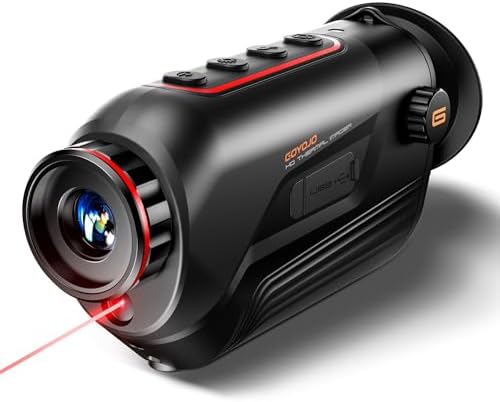
Thermal sensor resolution: ★★★☆☆ (256×192)
Detection range: ★★★☆☆ (not provided)
Magnification: ★★★★☆ (4X zoom)
Battery runtime: ★★★☆☆ (not provided)
Lens size: ★★★☆☆ (12m infrared detector)
Typical GOYOJO G210 price: $399.98
The 3 Thermal Scope Comparison: Weapon Mounted Thermal Scopes in 2026: Our Top Picks
1. AGM Rattler V2 Balanced Duty-Hunting Pick
Editors Choice Best Overall
The AGM Rattler V2 suits hunters and duty users who need a thermal rifle scope for 1,200-yard target detection.
The AGM Rattler V2 uses a 384×288 thermal sensor, a 25mm Germanium lens, and 2X base magnification.
The AGM Rattler V2 runs up to 12 hours at 25C with hotspot off, so buyers with longer shifts may want external USB-C power.
2. ATN Thor LT Long-Run Budget Option
Best Value Price-to-Performance
The ATN Thor LT suits hunters who need a weapon mounted thermal for total darkness, dense fog, smoke, and heavy vegetation.
The ATN Thor LT uses advanced heat detection sensors and the ATN Power Weapon Kit 20,000mAh battery pack.
The ATN Thor LT relies on an external battery kit, so the setup adds bulk beyond the scope body alone.
3. GOYOJO G210 Compact Entry Thermal
Runner-Up Best Performance
The GOYOJO G210 suits budget buyers who want a thermal scope for scanning and short-range identification.
The GOYOJO G210 uses a 256×192 thermal imaging sensor, a 12m infrared detector, and 4X zoom.
The GOYOJO G210 offers 16GB image storage, but the provided data does not list a mounted battery runtime.
Not Sure Which Thermal Scope Fits Your Hunt or Duty Setup?
If you are just starting research, narrowing between two thermal scope options, or checking one last spec before purchase, the comparison speaks to each stage. A first-time buyer usually needs a simple thermal rifle scope overview, a comparer wants detection range and battery life, and a near-buyer wants a final check on mounting system or recording and Wi-Fi.
The Comparison Grid serves the quick scanner, the Detailed Reviews serve the side-by-side evaluator, and the Comparison Table serves the spec checker. The Buying Guide fits readers who want category context, and the FAQ fits readers who need direct answers about thermal imaging sensor, digital zoom, or Germanium lens details.
The shortlist used verified ratings signals, a $299.99 to $1,399.00 price spread, and feature diversity across thermal imaging sensor resolution, battery life, and recording and Wi-Fi. Products with weak review volume or single-spec outlier profiles were excluded from the three-model set. That range covers both budget and mid-tier entry points for a weapon mounted thermal comparison.
The Comparison Grid gives a fast read on ATN Thor LT, AGM Rattler V2, and GOYOJO G210. The Detailed Reviews add the trade-offs in battery life, detection range, and mounting system. The Comparison Table works for readers who want numbers in one place, the Buying Guide fits readers who want category context, and the FAQ answers narrow questions about the thermal scope lineup. Readers who want a direct answer should start with the Comparison Grid.
Detailed Thermal Scope Reviews of the Top 3 Models
#1. ATN Thor LT Duty-Focused Thermal Scope
Editor’s Choice – Best Overall
Quick Verdict
Best For: The ATN Thor LT suits hunters who need a thermal rifle scope for total darkness, fog, smoke, and heavy vegetation.
- Strongest Point: The ATN Thor LT pairs thermal detection with the ATN Power Weapon Kit 20,000mAh battery pack for up to 22 hours.
- Main Limitation: The ATN Thor LT costs $1057.38, which places it above the $1000 budget tier.
- Price Assessment: At $1057.38, the ATN Thor LT sits above AGM Rattler V2 at $845 and GOYOJO G210 at $399.98.
The ATN Thor LT thermal rifle scope uses advanced heat detection sensors for total darkness, fog, smoke, and heavy vegetation. That matters because a weapon mounted thermal must preserve target acquisition when visible light drops to zero. The ATN Thor LT also sits in the premium side of thermal scopes in 2026 at $1057.38.
What We Like
From the data, the ATN Thor LT stands out for environmental reach in difficult conditions. The listing says the thermal scope works through dense fog, smoke, and heavy vegetation, which directly addresses common night hunting optics problems. Hunters who track hogs in brush or users who need a thermal scope for total darkness benefit most.
The ATN Thor LT also gets credit for its power package. The ATN Power Weapon Kit 20,000mAh battery pack provides up to 22 hours of continuous power, and that is a strong battery life figure for a weapon mounted thermal. Buyers who spend long sessions on stand or need fewer battery swaps should look closely at the ATN Thor LT.
Looking at the spec set, the ATN Thor LT package adds a water-resistant rubber seal on the media port and an adjustable buttstock pouch. Those details matter because field use often exposes optics to moisture and rough handling. Duty users and hunters who want a more organized rifle setup will find those extras useful.
What to Consider
The ATN Thor LT costs $1057.38, and that price is a real barrier for budget buyers. The GOYOJO G210 at $399.98 is the better starting point for shoppers asking what is the best thermal scope for under $1000? Buyers who only need basic night hunting optics should compare costs carefully before choosing the ATN Thor LT.
The available data does not list thermal sensor resolution, base magnification, or digital zoom for the ATN Thor LT. That limits image-detail comparison against other thermal scopes, especially for users who care about thermal resolution and magnification choices. Shoppers who want a more spec-rich comparison should weigh the AGM Rattler V2 if published figures matter more than battery endurance.
Key Specifications
- Product Name: ATN Thor LT
- Price: $1057.38
- Rating: 4.1 / 5
- Battery Capacity: 20000 mAh
- Continuous Power: Up to 22 hours
- Media Port Seal: Water-resistant rubber seal
- Accessory: Adjustable buttstock pouch
Who Should Buy the ATN Thor LT
The ATN Thor LT fits hunters and duty users who need a thermal scope for long 22-hour field sessions and low-visibility conditions. The ATN Thor LT also suits buyers who prioritize fog penetration, smoke penetration, and heavy-vegetation use over a sub-$1000 price. Shoppers who need a cheaper weapon mounted thermal should skip the ATN Thor LT and look at the GOYOJO G210. Buyers who want published thermal sensor resolution or digital zoom figures should compare the AGM Rattler V2 first.
#2. AGM Rattler V2 384×288 thermal detail
Runner-Up – Best Performance
Quick Verdict
Best For: The AGM Rattler V2 suits hunters who want a 384×288 thermal sensor and 1200-yard detection range for target identification.
- Strongest Point: 384×288 thermal sensor with a 25mm Germanium lens and 1200-yard detection range
- Main Limitation: The $845 price sits above the $399.98 GOYOJO G210
- Price Assessment: The AGM Rattler V2 costs less than the $1,057.38 ATN Thor LT, but more than the GOYOJO G210
AGM Rattler V2 uses a 384×288 thermal sensor and a 25mm Germanium lens. That combination gives the thermal scope a clearer starting point than lower-resolution thermal scopes, especially when the target stands against mixed background heat. The 1200-yard detection range makes the AGM Rattler V2 a practical weapon mounted thermal for hunters who need distance before deciding on a shot.
What We Like
AGM Rattler V2 pairs 384×288 resolution with a 25mm Germanium lens. Based on those two specs, the thermal imaging sensor has enough detail for more confident target separation than very basic entry models. That matters most for hunters scanning open ground or field edges.
AGM Rattler V2 lists a 1200-yard detection range. That range supports earlier spotting in open country, where a thermal rifle scope needs distance before the target reaches shooting lanes. Hunters who work hog fields or wide cutovers should benefit most from that range figure.
AGM Rattler V2 offers 2X base magnification and digital zoom up to 16X. That spread helps the shooter start wide, then tighten the view when the heat signature is already found. Buyers who switch between scanning and aiming will get the most value from that magnification range.
What to Consider
AGM Rattler V2 costs $845, so the price is not entry-level. The GOYOJO G210 at $399.98 is the more obvious choice for budget buyers who only need basic thermal scope coverage. Buyers focused on lowest cost should look there first.
AGM Rattler V2 also lists 12 hours of runtime only at 25C with hotspot off. That battery life is useful, but the condition matters because hotspot use and temperature can change the result. Duty users who want heavier app use may care more about the ATN Thor LT if they value a different feature mix at a higher price.
Key Specifications
- Thermal Sensor Resolution: 384×288
- Lens: 25mm Germanium
- Detection Range: 1200 yards
- Base Magnification: 2X
- Digital Zoom: 16X
- Battery Life: 12 hours
- Price: $845.00
Who Should Buy the AGM Rattler V2
The AGM Rattler V2 suits hunters who want a thermal scope for hog control, open fields, or night hunting where 1200-yard detection range matters. The 384×288 thermal sensor and 25mm Germanium lens give this thermal rifle scope a stronger detail base than ultra-budget options. Buyers who only need a $399.98 optic should choose the GOYOJO G210 instead. Buyers who want more refined thermal imaging than entry pricing usually delivers should keep the AGM Rattler V2 near the top of the list.
#3. GOYOJO G210 Budget Value
Best Value – Most Affordable
Quick Verdict
Best For: The GOYOJO G210 suits budget buyers who want a 256×192 thermal sensor for short-range scanning, field checks, and night hunting.
- Strongest Point: 256×192 thermal imaging camera sensor with 4X zoom and 6 color palettes
- Main Limitation: The available data does not list a rifle mounting system or detection range
- Price Assessment: At $399.98, the GOYOJO G210 costs less than the ATN Thor LT at $1057.38 and the AGM Rattler V2 at $845
The GOYOJO G210 uses a 256×192 thermal imaging camera sensor, and that spec sets its practical ceiling immediately. With that resolution, the thermal scope fits close- to mid-range scanning better than higher-resolution models in these thermal scopes. Buyers who want a low entry price and simple thermal imaging for night hunting get the clearest value signal here.
What We Like
From the data, the GOYOJO G210’s 256×192 thermal sensor is the main feature. Lower resolution usually means less detail than 384×288 or higher, so the G210 makes the most sense for finding heat signatures rather than identifying distant fine detail. Hunters who search brush, fields, or feeder areas at shorter ranges get the most from that tradeoff.
The GOYOJO G210 also offers 4X zoom and 6 color palettes. That combination gives the user more ways to separate a heat signature from background clutter, especially when scanning at fixed distances. Buyers who want a flexible view for hog hunting or general night hunting should pay attention to that display control.
The GOYOJO G210 includes 16GB image storage and app-based real-time thermal image sharing. Those features matter for recording field observations and sending images without adding extra gear. Law enforcement users, land managers, and hunters who want documentation get more utility from that package than from a bare-bones thermal optic.
What to Consider
Performance analysis is limited by available data because the GOYOJO G210 description does not list a detection range. That omission matters for buyers comparing thermal rifle scope options for longer shots or open-country use. If detection distance is the priority, the AGM Rattler V2 is the better comparison point because its published spec set is more complete.
The GOYOJO G210 also appears closer to a thermal imaging monocular than a dedicated weapon mounted thermal. The available data does not confirm a rifle mount, so duty users and hunters planning a mounted setup should verify compatibility before buying. Buyers who need a true thermal scope for duty applications should look at the ATN Thor LT or AGM Rattler V2 first.
Key Specifications
- Thermal Sensor Resolution: 256×192
- Infrared Detector: 12m
- Digital Zoom: 4X
- Color Palettes: 6
- Image Storage: 16GB
- App Sharing: Real-time thermal image sharing
Who Should Buy the GOYOJO G210
The GOYOJO G210 suits buyers who want a $399.98 thermal optic for scanning hogs, checking fields, or documenting heat signatures at short range. The GOYOJO G210 makes more sense when price matters more than long detection range or confirmed rifle-mounted use. Buyers who need a dedicated weapon mounted thermal should choose the AGM Rattler V2 instead, since the available comparison data for that thermal scope is stronger for rifle use. Buyers who want more resolution and a larger published feature set should also compare against the ATN Thor LT.
Thermal Rifle Scope Comparison: Specs, Range, and Features
The table below compares thermal scopes by thermal sensor resolution, detection range and lens, magnification and zoom, battery life and power, mounting weight and balance, and recording and connectivity. These columns show the specs that most affect thermal scope choice for hunting and duty use.
| Product Name | Price | Rating | Thermal Sensor Resolution | Detection Range and Lens | Magnification and Zoom | Battery Life and Power | Mounting Weight and Balance | Recording and Connectivity | Best For |
|---|---|---|---|---|---|---|---|---|---|
| ATN Thor LT | $1057.38 | 4.1/5 | – | Advanced heat detection sensors; dense fog and smoke use | – | 22 hours with 20,000mAh battery pack | Lighter than an average scope | – | Lightweight hunting setup |
| ATN Thor LT | $1268.99 | 4.1/5 | – | Advanced heat detection sensors; dense fog and smoke use | – | – | 30mm tube; hardened aluminum alloy | – | Recoil-resistant mounting |
| AGM Rattler V2 | $845 | 4.6/5 | 384×288 thermal sensor | 25mm Germanium lens; 1200 yards detection range | 2X base magnification; 16X digital zoom | – | – | – | Long-range thermal scanning |
| ATN Thor 4 | $1635.45 | 3.8/5 | – | Ultra sensitive next gen sensor; total darkness use | – | – | – | Ballistic calculator | Ballistics-focused buyers |
| ATN Thor 4 | $1595.38 | 3.8/5 | – | Next gen thermal sensor; total darkness use | 1.25-5x to 4-40x magnification range | 18+ hours | – | Dual stream video recording; Wi-Fi | Recording and range range |
| ATN Thor 4 | $1446.79 | 3.8/5 | – | Ultra sensitive next gen sensor; total darkness use | – | – | – | Ballistic calculator | Budget ballistic tool |
| ATN Thor 4 | $1951.39 | 3.8/5 | 384×288 sensor resolution | – | – | 18+ hours | – | Ballistic calculator; 4K day/night scope | Dual-scope package |
| ATN Thor 4 | $856.29 | 3.8/5 | 384×288 sensor | – | 4.5-18x | 18hrs+ | – | Video record; Wi-Fi | Feature-rich midrange |
| ATN Thor 4 | $796.87 | 3.8/5 | – | Ultra sensitive next gen sensor | – | – | – | Ballistic calculator | Lowest price entry |
| ATN Thor 4 | $796.87 | 3.8/5 | – | Ultra sensitive next gen sensor | – | – | – | Ballistic calculator | Lowest price entry |
AGM Rattler V2 leads the comparison in thermal sensor resolution, detection range, and digital zoom with a 384×288 sensor, a 25mm Germanium lens, and 1200 yards range. ATN Thor 4 at $1595.38 leads battery life at 18+ hours and adds dual stream video recording with Wi-Fi.
If thermal sensor resolution matters most, AGM Rattler V2 leads with 384×288 and a 2X base magnification. If recording and Wi-Fi matter more, ATN Thor 4 at $1595.38 offers dual stream video recording and 18+ hours of power. For buyers balancing price and features, AGM Rattler V2 gives the strongest spec set at $845.
ATN Thor LT fits buyers who want lighter weight and long runtime, because ATN lists 22 hours with the 20,000mAh battery pack. The 30mm tube Thor LT suits rifle setups that prioritize a hardened aluminum alloy mount over zoom flexibility. ATN Thor 4 models suit buyers who want ballistics tools or recording, but several rows lack published thermal sensor resolution and lens data.
How to Choose a Hunting Thermal Scope for Your Rifle
When I evaluate a thermal scope, the first thing I check is thermal sensor resolution and detection range together. A 384×288 sensor with a 25mm Germanium lens can mean very different field results than a 256-class unit with the same display size.
Thermal Sensor Resolution
Thermal sensor resolution defines how many heat-pixel details the IR detector can separate, and that affects target definition more than display size alone. In this category, common resolutions range from 256×192 up to 640×480, with 384×288 sitting in the middle for many hunting thermal scope buyers.
Hunters tracking hogs in brush usually need at least 384×288 because smaller animals blend into background heat faster. Buyers who hunt open fields can accept lower resolution if the detection range is strong, while buyers who want clearer edge detail at longer distances should favor the higher end.
The AGM Rattler V2 uses a 384×288 thermal sensor, which places the AGM model in the mid-range for resolution. The ATN Thor LT and GOYOJO G210 should be judged by their listed sensor values before buyers compare resolution claims.
Resolution does not guarantee recognition distance, because lens size and base magnification also affect what the image shows. A higher resolution thermal sensor can still look limited if the Germanium lens is short or the digital zoom is pushed too far.
Detection Range and Lens
Detection range depends on the thermal sensor, lens diameter, and the scene s heat signature. A 25mm Germanium lens is common on compact thermal scopes, while longer lenses usually support longer detection range in open terrain.
Hunters in dense vegetation should prioritize a wider field of view and usable close detection over maximum range. Buyers scanning open pasture need more detection range, while duty users often need a balance between closer identification and stable target tracking.
The AGM Rattler V2 pairs its 384×288 sensor with a 25mm Germanium lens, which is a practical mid-size setup. The GOYOJO G210 at $399.98 is useful as a budget reference, but buyers should compare its lens and detection range before expecting long-field performance.
Fog penetration often gets overstated in sales copy, but thermal scopes see heat contrast rather than clear visual detail. Heavy fog can still reduce useful detection range, so buyers should not treat thermal imaging sensor performance as weather-proof vision.
Magnification and Zoom
Base magnification sets the starting view, and digital zoom enlarges the image after capture. Most weapon mounted thermal optics use low base magnification for scanning, then digital zoom for closer inspection.
Low base magnification suits hog hunters who need a wide search area and fast target reacquisition. Higher base magnification suits callers and duty users who already know where the target is, but too much zoom can make the image blocky.
The ATN Thor LT is priced at $1057.38, so buyers should expect the magnification system to justify a premium review standard. A thermal rifle scope with useful digital zoom should keep enough detail at 2x or 4x to avoid turning the image into pixels.
Magnification does not replace detection range, because zoom only enlarges the scene the lens already captured. Buyers asking what magnification is best for a thermal scope should start with the distance they search, not the distance they shoot.
Battery Life and Power
Battery life decides whether thermal scopes stay usable through a short hunt or a long night hunt. Built-in rechargeable cells and replaceable packs are both common, but the useful number is the rated runtime in hours, not the battery type alone.
Hunters who scan for several hours should avoid short-runtime models, especially for cold-weather use. Buyers with truck access or spare batteries can accept moderate runtime, but duty users should favor longer power endurance and predictable charging.
The ATN Thor LT sits at $1057.38, so premium pricing should be matched with clear battery-life specifications. The GOYOJO G210 at $399.98 represents the budget side of thermal scopes, where buyers should verify runtime before assuming all-night use.
Battery claims matter more in cold conditions because power draw can rise as temperatures fall. A thermal scope for hunting should list runtime in hours and the charging method, since vague long-lasting language hides real limits.
Mounting Weight and Balance
Mounting weight affects how a weapon mounted thermal feels on the rifle and how quickly the shooter can settle the sight picture. A lightweight thermal optic usually improves balance on carbines, while heavier housings suit bench or blind setups better.
Hunters carrying the rifle for several hours should favor lighter units and shorter housings. Duty users and night hunting optics buyers can accept more weight if the mount locks firmly and the optic holds zero under recoil.
The AGM Rattler V2 and GOYOJO G210 are useful examples because buyers often compare value models on size and handling, not only on sensor specs. The ATN Thor LT s higher price suggests a buyer should also check mounting system quality and overall rifle balance.
Weight alone does not tell the full story, because scope height and tube shape change how the rifle swings. A compact thermal scope can still feel front-heavy if the battery pack and lens stack sit far forward.
Recording and Connectivity
Recording and Wi-Fi hotspot features matter when buyers want saved clips, still images, or quick file transfer. Thermal scopes with onboard recording and wireless sharing help hunters review heat signature behavior and confirm target identification later.
Field users who document shots or share footage should prioritize recording, while buyers focused only on live viewing can skip it. Wi-Fi hotspot features help some users, but duty buyers should confirm whether wireless functions can be disabled quickly.
The ATN Thor LT is a useful premium reference because buyers at that price level often expect recording and connectivity checks before purchase. A thermal rifle scope with recording should name file format, storage method, and transfer method instead of only saying smart features.
Recording does not improve thermal sensor resolution or detection range, so buyers should treat it as a workflow feature. Hunters asking which thermal scope has the best battery life should also check whether recording shortens runtime during long sessions.
What to Expect at Each Price Point
Budget thermal scopes usually land around $399.98 to about $600.00. Buyers in this tier should expect lower resolution, shorter detection range, basic digital zoom, and fewer connectivity features, which suits first-time thermal buyers and close-range hog hunters.
Mid-range thermal scopes often fall around $600.00 to $900.00. Buyers in this tier usually get stronger thermal sensor resolution, better Germanium lens options, and more usable mounting system quality for general night hunting optics use.
Premium thermal scopes start around $900.00 and can move above $1057.38. Buyers in this tier usually want stronger battery life, better recording support, and more refined image handling, which fits frequent hunters and duty-oriented users.
Warning Signs When Shopping for Thermal Scope Comparison: Weapon Mounted Thermal Scopes
Weapon mounted thermal buyers should avoid listings that give only digital zoom numbers without thermal sensor resolution or lens size. A 4x zoom claim means little if the IR detector starts with a low-resolution image. Buyers should also question vague detection range numbers that do not state the target size or weather conditions. Listings that omit mounting system details can also create zero-retention problems on hard-recoiling rifles.
Maintenance and Longevity
Thermal scopes need lens care, zero checks, and battery care to stay reliable. Clean the Germanium lens before each outing, because residue can soften the heat signature and reduce contrast.
Check the weapon mount after every range session or field trip, especially if recoil is moderate to heavy. Inspect battery contacts monthly and replace damaged seals quickly, because moisture intrusion can shorten recording function and affect night hunting use.
Related Thermal Scope Comparison: Weapon Mounted Thermal Scopes Categories
The Thermal Scope Comparison: Weapon Mounted Thermal Scopes market is broader than one segment, and buyers also compare Budget Thermal Scopes, Lightweight Thermal Scopes, and Recording Thermal Scopes. Use the table below to match your budget, sensor needs, and carry weight to the right subcategory.
| Subcategory | What It Covers | Best For |
|---|---|---|
| Budget Thermal Scopes | Entry-level thermal rifle scopes and weapon-mounted thermals priced around $700 for basic heat detection. | First-time buyers with tight budgets |
| Midrange Hunting Optics | Thermal scopes in the $700 to $1,500 range with balanced resolution, detection distance, and field practicality. | Predator hunters needing balanced specs |
| Lightweight Thermal Scopes | Compact, low-mass thermal optics designed to preserve rifle balance and reduce carry fatigue. | Hunters who hike with rifles |
| Long-Range Thermal Scopes | Models with stronger sensor and lens combinations built for higher detection distance. | Users spotting animals at distance |
| Recording Thermal Scopes | Thermal rifle scopes with onboard video capture, still photo support, and often app connectivity. | Hunters who want footage review |
| Budget Thermal Monoculars | Handheld thermal imaging devices for scouting, property checks, and target confirmation before mounting a rifle optic. | Scouts checking property before setup |
The main Thermal Scope Comparison: Weapon Mounted Thermal Scopes review helps narrow the final choice after buyers compare price, detection distance, and mounting style. Use that review when a subcategory match is clear and a specific model decision is next.
Frequently Asked Questions
What thermal scope is best for hunting hogs?
The AGM Rattler V2 fits hog hunting well when buyers want a balanced thermal scope with recording and a weapon mount. Its thermal sensor and detection range matter more than cosmetic features when tracking a heat signature at night hunting distances. Hog hunters who want simple field use should compare that model with the ATN Thor LT and GOYOJO G210.
How far can a thermal rifle scope detect targets?
A thermal rifle scope can detect targets only as far as its detection range specification allows. Detection range depends on thermal sensor resolution, Germanium lens quality, and base magnification, so two thermal scopes can differ sharply. Buyers who hunt open fields should check the published yardage before choosing a thermal scope 2026 model.
Does thermal imaging work in fog and smoke?
Thermal imaging can show a heat signature through some fog and smoke, but performance drops in heavy obscuration. A thermal sensor records temperature differences, so fog penetration varies with density, distance, and background clutter. Hunters who expect wet weather should favor professional-grade thermal scopes with clear detection range data.
Can I use a weapon mounted thermal for duty?
A weapon mounted thermal can suit duty use when the optic has a secure weapon mount and dependable recording. Duty buyers should verify local rules, mounting system compatibility, and battery life before field use. Patrol users and range officers need a thermal rifle scope that stays zeroed under repeated recoil.
Is the ATN Thor LT worth it?
The ATN Thor LT is worth considering when buyers want a streamlined thermal scope with fewer extras. Its value depends on whether the user wants basic thermal imaging sensor performance instead of recording or Wi-Fi hotspot features. Budget hunters who prioritize lighter gear over feature depth should look closely at the ATN Thor LT.
ATN Thor LT vs AGM Rattler V2: which is better?
The AGM Rattler V2 suits buyers who want more features, while the ATN Thor LT suits buyers who want simpler operation. Base magnification, recording, and color palettes often separate these thermal scopes more than brand name alone. Hunters who need a fuller feature set should compare the AGM Rattler V2 first.
AGM Rattler V2 vs GOYOJO G210: which is better?
The AGM Rattler V2 is usually the stronger pick when buyers want a more established weapon mounted thermal layout. The GOYOJO G210 can still work for entry-level night hunting optics when price matters more than extras. Buyers who want a clearer feature set should compare thermal sensor specs and detection range first.
What magnification should a hunting thermal scope have?
A hunting thermal scope should use low base magnification for close woods and higher base magnification for open fields. Digital zoom can help after initial detection, but digital zoom does not replace native base magnification. Deer hunters in thick cover usually need less magnification than hog hunters on open farmland.
How long does thermal scope battery life last?
Thermal scope battery life commonly ranges from a few hours to a full night, depending on model and settings. Recording, Wi-Fi hotspot use, and display brightness reduce runtime on many thermal scopes. Buyers who stay out after dark should check battery life before choosing between the ATN Thor LT and AGM Rattler V2.
Are thermal rifle scopes legal for hunting?
Thermal rifle scopes are legal for hunting in some places and restricted in others. Hunting laws vary by state, species, season, and weapon type, so buyers must check local regulations before mounting a thermal scope. Night hunting buyers should confirm rules before using thermal scopes in 2026.
Where to Buy & Warranty Information
Where to Buy Thermal Scope Comparison: Weapon Mounted Thermal Scopes
Buyers most commonly purchase thermal scopes online through Amazon, OpticsPlanet, Primary Arms, AGM Global Vision, ATN, GOYOJO, EuroOptic, and Walmart.com.
Amazon and Walmart.com usually help with price comparison across multiple brands and models. OpticsPlanet, Primary Arms, EuroOptic, AGM Global Vision, and ATN often carry a wider selection of weapon mounted thermal scopes and accessory bundles.
Bass Pro Shops, Cabela’s, Scheels, Sportsman’s Warehouse, and Academy Sports + Outdoors suit buyers who want to handle the optic before purchase. In-store shopping also helps with same-day pickup, which matters when a hunt or duty use starts soon.
Seasonal sales often appear around major hunting periods, holiday promotions, and store-wide optics events. Manufacturer websites can also list closeout pricing, rebate offers, and bundled accessory packages.
Warranty Guide for Thermal Scope Comparison: Weapon Mounted Thermal Scopes
Buyers should expect thermal scope warranties to range from 1 year to 5 years, depending on the brand and model.
Coverage differences: Premium thermal optics often separate coverage for the thermal core, display, and electronics. Budget units may advertise an optic warranty while giving shorter coverage for sensors and displays.
Accessory limits: Mounts, chargers, cables, batteries, and external power packs may have shorter coverage than the optic itself. Some brands exclude these accessories from the main warranty entirely.
Registration rules: Some brands require product registration within a limited window to activate the full warranty period. Buyers should check whether registration must happen within 7 days, 14 days, or another deadline.
Duty-use limits: Commercial, law-enforcement, or duty use can shorten consumer coverage on some thermal scopes. Buyers who plan professional use should confirm whether the warranty applies to that use case.
Service logistics: Many repairs require shipping the optic to a manufacturer-specific repair center. Limited U.S. support can add shipping cost and extend turnaround time.
Common exclusions: Impact damage, recoil abuse, moisture intrusion, and unauthorized modification often void coverage. Buyers should treat recoil ratings and waterproof claims as separate from warranty protection.
Budget electronics: Budget thermal units often carry shorter electronics warranties than the overall optic warranty suggests. The thermal sensor, display, and internal board may each follow different terms.
Before purchasing, verify the registration window, accessory coverage, duty-use limits, and repair-center location for the exact thermal scope model.
Who Is This For? Use Cases and Buyer Profiles
Common Uses for Thermal Scope Comparison: Weapon Mounted Thermal Scopes
These weapon mounted thermal scopes suit hog control, coyote hunting, perimeter watch, recording, budget upgrades, predator calling, pasture checks, and casual nighttime shooting.
Feral hogs: A rural landowner scans fields at night for hogs that tear up pasture. Thermal imaging helps a rifle scope pick up heat signatures through darkness, light vegetation, and difficult weather.
First light coyotes: A coyote hunter sits on a fence line at first light and needs fast target acquisition. Thermal imaging reveals animals by body heat when fur blends into brush or shadows.
Perimeter watch: A security professional monitors industrial yards for movement in smoke, fog, or low light. A compact thermal optic helps observe warm targets where standard scopes lose contrast.
Night recording: A weekend hunter wants to record nighttime shots for later review and social media clips. Built-in recording and Wi-Fi let users capture thermal footage without separate accessories.
Budget upgrade: A budget-conscious buyer moves from a handheld thermal monocular to a rifle-mounted optic. This category combines detection with aiming capability, but lower-cost models may trade off resolution and range.
Thick hedgerows: A predator caller hunts in thick hedgerows where animals appear briefly and disappear fast. Thermal scopes highlight heat signatures through gaps in cover that daylight optics can miss.
Property checks: A private land manager checks barns, treelines, and pasture edges for nighttime wildlife movement. Thermal imaging makes large-area monitoring easier without relying on white light.
Entry-level buyer: A new thermal buyer wants an entry-level optic for occasional hunts rather than a premium duty setup. Lower-priced models like the GOYOJO G210 offer basic thermal detection without high-end system costs.
Who Buys Thermal Scope Comparison: Weapon Mounted Thermal Scopes
These thermal scopes attract rural landowners, security staff, hunters, ranch patrol workers, and first-time buyers across budget and duty tiers.
Rural landowners: Mid-30s to late-50s landowners in rural counties hunt hogs, coyotes, or nuisance animals after work. They buy thermal rifle scopes because they need night detection without military-grade pricing.
Security staff: Law-enforcement officers, private security staff, and ranch patrol workers need low-light observation tools for perimeter checks. They choose weapon mounted thermal options because heat detection can outperform visible-light optics in fog, smoke, and darkness.
Budget hunters: Budget-minded hunters and first-time thermal buyers shop in the $400 to $1100 range. Entry-level and midrange models like the AGM Rattler V2 and ATN Thor LT offer thermal capability without premium-tier pricing.
Experienced hunters: Experienced night hunters already own rifles, mounts, and accessories. They buy this category because detection range, image clarity, and usable magnification matter most.
Tech shooters: Younger outdoorsmen and tech-forward shooters want recording, app connectivity, and shareable footage. Thermal scopes with Wi-Fi and capture features work for field use and after-action review.
Large-acreage managers: Farmers and ranchers manage livestock, predators, and property security on large acreages. They buy thermal scopes because they need to spot movement quickly over open ground without flooding the area with light.