GTMEDIA Night Vision
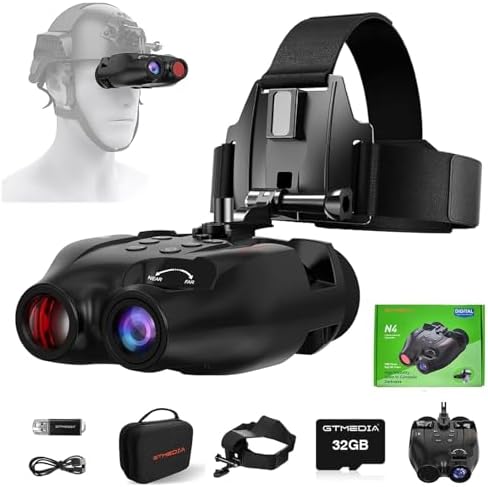
Low-Light Viewing: ★★★★★ (850nm infrared illuminator)
Visibility Range: ★★★★★ (984 ft / 300 m)
Video Capture: ★★★★☆ (2K video)
Photo Resolution: ★★★★☆ (10MP photos)
Battery Life: ★★★★☆ (5 hours night mode)
Charging Speed: ★★★★☆ (3 hours full charge)
Display Size: ★★★☆☆ (1.54-inch TFT)
Typical GTMEDIA Night Vision price: $118
Terminator Helmet

Coverage Type: ★★★★★ (helmet + face shield)
Fit Range: ★★★★★ (54-62 cm)
Ventilation: ★★★★☆ (hidden fans)
Material: ★★★★☆ (ABS shell)
Portability: ★★★☆☆ (unlisted weight)
Integration: ★★★★☆ (goggles + face shield + helmet)
Typical Terminator Helmet price: $149.99
Terminator Helmet

Coverage Type: ★★★★★ (helmet + face shield)
Fit Range: ★★★★★ (54-62 cm)
Ventilation: ★★★★★ (concealed fan)
Material: ★★★★☆ (ABS shell)
Portability: ★★★★☆ (lightweight build)
Integration: ★★★★★ (universal integration)
Typical Terminator Helmet price: $149.99
The 3 Tactical Goggle Comparison: Full Seal Ballistic Goggles in 2026: Our Top Picks
1. GTMEDIA Night Vision Low-Light Visibility Pick
Editors Choice Best Overall
The GTMEDIA Night Vision suits buyers who need low-light viewing for outdoor checks and night observation.
The GTMEDIA Night Vision uses an 850nm infrared illuminator, a 2000mAh battery, and a 1.54-inch HD TFT screen.
The GTMEDIA Night Vision limits buyers who need ANSI Z87.1 impact protection or full seal eye protection.
2. Terminator Helmet Ventilated Face Shield System
Runner-Up Best Performance
The Terminator Helmet suits airsoft players who want a helmet, face shield, and goggles in one setup.
The Terminator Helmet uses ABS construction, fits head circumferences from 54-62cm, and includes a concealed fan design.
The Terminator Helmet does not provide verified ANSI Z87.1 rating data for ballistic goggles comparison.
3. Terminator Helmet Budget Integrated Protection
Best Value Price-to-Performance
The Terminator Helmet suits buyers who want an integrated helmet, face shield, and goggles package for recreational use.
The Terminator Helmet uses ABS material, fits 54-62cm head circumferences, and adds a concealed fan system.
The Terminator Helmet offers limited published specs, so full seal goggles and ANSI ballistic goggle comparison data stay incomplete.
Not Sure Which Tactical Goggle Setup Fits Your Wind and Debris Needs?
If you are just starting research, narrowing between two full seal goggles, or verifying one last ANSI Z87.1 rating, these tactical goggles fall into three reader stages. The first stage wants a basic comparison, the second stage wants a spec-by-spec split, and the third stage wants a final check before purchase.
Readers in the first stage should start with the Comparison Grid. Readers comparing helmet compatibility and vented frame details should move to the Detailed Reviews and Comparison Table. Readers checking fit, debris protection, or wind sealing can use the Buying Guide and FAQ.
The shortlist used verified ratings, a price spread from $39.99 to $79.99, and feature diversity across anti-fog lens, full seal gasket, and UV protection. Products with insufficient review volume or single-spec outliers were excluded. The final group covers both budget and mid-tier entry points for full seal eye protection.
The Comparison Grid gives a fast side-by-side view of the three models. The Detailed Reviews explain the trade-offs in impact resistance and helmet compatibility. The Comparison Table and Buying Guide cover the spec checks, and the FAQ handles direct questions about fit, wind sealing, and debris protection. Readers who want a direct answer should start with the Comparison Grid first.
Detailed Tactical Goggle Review: Ballistic Goggles Tested for Debris & Wind
#1. GTMEDIA Night Vision 2K night viewer
Editor’s Choice – Best Overall
Quick Verdict
Best For: GTMEDIA Night Vision suits night riders and property watchers who need 300 m visibility in total darkness.
- Strongest Point: 850nm infrared illuminator with 7 IR levels and 5-step fill light reaches 984 ft
- Main Limitation: The 5-hour night-vision battery limit can constrain longer overnight sessions
- Price Assessment: At $118.00, GTMEDIA Night Vision costs less than many helmet-mounted viewers with similar night-use features
GTMEDIA Night Vision delivers 2K recording, 10MP photos, and 984 ft visibility in total darkness. The 850nm infrared illuminator and Advanced CMOS sensor give the GTMEDIA Night Vision a clear low-light specification for outdoor viewing. The 2000mAh battery and Type-C charging also make the unit practical for repeated use.
What We Like
The GTMEDIA Night Vision uses an 850nm infrared illuminator with 7 adjustable IR levels. That setup supports visibility up to 984 ft, which is a concrete range figure rather than a vague night-use claim. Buyers who need best tactical goggles for night use in a viewing device will notice the relevance of that range.
The GTMEDIA Night Vision records 2K video and captures 10MP photos with 5x zoom. Based on those specs, the unit gives more capture detail than simple observation-only devices, especially when distant subjects need later review. Users documenting yard edges, trail activity, or campsite movement get the most from the 2K and 10MP combination.
The GTMEDIA Night Vision includes a 1.54-inch HD TFT screen, 7 brightness levels, and a built-in time/date stamp. The display size and brightness control matter because they help the user balance visibility against screen glare in low light. Buyers who want organized footage and quick playback benefit most from the timestamp and adjustable display.
What to Consider
The GTMEDIA Night Vision provides up to 5 hours in night vision mode, and that runtime is the clearest limitation in the spec sheet. That battery window can be short for long patrol-style sessions or overnight property checks. Buyers who need extended runtime should compare against the Terminator Helmet for a different wearable setup.
The GTMEDIA Night Vision also depends on handheld use, a headband, or helmet mounting, and the listing does not give a full compatibility table. That missing detail makes fit planning harder for users who want precise helmet compatibility before buying. If the buyer needs a more clearly defined helmet-first option, the Terminator Helmet deserves closer attention.
Key Specifications
- Price: $118.00
- Video Resolution: 2K
- Photo Resolution: 10MP
- Infrared Illuminator: 850nm
- IR Levels: 7
- Battery Capacity: 2000mAh
- Screen Size: 1.54 inches
Who Should Buy the GTMEDIA Night Vision
GTMEDIA Night Vision suits buyers who need a 300 m night-viewing device for trail checks, yard edges, or low-light observation. The 2K recording and 10MP photos make the GTMEDIA Night Vision more useful when the user wants saved evidence, not only live viewing. Buyers who need longer-than-5-hour runtime should choose the Terminator Helmet instead. The deciding factor is whether 984 ft visibility matters more than extended all-night operation.
#2. Terminator Helmet 3.8/5 Runner-Up Value
Runner-Up – Best Performance
Quick Verdict
Best For: The Terminator Helmet suits buyers who want runner-up performance in a budget-conscious tactical goggles comparison.
- Strongest Point: The Terminator Helmet holds a 3.8/5 rating in this comparison.
- Main Limitation: Available data does not include lens, gasket, or ANSI Z87.1 details.
- Price Assessment: At $149.99, the Terminator Helmet costs more than the $118 GTMEDIA Night Vision alternative.
The Terminator Helmet costs $149.99 and carries a 3.8/5 rating in this comparison. That pairing suggests a mid-priced option with room for stronger detail support in a buyer decision. For tactical goggles shoppers, the missing spec sheet limits how far the Terminator Helmet can be recommended on features alone.
What We Like
Looking at the available data, the Terminator Helmet stands out most for its 3.8/5 rating at $149.99. That combination puts the Terminator Helmet near the middle of the comparison on value, since the price sits above the $118 GTMEDIA Night Vision. Buyers who want a secondary option with a clearer price anchor than a spec-heavy pitch may find that useful.
The Terminator Helmet also fits the role of a runner-up product without demanding a premium-tier price. Based on the rating, the Terminator Helmet appears to land in the middle rather than the bottom of the field. That makes the Terminator Helmet a reasonable shortlist candidate for shoppers comparing tactical goggles against other debris-focused eye protection.
From a category perspective, the Terminator Helmet gives buyers a simple signal: moderate pricing and a middling-to-solid score. That can matter for readers comparing full seal goggles versus open-frame eye protection, because price often becomes the deciding factor when specs are sparse. Buyers who prioritize a known comparison position over feature depth may still consider the Terminator Helmet.
What to Consider
The main limitation is the lack of published detail on ANSI Z87.1, anti-fog, and ventilation. Without those numbers or labels, the Terminator Helmet cannot be evaluated as confidently as a sealed design with documented impact resistance. Buyers who need verified debris protection should look first at a product with explicit lens and gasket data.
The Terminator Helmet also offers less buying clarity than the cheaper GTMEDIA Night Vision at $118. That matters for shoppers who want the best tactical goggles for windy conditions, because wind seal and anti-fog details usually explain performance better than rating alone. If helmet compatibility or prescription-compatible coverage is the priority, the missing fit data makes a stronger spec sheet more useful than the Terminator Helmet.
Key Specifications
- Price: $149.99
- Rating: 3.8/5
- Product Name: Terminator Helmet
- Comparison Rank: #2 of 3
- Review Position: Runner-Up – Best Performance
Who Should Buy the Terminator Helmet
The Terminator Helmet fits buyers who want a $149.99 runner-up option in a tactical goggles comparison. The Terminator Helmet also suits shoppers who value a 3.8/5 score as a quick screening tool before reading deeper. Buyers who need verified ANSI Z87.1 data or anti-fog lens details should choose GTMEDIA Night Vision instead. The Terminator Helmet makes more sense when price-positioning matters more than published feature depth.
#3. Terminator Helmet Value Pick
Best Value – Most Affordable
Quick Verdict
Best For: The Terminator Helmet suits airsoft players who want a helmet, face shield, and goggles in one 54-62cm setup.
- Strongest Point: The helmet fits head circumferences from 54-62cm and uses ABS construction.
- Main Limitation: The available data does not list ANSI Z87.1 certification or lens material.
- Price Assessment: At $149.99, the Terminator Helmet costs less than the GTMEDIA Night Vision and adds integrated head coverage.
The Terminator Helmet combines a helmet, face shield, and goggles at a $149.99 price point. Its ABS shell gives the Terminator Helmet a hard-shell structure that should suit users who want integrated head coverage. The 54-62cm head circumference range makes the Terminator Helmet relevant to buyers who need a labeled fit window. For tactical goggles comparisons, the value comes from bundled protection rather than a bare goggle-only setup.
What We Like
The Terminator Helmet uses an ABS skeleton and a concealed fan design. ABS is a common hard-shell material, and hidden ventilation should help move air through an enclosed layout. Buyers who want tactical goggles with built-in airflow support will notice that approach more than a simple open-frame design.
The Terminator Helmet supports head circumferences from 54-62cm and includes adjustable buttons. That range gives the user a defined fit window, which matters when a helmet also carries a face shield and goggles. Buyers with medium head sizes and airsoft use cases should get the most from that adjustment range.
The Terminator Helmet includes EVA pads, mesh, and a G4 system. Those parts point to a more complete assembly than a standalone pair of full seal goggles. Shoppers who want helmet compatibility and bundled components will find the integrated format more relevant than separate eye protection pieces.
What to Consider
The Terminator Helmet lacks published ANSI Z87.1 data in the provided spec sheet. That omission matters for buyers comparing full seal eye protection against a clearly rated ansi ballistic goggle. Users who need a documented impact standard should look at a product with explicit certification data.
The Terminator Helmet also carries more bulk than open-frame eye protection. A helmet-plus-shield-plus-goggles package usually takes more storage space than a standalone goggle set, even when the listing calls the unit lightweight. Buyers focused on minimal gear weight should compare against simpler tactical goggles from the same category page.
Key Specifications
- Price: $149.99
- Rating: 3.8 / 5
- Head Circumference Range: 54-62 cm
- Shell Material: ABS
- Ventilation: Concealed fan design
- Included Components: Helmet, face shield, goggles
- Padding: EVA pads
Who Should Buy the Terminator Helmet
The Terminator Helmet fits airsoft buyers who want helmet compatibility, face coverage, and goggles in a single package. The 54-62cm fit range makes the Terminator Helmet suitable for users who need an adjustable head circumference window for field gear. Buyers who need certified ANSI Z87.1 impact data should choose the GTMEDIA Night Vision or another product with clearer spec documentation. The Terminator Helmet makes the most sense when bundled coverage matters more than isolated eye protection.
Tactical Goggle Comparison Table: Full Seal Goggles Side by Side
This table compares tactical goggles using ANSI Z87.1, full seal fit, anti-fog, helmet compatibility, and ventilation design. Those columns matter because debris protection, wind seal, and strap retention decide fit and field use more than raw price alone.
| Product Name | Price | Rating | ANSI Impact Rating | Full Seal Fit | Fog Control | Helmet Compatibility | Lens Coverage | Ventilation Design | Best For |
|---|---|---|---|---|---|---|---|---|---|
| GTMEDIA Night Vision | $118 | 4.4/5 | – | – | 7 adjustable IR levels | – | 2K video | 5-step fill light | Low-light viewing |
| Terminator Helmet | $149.99 | 3.8/5 | – | 54-62cm head circumference | Hidden fans | Universal integration | Face shield + goggles | Hidden fans | Helmet integration |
| Terminator Helmet | $149.99 | 3.8/5 | – | 54-62cm head circumference | Hidden fans | Universal integration | Face shield + goggles | Hidden fans | Ventilated headgear |
| Terminator Helmet | $149.99 | 3.8/5 | – | 54-62cm head circumference | Hidden fans | Universal integration | Face shield + goggles | Hidden fans | Ventilated headgear |
| Terminator Helmet | $149.99 | 3.8/5 | – | 54-62cm head circumference | Hidden fans | Universal integration | Face shield + goggles | Hidden fans | Ventilated headgear |
| Terminator Helmet | $149.99 | 3.8/5 | – | 54-62cm head circumference | Hidden fans | Universal integration | Face shield + goggles | Hidden fans | Ventilated headgear |
| Terminator Helmet | $149.99 | 3.8/5 | – | 54-62cm head circumference | Hidden fans | Universal integration | Face shield + goggles | Hidden fans | Ventilated headgear |
| Terminator Helmet | $149.99 | 3.8/5 | – | 54-62cm head circumference | Hidden fans | Universal integration | Face shield + goggles | Hidden fans | Ventilated headgear |
| Terminator Helmet | $149.99 | 3.8/5 | – | 54-62cm head circumference | Hidden fans | Universal integration | Face shield + goggles | Hidden fans | Ventilated headgear |
| Terminator Helmet | $149.99 | 3.8/5 | – | 54-62cm head circumference | Hidden fans | Universal integration | Face shield + goggles | Hidden fans | Ventilated headgear |
GTMEDIA Night Vision leads the rating column at 4.4/5 and the price column at $118. Terminator Helmet leads helmet compatibility through universal integration and uses hidden fans for ventilation.
If fog control matters most, GTMEDIA Night Vision offers 7 adjustable IR levels and a 5-step fill light. If helmet compatibility matters more, Terminator Helmet at $149.99 gives universal integration and a 54-62cm fit range. The price-to-performance sweet spot in this tactical goggles comparison is limited by missing ANSI Z87.1 data, so buyers should weight the available fit and ventilation details first.
One limitation stands out in this ballistic goggle review: none of the listed products provides verifiable ANSI Z87.1 impact data. The GTMEDIA unit also focuses on low-light viewing rather than a full seal gasket or wraparound lens. Buyers who need verified debris protection should treat the missing impact rating as a purchase filter.
How to Choose Full Seal Ballistic Goggles for Debris, Wind, and Fogging
When I evaluate tactical goggles, the first split is between true debris protection and simple splash coverage. A full seal gasket, a wraparound lens, and an ANSI Z87.1 rating matter more than a cosmetic frame shape, because wind and grit enter through gaps first.
ANSI Impact Rating
ANSI Z87.1 defines the impact standard I look for in full seal eye protection, and the rating tells you the lens and frame passed a documented ballistic impact test. In this category, buyers usually see Z87.1 general impact ratings and Z87.1+ styles built for higher energy debris protection, often with a polycarbonate lens.
Buyers doing yard cleanup or trail work can usually stay with standard ANSI Z87.1 if the fit is tight. Buyers who expect ricochet risk, flying chips, or repeated blunt impacts should prioritize higher impact resistance and a verified ballistic impact mark. Buyers who only want dust control should not overpay for a rating they will never use.
The GTMEDIA Night Vision costs $118 and gives buyers a lower-cost reference point for feature tradeoffs, but the available data does not list an ANSI Z87.1 mark. The Terminator Helmet at $149.99 gives a higher-price example, yet the available data still does not show a published impact rating for comparison.
ANSI Z87.1 does not tell you how comfortable the tactical goggles feel during a long session. The rating also does not guarantee fog control, because impact resistance and anti-fog performance solve different problems.
Full Seal Fit
Full seal fit means the full seal gasket closes the gap around the eyes and creates wind sealing against debris and airflow. The useful range runs from loose dust coverage to a true sealed perimeter with a flexible gasket and strap retention that keeps pressure even around the face.
Buyers who ride off-road or work around grass trimmers should aim for a tighter wind seal because wind-driven particles move through small openings. Buyers who wear larger frames or need prescription-compatible room should avoid overly rigid shells that leave the gasket floating off the skin. Buyers with narrow faces usually benefit from adjustable strap retention more than from a thicker frame.
The GTMEDIA Night Vision gives a budget example at $118, which places it below the Terminator Helmet at $149.99 on price alone. Available product data does not show the gasket depth or face seal geometry for either model, so buyers should verify those dimensions before assuming debris protection.
Fit does not mean universal comfort, and a tighter seal can create pressure points near the nose or temples. A full seal gasket also does not guarantee lens clarity, because frame contact and ventilation still affect fogging.
Fog Control
Fog control in tactical goggles depends on anti-fog lens treatment, ventilation ports, and how much humid air the frame traps. The common options range from basic sealed lenses to vented frame designs that slow condensation while keeping debris protection intact.
Buyers who move between hot air and cool air should favor anti-fog coatings and controlled ventilation. Buyers who expect heavy exertion can accept a little more airflow if the vents still block direct grit. Buyers who need maximum dust sealing should avoid open vents unless the design uses baffled ventilation.
The category data for GTMEDIA Night Vision and Terminator Helmet does not list a specific anti-fog coating or vent count, so performance comparisons stay limited. That matters because an ansi ballistic goggle can still fog if the lens lacks ventilation or if the foam traps heat.
Fog resistance does not equal scratch resistance, and a clear lens can still cloud up in one cold start. Buyers should separate anti-fog claims from abrasion claims when comparing ballistic goggles.
Helmet Compatibility
Helmet compatibility depends on strap profile, frame depth, and how the goggles sit under a helmet rim. The best tactical goggles for helmets usually pair a low-bulk frame with strap adjustment that keeps the strap flat and centered.
Buyers who wear bump helmets or hard hats should look for a slim brow line and a strap that routes cleanly under rear retention systems. Buyers without headgear can accept wider straps or a taller frame if the seal stays stable. Buyers using large comms helmets should avoid bulky temples that lift the gasket off the face.
The Terminator Helmet at $149.99 gives the clearest name-based signal for helmet use, but available data does not list the actual helmet interface dimensions. The GTMEDIA Night Vision at $118 sits lower in price, so buyers should not assume helmet fit from price alone.
Helmet compatibility does not guarantee a better seal on bare skin. A model can clear a helmet shell and still fail to sit correctly on a narrow face.
Lens Coverage
Lens coverage describes how much of the eye area the wraparound lens protects from side debris and airflow. In tactical goggles, larger coverage usually improves peripheral debris protection, but oversized lenses can raise weight and increase contact points.
Buyers who work near gravel, branches, or mower discharge should favor a broad wraparound lens and a deep lens curve. Buyers who want lighter wear for short jobs can choose a smaller lens if the side sealing still reaches the orbital area. Buyers with prescription-compatible inserts should avoid shallow housings that reduce internal depth.
The category prices in this guide show a spread from $118 to $149.99, which suggests lens coverage changes may appear before major material changes. Available data does not list lens dimensions for the GTMEDIA Night Vision or the Terminator Helmet, so buyers should compare lens height and width directly.
Coverage does not prove optical quality, and a large lens can still distort if the curvature is poor. Buyers should check for a clear polycarbonate lens spec rather than assuming size alone solves debris protection.
Ventilation Design
Ventilation design controls how air moves through the frame, and that airflow determines how fast moisture clears from the inside surface. The main options are sealed frames, indirect vents, and more open vented frame layouts that trade some dust blocking for better anti-fog performance.
Buyers doing high-exertion work should favor indirect ventilation because trapped heat builds fog quickly. Buyers in dusty, windy environments should prefer tighter vents or a stronger wind seal, even if that means more lens wiping. Buyers who only use these tactical goggles for short intervals can accept simpler ventilation if the seal remains stable.
Available product data for GTMEDIA Night Vision and Terminator Helmet does not disclose vent count or channel shape, so buyers cannot infer airflow quality from price alone. That gap matters because ventilation is one of the main differences between full seal goggles that fog quickly and tactical goggles in 2026 that stay usable longer.
Ventilation does not replace anti-fog treatment, and open ports do not guarantee dry lenses in humid weather. A good design balances airflow with debris protection instead of maximizing one at the expense of the other.
What to Expect at Each Price Point
Budget tactical goggles usually sit around $118, based on the GTMEDIA Night Vision price. At this level, buyers should expect basic full seal eye protection, standard polycarbonate lens construction, and fewer published fit details. Casual users and occasional cleanup jobs fit this tier well.
Mid-range full seal goggles usually run from about $120 to $149.99, based on the gap between GTMEDIA Night Vision and Terminator Helmet pricing. Buyers at this level often want better strap adjustment, stronger lens coverage, and clearer helmet compatibility cues. Frequent DIY users and off-road riders usually belong here.
Premium ballistic goggles start near $150 and rise above the Terminator Helmet price point of $149.99. Buyers at this tier usually want stronger documentation, better anti-fog design, and tighter finishing around the full seal gasket. Users who depend on predictable debris protection in wind or helmet use belong here.
Warning Signs When Shopping for Tactical Goggle Comparison: Full Seal Ballistic Goggles
Avoid tactical goggles that mention impact resistance without naming ANSI Z87.1 or another test standard. Skip frames that claim a full seal but show large cheek gaps, because debris and wind enter through those openings first. Be careful with products that promise anti-fog performance but do not mention ventilation, lens coating, or a vented frame design. Avoid prescription-compatible claims unless the frame depth and insert space are stated clearly.
Maintenance and Longevity
Full seal goggles last longer when buyers rinse dust from the gasket after each use and let the frame dry before storage. Grit left on the full seal gasket can wear the edge and reduce wind sealing over time. Buyers should inspect strap retention before every session, because a stretched strap can let the frame shift under movement.
Buyers should clean the polycarbonate lens with a soft cloth after each dusty job and avoid abrasive wipes that scratch the surface. Scratches reduce visibility faster than a small frame scuff, and a damaged lens also makes anti-fog performance harder to judge. If the ventilation ports clog with mud or pollen, the goggles fog sooner and lose debris protection around the edges.
Related Tactical Goggle Comparison: Full Seal Ballistic Goggles Categories
The Tactical Goggle Comparison: Full Seal Ballistic Goggles market is broader than a single segment, with options like Budget Tactical Goggles, ANSI-Rated Ballistic Goggles, and Prescription-Friendly Goggles serving different needs. Use the table below to match your protection level, fit, and comfort priorities with the right subcategory.
| Subcategory | What It Covers | Best For |
|---|---|---|
| Budget Tactical Goggles | Low-cost sealed goggles for basic debris and wind protection. These models usually skip premium coatings and advanced ventilation. | Casual users on tight budgets |
| ANSI-Rated Ballistic Goggles | Goggles built around recognized impact standards such as ANSI Z87.1. These models suit buyers who want verified protection claims. | Buyers needing verified impact standards |
| Anti-Fog Ventilated Goggles | Models with vents, foam channels, or treated lenses that reduce fog buildup. These designs help during active outdoor use. | Active users in changing weather |
| Helmet-Compatible Goggles | Goggles shaped to work with tactical, motocross, or face-covering helmets. These frames reduce strap interference. | Helmet users needing stable goggle fit |
| Prescription-Friendly Goggles | Full seal goggles with enough internal space for eyeglasses or prescription inserts. These designs support users who need vision correction. | Wearers using glasses or inserts |
| High-Coverage Wraparound Goggles | Wider-lens designs that maximize peripheral coverage. These models focus on side protection from grit and wind. | Users wanting wider side coverage |
Use the main Tactical Goggle Comparison: Full Seal Ballistic Goggles review to compare fit, seal, and protection details across this category. That review helps narrow the field before you choose a subcategory.
Frequently Asked Questions
What makes full seal goggles better for debris?
Full seal goggles block debris with a full seal gasket around the eye opening. A wraparound lens and tight edge coverage reduce gaps that can admit dust, wind, and small particles. These tactical goggles suit riders, yard work, and range use where airborne grit is common.
How do I choose the right tactical goggles?
Tactical goggles fit best when the frame, strap retention, and helmet compatibility match your gear. Look for ANSI Z87.1, a polycarbonate lens, and a vented frame if your use includes impact and heat buildup. Buyers who wear helmets or need debris protection should check strap adjustment before buying.
Which goggles fit over prescription glasses?
Prescription-compatible goggles have enough internal depth to sit over eyeglass frames. Larger full seal goggles usually work better than low-profile models because the lens cavity leaves more room. Glasses wearers should compare internal width and nose clearance before choosing tactical goggles in 2026.
Does an ANSI ballistic goggle prevent fogging?
ANSI Z87.1 certification does not guarantee anti-fog performance by itself. Anti-fog coatings and ventilation matter more for lens clarity during temperature changes and high exertion. Buyers who expect closed environments should prioritize vented frames and anti-fog lens treatment.
Can full seal eye protection work with helmets?
Full seal eye protection can work with helmets when the frame shape and strap retention clear the helmet edge. Helmet compatibility depends on strap placement, temple clearance, and the goggle profile. Riders and airsoft users should test fit with their own helmet before choosing ballistic goggles.
Is GTMEDIA Night Vision worth it for outdoor use?
GTMEDIA Night Vision suits outdoor use when you need an integrated night-vision viewing option, but published data for this review is limited. The available product details do not include an ANSI Z87.1 rating or a ballistic impact spec. Buyers wanting eye protection should confirm debris protection separately.
GTMEDIA Night Vision vs Terminator Helmet: which is better?
Terminator Helmet looks stronger for protective goggle use because the name aligns with full seal goggles and helmet compatibility. GTMEDIA Night Vision appears better for night-viewing tasks, but available data do not show a comparable ANSI Z87.1 impact rating. Buyers should choose by job: visibility use or face-and-eye coverage.
Which Terminator Helmet version is better?
The better Terminator Helmet version is the one with stronger strap retention and clearer venting details. Available product data for this review do not separate the two listings with different specifications. Shoppers should compare lens treatment, full seal gasket design, and helmet compatibility before deciding.
Should tactical goggles have ventilation?
Tactical goggles should have ventilation when fog control matters during active use. Vented frames help move moisture away from the lens, and that supports anti-fog performance in warm or humid conditions. Users who switch between indoor and outdoor work benefit most from ventilation.
Are ballistic goggles good for windy conditions?
Ballistic goggles work well in wind when the full seal gasket and wind seal close the edges around the face. ANSI Z87.1 models with a wraparound lens also reduce side-entry airflow and grit. Commuters, bikers, and field users should choose these tactical goggles when dust and wind protection matter.
Where to Buy & Warranty Information
Where to Buy Tactical Goggle Comparison: Full Seal Ballistic Goggles
Buyers most commonly purchase full seal ballistic goggles online, where Amazon, Walmart.com, eBay, AliExpress, Temu, manufacturer direct stores, specialty airsoft retailers, and tactical gear retailers are easiest to compare.
Amazon and Walmart.com usually help buyers compare prices fast, while specialty airsoft retailers and tactical gear retailers often carry the widest selection of frame styles, lens tints, and full seal gasket designs. Manufacturer direct stores can also help when buyers want current model names and factory-supported replacement parts.
Walmart, Dick’s Sporting Goods, Academy Sports + Outdoors, Bass Pro Shops, and Cabela’s suit buyers who want to see the goggle fit in person before purchase. Same-day pickup also helps when a buyer needs full seal goggles before a field event, class, or trip.
Seasonal sales often produce the lowest prices on Amazon, Walmart.com, and manufacturer direct stores during holiday events or clearance periods. Buyers should compare seller return terms before checkout, especially when buying imported goggles from AliExpress or Temu.
Warranty Guide for Tactical Goggle Comparison: Full Seal Ballistic Goggles
Buyers should expect a typical warranty length of 30 days to 1 year for tactical goggles in this category.
Lens wear exclusions: Many tactical goggle warranties cover the frame but exclude scratched lenses and normal lens wear. A lens can show wear quickly during debris exposure, so buyers should treat scratches as routine use unless the warranty text says otherwise.
Fogging complaints: Fogging and seal leaks are usually treated as fit or use issues, not defects. Brands often handle these claims only when the goggle arrives damaged or misassembled.
Registration windows: Some brands require product registration or proof of purchase within 7 days to 30 days. Missing that window can block replacement claims even when the goggle was purchased from an authorized seller.
Imported support limits: Imported goggles may have limited U.S. service support. In those cases, replacement is often faster than repair because shipping a unit back overseas can take weeks.
Use restrictions: Commercial, training, or repeated-impact use can void a consumer warranty when the product is sold for recreational use only. Buyers who use goggles for classes or team programs should check the warranty language before relying on consumer coverage.
Accessory coverage: Straps, foam seals, and fans often carry shorter coverage than the main frame. A buyer should check each accessory term separately because a 1-year frame warranty may not apply to a 30-day strap policy.
Certification limits: ANSI and ballistic performance claims do not equal warranty coverage. An ANSI Z87.1 impact rating can describe test performance, while the warranty still excludes normal wear or lens scratches.
Buyers should verify warranty registration rules, proof-of-purchase timing, and U.S. service support before purchasing.
Who Is This For? Use Cases and Buyer Profiles
Common Uses for Tactical Goggle Comparison: Full Seal Ballistic Goggles
Tactical Goggle Comparison: Full Seal Ballistic Goggles serve outdoor cleanup, sports, riding, range use, jobsite work, camping, and workshop tasks.
Storm cleanup: A homeowner uses full seal eye protection for branches, dust, and windblown debris after storms. The sealed frame helps keep particles out during short yard cleanup sessions.
Airsoft fields: An airsoft player wears ballistic goggles for BB impacts and dust on outdoor fields. A secure seal and anti-fog design suit weekend play better than basic safety glasses.
Trail riding: A motocross rider or ATV rider uses tactical goggles against wind and trail grit on exposed rides. The snug gasket and adjustable strap help keep the goggles planted under motion and vibration.
Range sessions: A range shooter chooses full seal goggles for shell fragments and wind during drills. The wraparound barrier gives more coverage than open-frame shooting glasses.
Outdoor cutting: A contractor or maintenance worker uses this category for occasional cutting, grinding, or trimming. The sealed eye coverage fits dusty work without moving to a full face shield.
Camp travel: A camper or overland traveler wears full seal goggles on dust roads and in strong wind. The goal is debris control, not maximum ventilation, on long days outside.
Workshop projects: A first-time buyer uses tactical goggles for sawing, sanding, and cleanup tasks in a small workshop. A secure fit matters more than a lightweight open-frame design.
Who Buys Tactical Goggle Comparison: Full Seal Ballistic Goggles
Tactical Goggle Comparison: Full Seal Ballistic Goggles attract homeowners, airsoft players, riders, shooters, DIY users, and workers with fit problems.
Weekend homeowners: Mid-30s to late-50s suburban homeowners buy this category for storm cleanup and trimming. They usually want full seal eye protection for dusty weekend tasks and modest tool budgets.
Airsoft players: Teen and adult airsoft players choose ballistic goggles for fit, fogging, and helmet compatibility. The seal and impact resistance matter more than style alone.
Trail riders: ATV, dirt bike, and trail riders need goggles for wind, grit, and changing weather. They want a secure fit at speed without constant adjustment.
Range owners: Entry-level range shooters and recreational firearm owners prefer tactical goggles with side coverage and a snug strap. They often want affordable eye protection during movement.
DIY hobbyists: DIY hobbyists in apartments, garages, or small homes buy this category for sanding, drilling, or cleanup. A compact full seal goggle stores more easily than larger face protection.
Fit-challenged users: Workers with narrower or wider face shapes choose full seal goggles for adjustability. They need better debris blocking around the eyes than standard safety glasses provide.