Flashlight batteries are primarily divided by their chemistry and discharge behavior rather than their physical shape. While a battery’s size determines which flashlight it fits, its internal chemistry determines how much power it can provide, how long it lasts under heavy loads, and how it behaves as it depletes. Understanding these chemical differences is the primary factor in deciding whether a flashlight will provide consistent brightness or fail unexpectedly during use.
What are Alkaline Flashlight Batteries?
Alkaline flashlight batteries use a zinc-manganese chemistry that provides a steady, reliable power source for low-to-medium drain devices. These are the standard batteries found in most household electronics and are suitable for flashlights that do not require high-intensity output for extended periods.
Who should use alkaline batteries?
You should choose alkaline batteries if your primary use case involves occasional, short-duration lighting, such as a household emergency light or a basic backyard utility light. Because they are inexpensive and widely available, they are the most cost-effective option for non-critical tasks.
What do alkaline batteries give up?
Alkaline batteries have a lower energy density and a limited shelf life compared to other types. They also suffer from voltage sag, where the power output drops significantly as the battery nears depletion, which can cause a high-powered flashlight to dim prematurely. They sit at the lowest price point of all common flashlight battery types.
Where these choices show up in our reviews
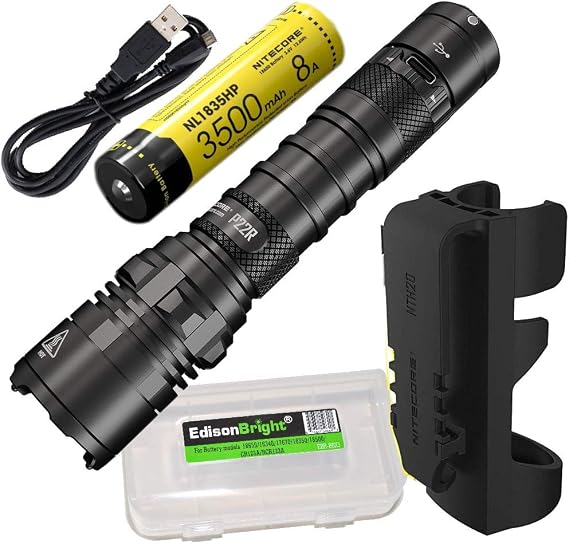
Prices across these 3 run from $109.95 to $139.95; each one has a full review here.
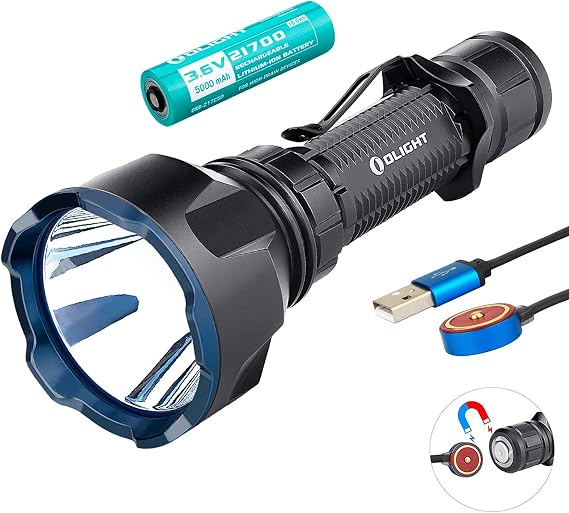
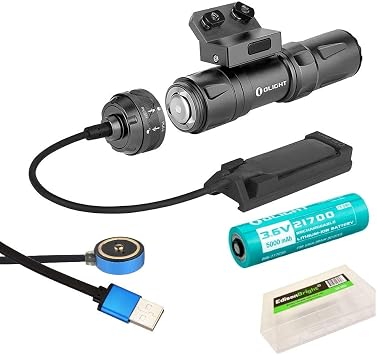
OLIGHT Odin Mini
$139.95 price checked August 2026
To understand the core mechanics, you can learn how flashlight batteries function.
What are Lithium Primary Batteries?
Lithium primary batteries are non-rechargeable cells that offer a high energy density and a stable voltage curve throughout their discharge cycle. Unlike alkaline cells, these batteries maintain a consistent power output until they are nearly exhausted.
Who should use lithium primary batteries?
You should prioritize lithium primary batteries for professional use, cold-weather applications, or emergency kits where reliability is paramount. They perform significantly better in freezing temperatures than alkaline options and provide a much longer shelf life, often lasting years in storage without losing significant capacity.
What do lithium primary batteries give up?
The main trade-off for lithium primary batteries is that they cannot be recharged. Once the energy is depleted, the cell must be replaced. They sit in a mid-to-high price band, costing more than alkalines but less than the initial investment required for rechargeable systems.
What are Lithium-ion Rechargeable Batteries?
Lithium-ion (Li-ion) rechargeable batteries are high-capacity cells designed to be cycled hundreds of times, providing high power output and rapid discharge capabilities. These are the standard power source for modern, high-lumen LED flashlights.
For a clearer breakdown of technical jargon, see common flashlight battery specs explained.
Who should use lithium-ion batteries?
You need lithium-ion batteries if you use your flashlight frequently or require high-lumen output for professional work. They are the best choice for users who want to avoid the recurring cost of disposable batteries and require a high power-to-weight ratio.
What do lithium-ion batteries give up?
Lithium-ion batteries require a dedicated charging system and a higher upfront cost. They also have a finite cycle life, meaning they will eventually lose their ability to hold a full charge after several hundred uses. They sit at the highest price point for the initial purchase but offer the lowest cost per use over time.
What are NiMH Rechargeable Batteries?
Nickel-metal hydride (NiMH) rechargeable batteries are a robust alternative to lithium-ion, offering a balance between rechargeability and durability. They are often used in standard AA or AAA sizes to power medium-duty flashlights.
Who should use NiMH batteries?
You should consider NiMH batteries if you want a rechargeable option that is compatible with standard chargers and has a proven track record of durability. They are often preferred for devices that require a steady, consistent power flow rather than a massive burst of energy.
What do NiMH batteries give up?
NiMH batteries have a lower energy density than lithium-ion, meaning they provide less runtime for the same physical size. They also have a tendency to lose their charge over time if left unused, a phenomenon known as self-discharge. They sit in a low-to-mid price band, often being the most affordable rechargeable option.
How do you choose the right flashlight battery?
To choose the correct flashlight battery, you must identify your primary usage environment and the frequency of your use. Each battery type serves a specific operational requirement.
How often will you use the light?
If you only need the light once or twice a year, lithium primary or alkaline batteries are the most practical choices because they do not require maintenance or charging. If you use the light weekly or daily, a rechargeable system like lithium-ion or NiMH is necessary to make the cost of the power source sustainable.
Will you use the light in extreme cold?
If your work involves sub-zero temperatures, you must avoid alkaline batteries, as their internal chemistry slows down and loses power in the cold. In these conditions, lithium primary or lithium-ion batteries are the only options that will maintain consistent performance.
How much brightness do you need?
For high-lumen output that can illuminate a large area, lithium-ion batteries provide the necessary current. If you only need to see a path or a small object, the lower power output of alkaline or NiMH batteries is sufficient and easier to manage.
Flashlight Battery Comparison
| Battery Type | Best-Fit Buyer | Main Advantage | Main Compromise |
|---|---|---|---|
| Alkaline | Occasional/Household use | Low cost and availability | Voltage sag and short shelf life |
| Lithium Primary | Emergency/Cold weather | Stable voltage and long storage | Non-rechargeable |
| Lithium-ion | Frequent/Professional use | High power and rechargeability | High upfront cost and cycle limits |
| NiMH | Budget rechargeable use | Durability and low cost | Lower energy density and self-discharge |
Browse our other Flashlight Battery pages
- The Rechargeable Flashlight Batteries That Work Best for Outdoor Use
- Which Flashlight Batteries Are Best for High Lumen Output?
- Best Rechargeable Flashlight Batteries for Duty Use
- Affordable Flashlight Batteries Under $200 Compared
- Which Rechargeable Flashlight Batteries Are Best for Night Vision?
- Best Replacement Flashlight Batteries for Heavy Duty Use