Flashlight batteries are portable power sources designed to provide a steady flow of electricity to a light source. They convert stored chemical energy into electrical energy to power the LED or bulb inside a flashlight, allowing for illumination in environments without access to a wall outlet.
These power cells exist to solve the problem of portable, reliable lighting. Without a dedicated battery, a flashlight cannot function in remote locations, during power outages, or in emergency situations. The design of a flashlight battery focuses on balancing how much energy it can hold with how much power it can release at once to keep a light bright and steady.
How do flashlight batteries work?
Flashlight batteries work through a chemical reaction that moves electrons from one point to another to create a current.
- The chemical reaction begins when a circuit is completed by turning on the flashlight switch.
- An internal chemical reaction occurs between an anode (the negative side) and a cathode (the positive side).
- This reaction releases electrons, which flow through the flashlight’s internal wiring and the light source.
- As electrons move, they create the electrical current required to power the LED or bulb.
- The process continues until the chemical reactants are depleted, at which point the battery is “dead” and requires recharging or replacement.
Flashlight Batteries we have reviewed in detail
Prices across these 3 run from $119.95 to $139.95; each one has a full review here.

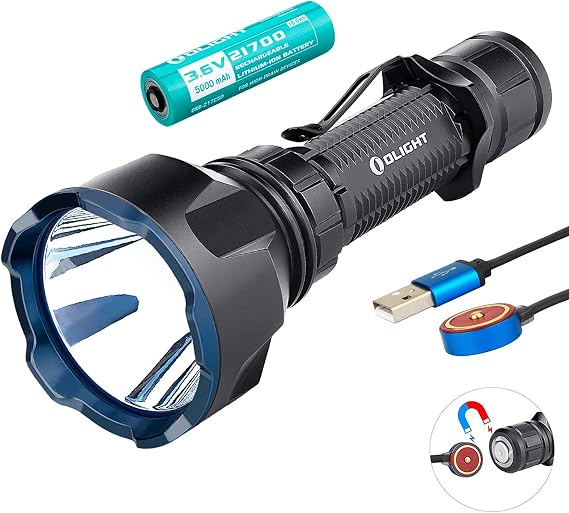
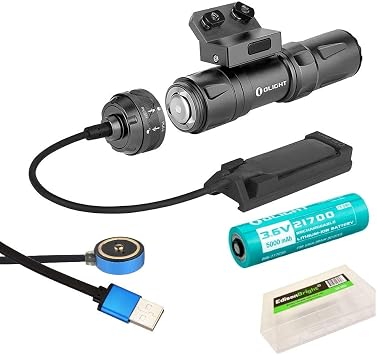
OLIGHT Odin Mini
$139.95 price checked August 2026
Read our full Odin Mini review
Understanding technical jargon is easier when you study flashlight battery terms and specs in simple language.
Flashlight battery parts and terminology
Understanding flashlight battery terminology helps you identify which power source provides the specific performance your flashlight requires.
Battery Chemistry Types
Chemistry refers to the internal chemical makeup of the battery, which determines its lifespan and power output. Lithium-ion (Li-ion) is a common chemistry that offers high energy density, while Nickel-Metal Hydride (NiMH) is a standard rechargeable option. Alkaline batteries use a different chemical process that is generally non-rechargeable and offers lower energy density but is widely available.
Capacity and mAh
Capacity is the total amount of energy a battery can hold, measured in milliamp-hours (mAh). A higher mAh rating means the battery can provide power for a longer duration before needing a recharge. If you need a flashlight to run for several hours on a single charge, you need a higher mAh rating.
Discharge Rate and Amps
Discharge rate refers to how much current the battery can provide at any given moment, measured in Amps (A). High-lumen flashlights require a high discharge rate to maintain brightness. If a battery has a low discharge rate, the flashlight may dim or flicker when turned to its highest setting.
Voltage Ratings
Voltage is the electrical pressure of the battery, measured in Volts (V). Most standard flashlight batteries operate at 1.5V, 3.7V, or 12V. You must match the voltage of the battery to the specific requirements of your flashlight, as using the wrong voltage can damage the electronics or fail to light the bulb.
How flashlight batteries change performance in practice
The choice of flashlight battery changes the usable runtime and brightness of your light in specific real-world scenarios.
Runtime vs. Brightness
High-capacity batteries extend the time your light stays on during long treks or extended power outages. However, if the battery cannot provide a high enough discharge rate, the flashlight will not reach its maximum brightness. You see the difference most when using “Turbo” modes, where a high-discharge battery keeps the beam steady while a standard battery may cause the light to drop in intensity.
Rechargeable vs. Disposable
Rechargeable batteries change the frequency of maintenance. Using rechargeable cells means you can keep a set of batteries ready to go at all times, whereas disposable batteries require you to keep a stock of spares. This difference is most noticeable in emergency kits where you want to ensure the light works immediately without searching for a fresh pack.
Weight and Portability
Battery weight affects how a flashlight feels in your hand. Lithium-based batteries offer a high power-to-weight ratio, making them ideal for headlamps or handheld lights that need to be light. Heavier chemistries might provide more power but can make a flashlight feel bulky during long periods of use.
Who needs flashlight batteries?
Flashlight batteries are necessary for anyone requiring portable lighting in environments without steady power.
Outdoor and Tactical Needs
People who work in construction, camping, or search and rescue need high-discharge batteries to power bright lights that can cut through darkness or illuminate large work areas.
Home and Emergency Use
Homeowners and those preparing for emergencies need reliable, long-lasting batteries that can provide steady light during a multi-day power failure.
Who does not need specialized batteries?
Users who only need a light for a few seconds, such as a small keychain light or a decorative lantern, do not need high-performance batteries and can rely on standard, low-cost options.
The other Flashlight Battery guides we have published
- Which Rechargeable Flashlight Batteries Are Best for Night Vision?
- Best Replacement Flashlight Batteries for Heavy Duty Use
- Long Throw Rechargeable Flashlight Batteries Compared
- Choosing the Best Flashlight Batteries for Compact Tactical Lights
- The Rechargeable Flashlight Batteries That Work Best for Outdoor Use
- Which Flashlight Batteries Are Best for High Lumen Output?