Weight for Gun Safes: How Much You Actually Need
Weight for gun safes should range from 33 lbs for small personal lockers to over 500 lbs for heavy-duty floor-mounted units. You need to determine your specific requirement based on whether the unit will be wall-mounted, floor-anchored, or moved frequently, as the median weight of 33 lbs in the current market often reflects portable rather than permanent storage.
Recommended Weight Values for Gun Safes
| Use Case | Recommended Weight | Why this number |
|---|---|---|
| Portable/Concealed Storage | Under 50 lbs | Allows for manual transport by one person without mechanical aids. |
| Standard Home Storage | 100 to 200 lbs | Provides a stable footprint for a 2-3 cubic foot interior capacity. |
| Wall-Mounted Security | 150 to 300 lbs | Ensures the unit is heavy enough to resist tipping during door opening. |
| Heavy-Duty Floor Anchoring | 200 to 500 lbs | Required to secure a heavy unit to the floor for maximum resistance. |
Gun Safes covered by our own reviews
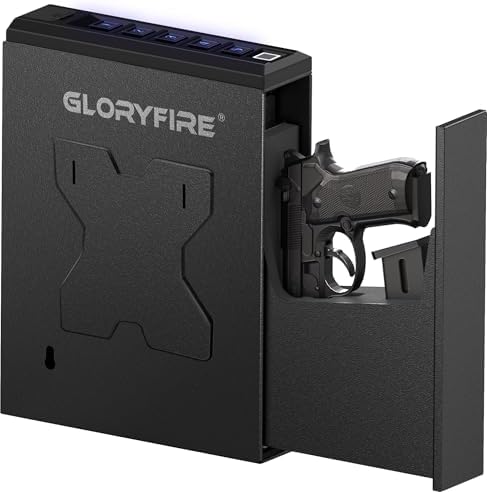
Each of the 3 shown here has its own full review on this site; they run from $129.99 to $499.99.
We provide a detailed look at our full Sentry QAP2BEL review for those seeking biometric security.


What happens if you go under or over on weight?
Underweight gun safes often lack the mass required to remain stable during use. If a safe weighs less than 100 lbs but holds a significant volume of items, the center of gravity can shift forward when the door is opened. This creates a tipping hazard where the entire unit may fall forward, potentially causing injury or damage to the contents. Many smaller units in the 33 lb median range are designed for mobility, not for high-volume storage where the weight of the contents significantly alters the balance of the shell.
High mass gun safes require reinforced flooring and professional moving equipment
Overbuying weight introduces a different set of practical constraints. A gun safe exceeding 400 lbs becomes a permanent fixture that is difficult to reposition once installed. If you choose a heavy unit but find the placement is inconvenient for your home layout, moving it may require professional movers or specialized equipment. High-mass units also require reinforced flooring; a heavy safe on a wooden subfloor might cause structural sagging or cracking over time if the weight is not distributed across a sufficient footprint.
You can see our data-driven analysis in our full LANGGER V ZRS01YM review.
What is the mistake most buyers make with weight?
Buyers often mistake the weight of the empty shell for the total weight of the storage solution. You must account for the weight of the firearms, ammunition, and accessories you intend to store inside. If you select a 40 lb safe to hold 20 lbs of equipment, the total weight becomes 60 lbs, which may exceed your ability to move the unit. Always calculate your “loaded weight” before deciding on the shell’s mass.
Balancing gun safe weight and volume for storage and portability
Instead of focusing solely on the weight of the steel, you should optimize for the weight-to-volume ratio. A heavy safe that is too small provides security but limits your storage capacity. Conversely, a large, light safe may offer plenty of space but lacks the physical mass to resist being moved by an intruder. You should prioritize a unit that meets your specific anchoring needs—whether that is a light enough unit to carry to a closet or a heavy enough unit to bolt to a concrete slab.
Take a look at our full KAER Digital Gun Safe breakdown to see its 180-degree access.
How does weight interact with other deciding specs?
Weight interacts with interior volume as the primary trade-off in the gun safe category. Because steel has a constant density, a significant increase in weight usually indicates a larger exterior footprint or thicker walls. If you need to store 10 rifles, the weight of the safe is less important than the internal dimensions. A high weight figure is wasted if the internal configuration does not accommodate the length of the long guns.
How wall stud load ratings limit the weight of mounted safes
Weight also interacts with the mounting method. For wall-mounted units, the weight of the safe determines the required load rating of your wall studs. A 250 lb safe requires a much more robust mounting system than a 100 lb unit. If you are mounting to a standard interior wall, you may be forced to choose a lower-weight unit regardless of your preference for heavy steel. In these cases, the mounting surface becomes the real limit on how much weight you can practically utilize.
Our technical analysis covers the our full KAER 1320W Safe review for smaller collections.
Prioritizing material thickness and locking hardware over total safe weight
Finally, weight is a secondary factor to the locking mechanism and material thickness when considering forced entry. While a heavy safe is harder to move, a lighter safe with high-quality 12-gauge steel and a heavy-duty boltwork can still provide significant resistance. You should evaluate the weight in the context of your specific threat model: if your goal is to prevent a thief from carrying the safe away, weight is a primary spec; if your goal is to prevent a thief from breaching the door, the material standards and locking hardware are the more relevant data points.
The other firearm locker guides we have published
- Choosing the Best Gun Safe with Interior Light
- The Portable Gun Safes That Work Best with a Security Cable
- Which Gun Safe with Digital Keypad Lock Is Best?
- The Gun Safes That Work for Budget Rifle and Shotgun Storage in the Garage
- Securing a Shotgun in the Bedroom With a Gun Safe
- Which Gun Safe Best Protects Your Firearms From Theft in Your Home?
Tactical Enclave is reader-supported: some links on this page are affiliate links, and as an Amazon Associate Tactical Enclave earns from qualifying purchases at no extra cost to you. Learn more.