Gun Safe Explained: What It Is and How It Works
A gun safe is a reinforced security container that secures firearms and related equipment using a locking mechanism to prevent unauthorized access. You need a dedicated storage solution when you possess more than two firearms or when you require a barrier between your equipment and a household’s daily activities. You should first measure the total number of long guns and handguns you own to determine the internal volume required for organized storage.
How gun safes prevent theft and accidental firearm discharge
The primary problem a gun safe solves is the risk of theft and the danger of accidental discharge. Unlike a standard cabinet or a drawer, a gun safe provides a physical barrier that complicates a thief’s ability to quickly grab a weapon. It also creates a controlled environment where children or untrained individuals cannot reach firearms. For many owners, the goal is to balance high-security features with the need for quick, reliable access during an emergency. A common mistake is selecting a safe based solely on external dimensions without verifying if the interior configuration allows for the specific length of the longest rifle owned.
How a Gun Safe Works Mechanically
The operation of a gun safe relies on a sequence of mechanical and electronic interactions that transition a door from an unlocked state to a secured state. The process follows a specific progression of events:
- The user interacts with the primary interface, such as a keypad, a dial, or a biometric scanner, to provide the correct authorization code or biological signature.
- The locking mechanism translates this input into a physical movement, usually by retracting a series of heavy steel bolts.
- The locking bolts move into the frame of the safe, creating a multi-point connection between the door and the main body of the unit.
- The door remains secured until the authorization sequence is repeated in reverse, pulling the bolts back into the door housing.
Gun Safes we have reviewed in detail
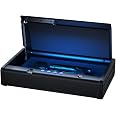
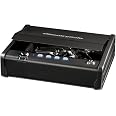
Prices across these 3 run from $119.99 to $129; each one has a full review here.

Parts and Standards That Matter to a Buyer
The performance of a gun safe depends on several specific components and engineering standards that dictate how well the unit protects its contents. Each of these features changes the result of the purchase by affecting either the speed of access or the difficulty of a forced entry.
How locking bolt depth prevents forced entry into a safe
The locking bolts provide the physical barrier against forced entry by extending into the safe’s frame. The number of bolts and their thickness determine how much force a person would need to apply to move the door. If a safe lacks sufficient bolt depth, it remains vulnerable to simple prying techniques.
You can find the technical details in our full LANGGER V ZRS01YM review.
How interior shelving organizes different types of firearms
Interior shelving determines the organization and storage capacity for different firearm types. Shelving allows you to separate handguns from rifles, preventing the weight of long guns from crushing smaller items. You should choose a configuration that matches your specific inventory, such as adjustable racks for rifles or dedicated bins for ammunition.
Why heavy duty hinges prevent door sagging and bolt misalignment
Door hinges affect the durability and ease of opening the safe. Heavy-duty hinges ensure that the door remains aligned over years of use and prevents the weight of the steel from causing the door to sag. Sagging hinges can cause the locking bolts to misalign, which may prevent the safe from opening even with the correct code.
What UL ratings signify for fire and forced entry resistance
The UL Rating (e.g., UL 768 or UL 1032) defines the standardized level of fire and forced entry resistance. This rating indicates that the safe has been tested to withstand specific temperatures for set durations or resisted specific tools for a set amount of time. Many consumer-grade units lack these ratings, which means their resistance to fire or tools is not verified by an independent third party.
Comparing biometric and mechanical interfaces for firearm access speed
The choice between Biometric vs. Mechanical vs. Electronic interfaces determines the primary user interface and access speed for the owner. Biometric systems use a fingerprint scanner to grant access in seconds, while mechanical dials require a sequence of turns that takes longer but does not require a power source. Electronic keypads offer a middle ground, providing a numerical code that is faster than a dial but slower than a fingerprint.
What Having a Gun Safe Changes in Practice
Owning a gun safe changes the way you manage the risk of your firearms in daily life. In a home with children, a gun safe ensures that a weapon is never left in a visible or reachable location. It moves the firearm from a “hidden” location, which can still be found by a determined person, to a “secured” location that requires specific knowledge or physical traits to open.
Discover the technical specifications in our full SentrySafe QAP1BE review.
How a gun safe provides security without affecting firearm maintenance
The difference shows up most clearly during a home inspection or when a guest is in the house. A safe allows you to keep your equipment out of sight while maintaining immediate access. However, the difference does not show up in terms of the physical condition of the firearms. A gun safe protects against theft and unauthorized use, but it does not change the maintenance requirements or the functionality of the weapons stored inside.
Choosing between biometric scanners and electronic keypads for speed
When two requirements conflict, such as needing high security but also needing to reach the safe quickly, the choice of locking mechanism is the deciding factor. A biometric scanner provides the fastest access, but it requires a clear path for the scanner to read a print. If you cannot guarantee a clear path, a high-quality electronic keypad remains the most reliable compromise for speed and security.
Frequently Asked Questions About Gun Safes
What happens if the batteries die while the door is locked?
If the batteries die while the door is locked, most electronic safes will remain in a locked state because the motor lacks the power to retract the bolts. Most manufacturers include an external battery pack or a physical override key to provide power or manual access in this situation. You should always ensure you have the override key stored in a secure, known location outside of the safe.
How does the build quality compare to the cheaper plastic boxes?
The build quality of a gun safe is significantly higher than plastic storage boxes because it utilizes heavy-gauge steel and reinforced hinges. Plastic boxes offer no resistance to forced entry and provide zero protection against fire. A steel gun safe is designed to withstand physical impacts and environmental stress that would shatter or melt a plastic container.
Is this a good deal compared to the bigger safes that hold more?
Whether a smaller gun safe is a good deal depends on your specific inventory count and your available floor space. If you only own three handguns, a large cabinet that holds twenty rifles is an unnecessary expense and a waste of space. You should calculate the total volume of your current gear to see if a smaller unit meets your needs for the next five years.
View the data-driven details in our full SentrySafe QAP2E review.
Is the steel thick enough to stop someone from just prying it open?
The steel thickness determines the resistance to prying and is a primary factor in the safe’s security rating. Most entry-level safes use thinner steel that may be vulnerable to heavy-duty pry bars or torches. To resist prying, you should look for a unit with a thick door and a heavy frame, often indicated by its weight and the presence of a UL rating.
Who Needs a Gun Safe and Who Does Not
You need a gun safe if you own multiple firearms, if you live in a household with children or other unauthorized users, or if you live in an area with a high risk of theft. It is a requirement for anyone who wants to ensure their equipment is not easily accessible to others. If you only own one firearm that you keep on your person or in a vehicle, the need for a stationary gun safe is lower.
When a gun safe is necessary for responsible firearm ownership
You do not need a gun safe if you do not own firearms or if you have a storage solution that meets your specific security needs. If your situation involves only a single tool that is never left unattended and never stored in a residential area, a dedicated safe may not be necessary. However, for the majority of responsible owners, the practical benefits of a secure locker outweigh the cost of the unit.
Before ordering a unit, confirm the current rules for your own location as regulations regarding storage and types of safes can vary by state and city. You should check your local laws to ensure your chosen storage method meets all legal requirements for your specific area.
The other firearm locker guides we have published
- Best Gun Safes for Home and Car Use
- Large Gun Cabinets for Multiple Firearms Compared
- Choosing the Best Gun Safe with Interior Light
- The Portable Gun Safes That Work Best with a Security Cable
- Which Gun Safe with Digital Keypad Lock Is Best?
- The Gun Safes That Work for Budget Rifle and Shotgun Storage in the Garage
Tactical Enclave is reader-supported: some links on this page are affiliate links, and as an Amazon Associate Tactical Enclave earns from qualifying purchases at no extra cost to you. Learn more.