Electrical Hazard (EH) ratings on heavy duty boots indicate the level of protection against electrical shock from ground sources. The correct rating depends entirely on the specific voltage and arc flash risks present in your particular work environment.
Which Electrical Hazard Rating Suits Your Work?
| If this is you | The Electrical Hazard Rating that suits you | Why |
|---|---|---|
| You work in a general warehouse or construction site with no high-voltage equipment. | Non-rated or standard EH | Basic insulation is sufficient for low-voltage risks common in general labor. |
| You work near residential power lines or standard 120V/240V circuits. | Standard EH | Standard EH ratings are designed to protect against shocks from these common ground sources. |
| You work in industrial plants with heavy machinery and high-voltage distribution. | High-Voltage EH | Higher voltage environments require specialized dielectric properties that standard boots may not provide. |
| You work in specialized utility roles involving high-voltage transmission. | Specialized Dielectric / Arc Flash Rated | These roles require specific certifications that go beyond standard EH ratings to handle extreme energy levels. |
Heavy Duty Boots covered by our own reviews
These 3 have their own full review on this site, and run from $169.95 to $264.95.

Irish Setter Ashby Men’s Soft Toe Work Boot
$169.95 price checked August 2026
Read our full Irish Setter Ashby review
If you need more specific options, view our top picks for industrial safety to find the most durable pair.

Carhartt 6 Moc Toe Waterproof Work Boots
$179.99 price checked August 2026
Read our full Carhartt 6 Moc Toe review
You should also compare the best heavy duty boots for outdoor work to see which models handle rough terrain best.
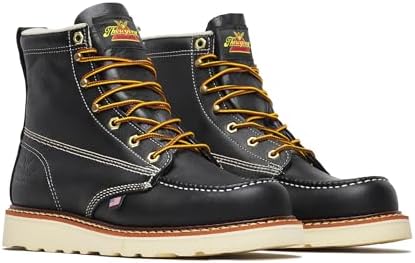
How to Measure and Establish Your Required Electrical Hazard Rating
To establish your required Electrical Hazard Rating, you must identify the maximum voltage potential of the equipment you interact with daily. Most industrial environments operate on specific voltage tiers, and your footwear must be rated to withstand the specific dielectric requirements of those tiers.
Understanding your requirements is easier when you learn about various toe protection ratings before making a purchase.
Identify the Voltage of Your Work Zone
Determine the voltage of the power sources in your immediate work area. This is usually found on the nameplate of the machinery or the electrical panel. For example, standard US residential power is 120V or 240V, while industrial settings may involve 480V or higher.
Check the Manufacturer’s Rating Labels
Verify the rating on the boot itself by looking for the EH mark or the specific ASTM F2413 standard on the tongue or interior tag. Manufacturers list these values clearly to indicate whether the boot has passed the required dielectric tests for specific voltage thresholds.
Consult Your Site Safety Officer
The most accurate way to establish your value is to ask your site safety officer for the specific protection requirements of your job site. They will have the official safety protocols and can tell you exactly which rating is required to comply with your company’s safety standards and local regulations.
What Goes Wrong with an Incorrect Electrical Hazard Rating?
Choosing an Electrical Hazard Rating that is too low for your environment creates a risk of electrical shock or arc flash. If the boot’s dielectric strength is lower than the voltage of the source, the material can fail, allowing electricity to pass through the sole to the ground.
Risks of Under-Rated Footwear
Under-rated footwear fails when the voltage of the environment exceeds the boot’s tested capacity. This can result in a “ground fault” where the electricity travels through the boot to the floor, potentially causing severe burns or cardiac issues. This mistake shows up as a failure of the boot’s insulating properties under specific electrical loads.
It is also important to understand the different shaft height options to ensure the boots provide the correct level of leg coverage.
Issues with Over-Specifying Protection
While choosing a rating higher than necessary does not typically pose a safety risk, it can lead to unnecessary costs and reduced comfort. High-voltage rated boots often use heavier, stiffer materials to achieve their dielectric properties, which may limit mobility or increase heat buildup during long shifts.
What Should You Do if You Fall Between Two Electrical Hazard Ratings?
If your work environment involves voltages that sit on the borderline between two different safety ratings, you should always choose the higher rating. Safety standards are designed as minimum requirements, and exceeding those requirements provides a necessary margin of safety.
Prioritize the Higher Rating
When a specific voltage is not clearly defined or falls into a gray area, the higher rating ensures that the boot meets the dielectric requirements of the higher threshold. It is safer to have a boot capable of handling more voltage than necessary than to have a boot that might fail at a peak power surge.
Verify Compliance with Local Standards
Check the specific local regulations for your industry, as some regions may mandate a specific rating regardless of the average voltage. If you are between two values, the legal requirement for your specific trade will dictate which rating you must select to remain compliant with safety laws.
More Heavy Duty Boot explainers and comparisons
- Choosing the Best Heavy Duty Boots for Soft Toe Work
- The Heavy Duty Boots That Work Best for Steel Toe Safety
- Heavy Duty Work Boots for Construction Compared
- Choosing the Best Waterproof Work Boots for Wet Weather
- The Heavy Duty Boots That Work Best for Industrial Safety
- Which Heavy Duty Boots Are Best for Tactical Use Under $150?