You need a Cut Resistance Level (CRL) of ANSI/ISEA 105 A1 to A9 depending on the specific sharpness and frequency of the hazards in your workspace. Choosing the correct level ensures your hands are protected against blade penetration while maintaining the dexterity required for your specific tasks.
Recommended Cut Resistance Levels by Use Case
| Use Case | Recommended Cut Resistance Level | Why this number |
|---|---|---|
| General Warehousing and Packing | ANSI/ISEA 105 A1 – A2 | Protects against minor abrasions and dull blades used in routine box opening. |
| Glass Handling and Sorting | ANSI/ISEA 105 A3 – A4 | Provides a buffer against sharp edges and shards during repetitive movement. |
| Metal Fabrication and Sheet Metal | ANSI/ISEA 105 A5 – A6 | Defends against jagged edges and high-frequency contact with industrial metal. |
| Meat Processing and Butchery | ANSI/ISEA 105 A7 – A8 | Required for high-speed knife work and heavy-duty carcass processing. |
| Industrial Blade Work or Heavy Metal | ANSI/ISEA 105 A9 | The highest standard for extreme risk environments involving heavy industrial cutters. |
Where these choices show up in our reviews
3 reviewed options, $124.99 to $247.80, with the full write-up behind each name.
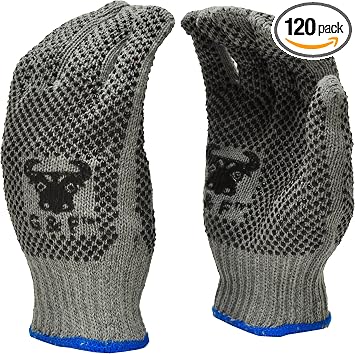
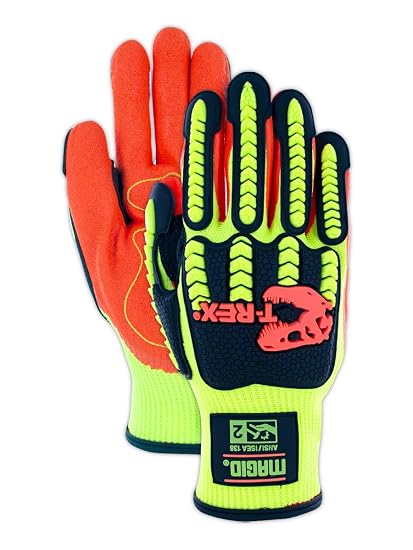
Magid Multipurpose Impact Glove
For high-voltage tasks, you can compare the best magid glove and safety electrical gloves to see which model offers the highest protection.
$160.28 price checked August 2026
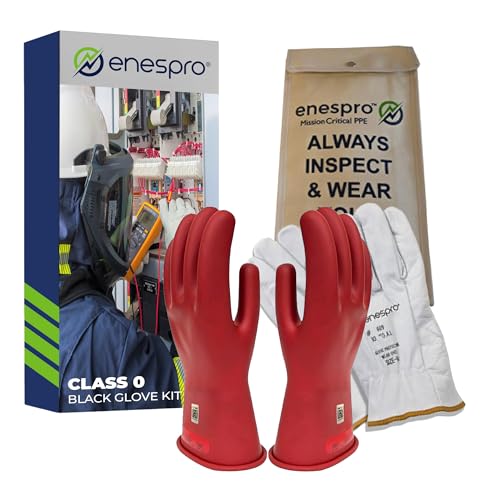
Enespro Class 0 Insulated Electrical Gloves
$247.80 price checked August 2026
Read our full Enespro Class 0 Gloves review
Mechanics require specialized dexterity, so view our selection of the best magid glove and safety work gloves for mechanics for heavy-duty use.
What Happens if You Go Under or Overbuy on Cut Resistance?
Under-provisioning on cut resistance means the material lacks the required density or fiber strength to stop a blade from penetrating the glove and reaching your skin.
The Risk of Under-Provisioning
If the ANSI/ISEA 105 rating is too low for your specific hazard, a blade can cause a cut-through failure. This occurs when the blade’s sharpness and force exceed the material’s resistance, leading to immediate injury. In high-risk environments like metal fabrication, even a small gap between your needs and the glove’s rating can result in a severe laceration.
Over-buying on cut resistance introduces a different set of practical limitations that can hinder your productivity and comfort.
The Cost of Over-Buying
High cut resistance often requires thicker coatings or denser knit structures, which can lead to a significant loss of dexterity. If you choose an A9 level for a task that only requires an A2, you may find it difficult to perform precision movements, such as gripping small tools or handling delicate components. Additionally, thicker gloves can reduce tactile feedback, making it harder to “feel” the material you are working with.
The Common Mistake with Cut Resistance Level
The most common mistake buyers make is assuming that a higher ANSI/ISEA 105 rating automatically makes a glove better for every task.
If you are handling hazardous liquids, understand the chemical permeation rate for work gloves to ensure your skin stays protected.
The Dexterity Trade-Off
A glove is only effective if you can actually use it. High-level cut resistance often comes at the cost of “hand-feel.” If you choose a glove that is too heavy for your task, you may find yourself taking the gloves off to perform detail work, which leaves your hands unprotected. You should optimize for the highest level of protection that still allows for the required level of hand mobility.
What to Optimize Instead
Instead of just looking for the highest number, you should optimize for the “fit-to-task” ratio. This means identifying the specific type of blade or sharp edge you encounter most frequently and selecting the lowest ANSI/ISEA 105 rating that safely covers that specific hazard. This ensures you maintain the best possible grip and tactile sensitivity while remaining safe.
How Cut Resistance Level Interacts with Other Deciding Specs
Cut resistance does not exist in a vacuum; it interacts with material choice and grip technology to determine the glove’s overall utility.
Material Interaction
The material used to achieve the cut resistance—such as high-performance fibers like Kevlar or Dyneema—impacts the glove’s weight and breathability. While these fibers provide excellent protection, they may react differently to heat or chemicals than standard knit materials. You must ensure the material matches your environment as well as the cut rating.
Grip and Surface Limitations
A high cut resistance rating is wasted if the glove lacks the necessary grip for the surface you are handling. For example, a glove with high protection against sharp metal may still be slippery when handling oily parts. You should look for a balance where the coating provides enough friction to hold the object securely without compromising the integrity of the cut-resistant layer.
Sizing and Fit Considerations
Because cut-resistant materials can be stiff, the fit of the glove is a critical deciding factor. If a glove is too large, the material will bunch up, creating “soft spots” where a blade could more easily penetrate. If it is too small, it may restrict circulation or cause the glove to tear under tension. You should measure your hand dimensions and refer to the manufacturer’s specific size guide for that model to ensure the protection remains consistent across the entire hand.
Every Magid Glove guide in this category
- Best Magid Glove and Safety Windstorm Series Gloves
- Magid Glove and Safety Electrical Gloves Compared
- Choosing the Best Magid Glove and Safety Work Gloves for Mechanics
- The Magid Glove and Safety Gloves That Work Best for Construction
- Which Magid Glove and Safety Gloves are Best for Yard Work?
- Best Magid Glove and Safety Gloves for Warehouse Work