The Chemical Permeation Rate you need depends on the specific hazard, typically ranging from 0.1 mg/s for light oils to over 100 mg/s for heavy industrial solvents. You must match the glove’s rated mg/s value to the concentration and contact time of the chemicals you handle.
Recommended Chemical Permeation Rate Values by Use Case
| Use Case | Recommended Chemical Permeation Rate | Why this number |
|---|---|---|
| Light Lubricants and Greases | 10 mg/s to 50 mg/s | Lower concentrations of hydrocarbons require less barrier integrity but still need a defined limit. |
| Degreasers and Industrial Solvents | 50 mg/s to 200 mg/s | Higher concentrations of solvents require a denser material structure to delay chemical breakthrough. |
| Acidic and Alkaline Solutions | 100 mg/s to 500 mg/s | Corrosive agents require high-density barriers to prevent rapid chemical migration to the skin. |
| Heavy Industrial Chemicals | Over 500 mg/s | Extreme hazards require specialized materials with very low migration rates to ensure prolonged protection. |
Where these choices show up in our reviews
Prices across these 3 run from $144.95 to $220; each one has a full review here.

TPR Impact Reducing Mechanic Safety Work Gloves
$220 price checked August 2026
Read our full Impact Reducing Gloves review
For high-voltage tasks, you can compare the best magid glove and safety electrical gloves to find the right protection.
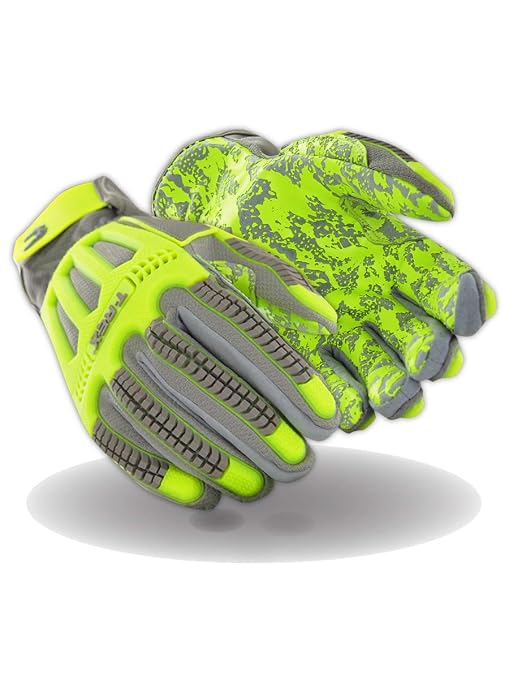
Magid TRX746 Windstorm Series Impact Gloves
Understanding your specific needs is easier when you determine the correct voltage rating for work gloves.
$144.95 price checked August 2026
What Happens if You Go Under or Overbuy Chemical Permeation?
Risks of Under-Provisioning
Under-provisioning occurs when the mg/s rating of a glove is lower than the permeation rate of the chemical it is intended to block. In this scenario, the chemical moves through the glove material and reaches the skin rapidly. This can result in chemical burns, dermatitis, or systemic toxicity depending on the substance. If the material is not rated for the specific chemical, the glove may also suffer from chemical degradation, where the material breaks down and loses its physical integrity, leading to a mechanical failure such as a tear or hole.
The Cost of Over-Buying
Over-buying happens when you select a glove with a Chemical Permeation Rate significantly higher than what your specific task requires. While this provides a safety margin, it often leads to a decrease in manual dexterity. High-protection gloves often require thicker materials or specialized coatings that make it harder to grip small parts or perform precision tasks. This can increase the time someone spends on a task and may lead to fatigue. Furthermore, specialized high-permeation-resistance gloves are often more expensive, meaning you pay a premium for protection that your specific work environment does not demand.
You should also verify the cut resistance level for work gloves based on your specific job hazards.
The Mistake Most Buyers Make with Chemical Permeation Rate
Focusing on the Wrong Metric
The most common mistake is assuming that a high Chemical Permeation Rate is a universal indicator of safety. A glove might have an excellent rating for preventing liquid soak-through but offer zero protection against a different chemical class, such as moving from an oil-resistant material to an acid-resistant one. A material that blocks one chemical may be dissolved by another within seconds.
What to Optimize Instead
You should optimize for chemical compatibility first, then look at the mg/s rating. Verify that the glove material is specifically tested against the chemical name on the Safety Data Sheet (SDS). Once compatibility is confirmed, select the lowest mg/s rating that safely covers your expected contact time. This ensures you maintain the best possible dexterity and comfort while meeting your safety requirements.
How Chemical Permeation Rate Interacts with Other Deciding Specs
Permeation vs. Dexterity
Chemical Permeation Rate interacts directly with the thickness and material type of the glove. As the required mg/s rating increases, the material often becomes thicker or requires a heavier coating. This creates a trade-off where the glove becomes less suitable for precision work. If your job requires high dexterity, you may need to choose a glove that meets the minimum safety threshold rather than the maximum possible rating.
Breakthrough Time Limits
Chemical Permeation Rate is a measure of speed, but breakthrough time is a measure of duration. Even with a good mg/s rating, a glove has a limited lifespan during a single exposure. If the time someone spends in contact with the chemical exceeds the tested breakthrough time, the protection fails regardless of the initial rating. You must coordinate the mg/s rating with the actual duration of the task to ensure the barrier remains intact for the entire duration of the work.
Browse our other Magid Glove pages
- Which Magid Glove and Safety Impact Gloves are Best?
- Best Magid Glove and Safety Windstorm Series Gloves
- Magid Glove and Safety Electrical Gloves Compared
- Choosing the Best Magid Glove and Safety Work Gloves for Mechanics
- The Magid Glove and Safety Gloves That Work Best for Construction
- Which Magid Glove and Safety Gloves are Best for Yard Work?