Most users require a max load capacity between 20 lbs and 45 lbs for standard daily and tactical use. You should select a capacity that exceeds your heaviest expected load by at least 15% to ensure the integrity of the stitching and hardware.
Recommended Max Load Capacity by Use Case
| Use Case | Recommended Max Load Capacity | Why this number |
|---|---|---|
| Daily Commute / Urban | 20 – 30 lbs | Covers laptops, tablets, and personal items without overstressing the shoulder straps. |
| Hiking / Day Trips | 30 – 45 lbs | Provides a buffer for water, extra layers, and supplies while maintaining stability. |
| Tactical / Professional | 40 – 60 lbs | Accounts for heavy gear, communications equipment, and modular attachments. |
| Heavy Hauling / Expedition | 60+ lbs | Required for extreme loads where weight distribution is critical to prevent material shear. |
Reviewed examples from this category
From $120.42 to $149.99: the 3 in this category we have reviewed in full.
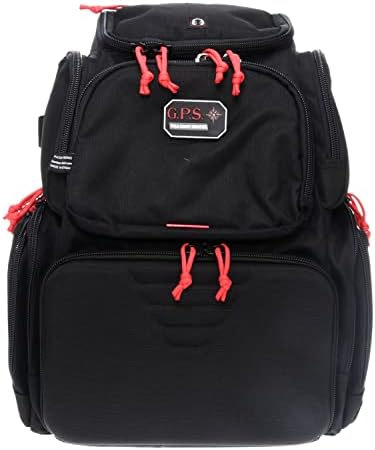

Vertx Ready Pack 2.0
$149.99 price checked August 2026
Read our full Ready Pack 2.0 review
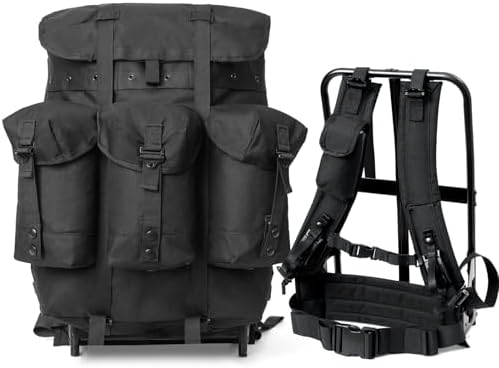
For those carrying extreme weight, explore the best MOLLE backpack for heavy gear.
What Happens if You Go Under or Overbuy on Load Capacity?
Under-provisioning occurs when the weight of your gear exceeds the rated max load capacity of the tactical backpack. This leads to material shear, where the low-denier nylon or polyester fibers begin to fray or tear under constant tension.
When a backpack is pushed beyond its limits, the primary failure points are the shoulder strap anchors and the base of the main compartment. You may notice the stitching pulling away from the fabric or the buckles beginning to warp. If the load exceeds the capacity, the backpack will lose its structural shape, causing the weight to shift toward the lower back and increase strain on the lumbar region.
Overbuying on load capacity is a common choice for users who want “future-proof” gear, but it carries a distinct cost in ergonomics and weight. A backpack designed for 60 lbs will often feature thicker padding and heavier-duty hardware than a 30 lb bag.
Determining your specific needs is easy when you learn how to choose your tactical backpack capacity.
The primary cost of overbuying is the added “dead weight” of the pack itself. If you only intend to carry 15 lbs of gear, a pack built to support 60 lbs will be unnecessarily bulky and heavy. This extra weight can cause the pack to feel cumbersome during long periods of wear, as the larger frame and heavier materials add to your total load before you even put a single item inside.
The Mistake Most Buyers Make with Max Load Capacity
Most buyers focus exclusively on the maximum weight a backpack can hold without considering the distribution of that weight. A high max load capacity is only useful if the internal organization and external mounting points can support the specific items you carry.
You should optimize for load distribution rather than just a raw weight number. A backpack might be rated for 50 lbs, but if it lacks a robust internal frame or a sternum strap, that weight will become uncomfortable very quickly. Weight that is not centered against the spine creates a “pull” effect that strains the shoulders.
Instead of looking for the highest number possible, look for a pack that matches your heaviest expected load while offering a suspension system suited for that weight. A 40 lb capacity pack with a high-quality hip belt is more functional for a heavy user than a 60 lb capacity pack with thin, flat shoulder straps.
How Max Load Capacity Interacts with Other Deciding Specs
Max load capacity interacts directly with the material denier, the hardware grade, and the suspension system of the tactical backpack. A high weight rating is wasted if the hardware cannot withstand the tension required to hold that weight.
The material used for the main body must have a high enough denier to resist tearing. If a backpack is rated for 50 lbs but uses thin, low-denier nylon, the fabric will stretch and sag, leading to load shift. Load shift occurs when the weight moves away from the center of gravity, causing the backpack to pull backward or sway, which leads to rapid fatigue.
Hardware standards like YKK zippers and heavy-duty buckles are essential for high-capacity packs. Under high tension, standard plastic buckles can snap or deform. You need hardware that maintains its shape and grip when under constant stress. Similarly, the MOLLE/PALS webbing must be reinforced; if the webbing is too thin, the weight of attached pouches will cause the straps to pull away from the bag’s body.
Finally, the suspension system is the ultimate limit on how much capacity you can actually carry. A backpack’s usable capacity is limited by the hip belt and shoulder strap design. If the hip belt does not transfer weight to the pelvis, the max load capacity becomes irrelevant for long-duration use, as the weight remains on the shoulders. Ensure the suspension system is rated to support the weight of your heaviest load to ensure the pack remains stable and comfortable.
Browse our other Tactical Backpack pages
- Choosing the Best Tactical Backpack for Hiking and Outdoor Survival Under $300
- The Tactical Backpacks That Work Best for Small Frames and Day Use
- Which Tactical Backpack Is Best for Carrying Multiple Handguns?
- Best Tactical Backpacks for Carrying a Laptop
- The Tactical Backpacks That Work Best for Hiking and Camping Under $300
- Which Military Style Backpack Is Best for Travel?