What is Tactical Backpack Capacity?
Capacity in a tactical backpack refers to the internal volume available for gear, measured in Litres (L). The correct volume depends on the specific duration of your mission, the amount of equipment you carry, and your physical ability to manage weight distribution.
Reviewed examples from this category
From $120.42 to $249: the 3 in this category we have reviewed in full.

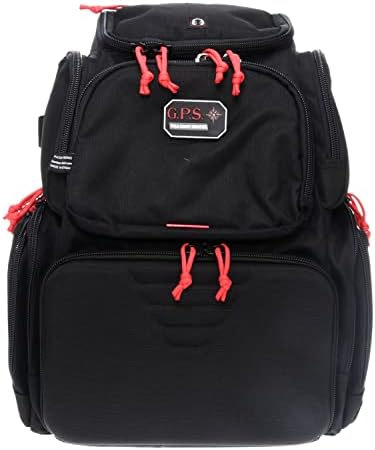
G.P.S. Wild About Shooting Handgunner Range Backpack
$120.42 price checked August 2026
Read our full Handgunner Range Backpack review
If you are hauling significant weight, compare the best MOLLE backpack for heavy gear to see which model holds up.

Which Tactical Backpack Capacity Suits You?
| If this is you | The Capacity that suits you | Why |
|---|---|---|
| You need a daily carry for a commute or short patrol. | 15L to 25L | This range fits standard everyday items like a laptop, hydration bladder, and personal electronics without excessive bulk. |
| You are heading out for a full day of activity or training. | 25L to 35L | This volume accommodates a full day of supplies, extra clothing layers, and a larger water supply for extended movement. |
| You are preparing for an overnight stay or multi-day trip. | 35L to 50L | The extra space allows for sleeping systems, multiple meals, and spare gear required for 24-to-48-hour periods. |
| You are planning a multi-day expedition or long-range trek. | 50L to 75L+ | Large capacities are necessary for heavy-duty gear, camping equipment, and sustained supplies for several days away from base. |
How do I determine my required Tactical Backpack Capacity?
To determine your required tactical backpack capacity, you must perform a physical inventory of the items you intend to carry. Start by gathering every piece of gear, including your primary loadout, spare parts, and personal items, and place them on a flat surface.
Calculating Volume via Item Dimensions
You can estimate the required L by measuring the dimensions of your largest items. For example, a standard hydration bladder or a large first-aid kit occupies a specific cubic volume. Sum the volume of these primary items and add 20% to the total to account for “dead space”—the air gaps between irregularly shaped items that cannot be compressed.
Locating Capacity Specs on the Product
When looking for the capacity of a specific pack, the number is usually printed on the manufacturer’s tag or listed in the technical specifications. Look for a value followed by the letter L (e.g., 30L). If the manufacturer only provides dimensions in centimetres or inches, you can calculate the volume by multiplying the height, width, and depth in centimetres and dividing by 1,000.
The Weight-to-Volume Correlation
While capacity is measured in L, weight is the practical limit. A 50L pack filled with heavy tools can become unmanageable. When establishing your value, consider the weight of your gear. If your gear weighs more than 15kg, you may need a larger capacity pack to ensure the weight is distributed across a larger surface area of the bag, rather than being compressed into a small, heavy lump.
What happens if the Tactical Backpack Capacity is too small?
If the tactical backpack capacity is too small for your requirements, the primary failure mode is gear displacement and “stuffing.” When you force too much gear into a small volume, items are pushed into the corners of the pack or compressed against the back panel.
You should also examine the proper dimensions for tactical backpacks to ensure the pack fits your physical frame.
Impact on Accessibility
Overstuffing a small pack makes it difficult to retrieve items quickly. You may find yourself having to remove three other items just to reach the one you need. In a tactical environment, this lack of accessibility can be a significant operational hurdle.
Impact on Load Distribution
When a pack is over-packed, the weight often shifts forward or pulls toward the bottom. This causes the load to pull away from your center of gravity, leading to increased strain on the shoulders and lower back. A pack that is too small for your gear will often fail to sit flush against your spine, causing the straps to dig in more aggressively.
What happens if the Tactical Backpack Capacity is too large?
If the tactical backpack capacity is too large for your needs, the primary issue is “load shift” and inefficient weight distribution. A large, empty bag creates internal voids where gear can move freely during movement.
The Problem of Internal Movement
When a pack is only partially full, the contents can bounce or shift with every step. This internal movement creates a “pendulum effect,” where the weight of your gear pulls the bag in different directions. This leads to rapid fatigue and can make the user feel unstable while traversing uneven terrain.
Physical Bulk and Mobility
A large capacity pack that is mostly empty takes up significant physical space. It can snag on doors, brush against other people in a group, or restrict your ability to move your arms freely. A 60L pack used to carry only 10L of gear will feel cumbersome and awkward, even if it is technically light.
What should I do if I fall between two Tactical Backpack Capacity values?
If you find that your gear requirements fall exactly between two common capacities, such as 30L and 35L, you should choose based on your intended mobility and the “compressibility” of your gear.
Prioritize Compressibility
If your gear consists of soft goods—such as clothing, sleeping bags, or padded kits—choose the smaller capacity. Soft items can be compressed to fill the gaps in a smaller bag. If your gear consists of hard items—such as electronics, tools, or metal frames—choose the larger capacity to ensure there is enough “hard” space for these items to sit without being crushed.
Consider the Frequency of Use
If you will use the pack daily, the smaller capacity is usually the better choice to maintain a streamlined profile. If the pack is for occasional use where you might occasionally need to “over-pack” for a specific mission, choose the larger capacity. It is easier to carry a slightly larger, partially empty bag than it is to find a way to fit extra gear into a bag that is already at its limit.
More Tactical Backpack explainers and comparisons
- Best Tactical Backpacks for Carrying a Laptop
- The Tactical Backpacks That Work Best for Hiking and Camping Under $300
- Which Military Style Backpack Is Best for Travel?
- Best Tactical Daypacks for Range Shooting
- MOLLE Backpacks for Heavy Gear Compared
- Choosing the Best Tactical Backpack for Hiking and Outdoor Survival Under $300