I GO Survival
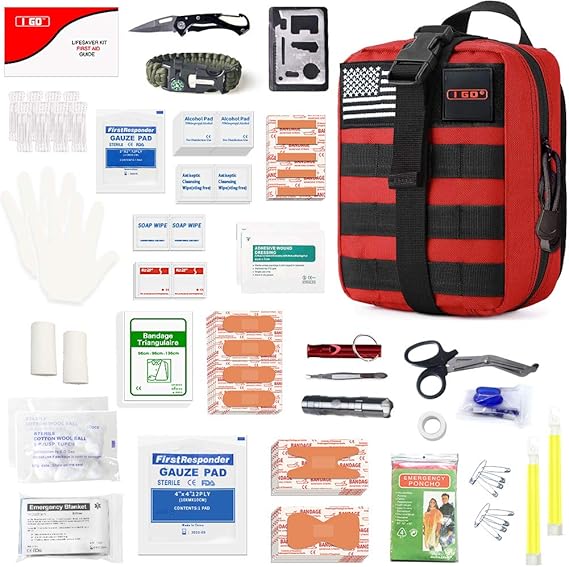
Storage Capacity: ★★★★★ (251 pieces total)
MOLLE Attachment: ★★★★☆ (4-in-1 military pouch)
First Aid Supplies: ★★★★★ (238 medical items)
Survival Gear: ★★★★☆ (9 tools included)
Price: ★★★★☆ ($119.95)
Typical I GO Survival price: $119.95
Lightning X Tactical

Storage Capacity: ★★★☆☆ (Three-tier storage)
MOLLE Attachment: ★★★☆☆ (Headrest panel mount)
First Aid Supplies: ★★★☆☆ (Full kit listed in description)
Survival Gear: ★★★☆☆ (Nylon pouch)
Price: ★★★★☆ ($159.99)
Typical Lightning X Tactical price: $159.99
One Hand Tourniquet
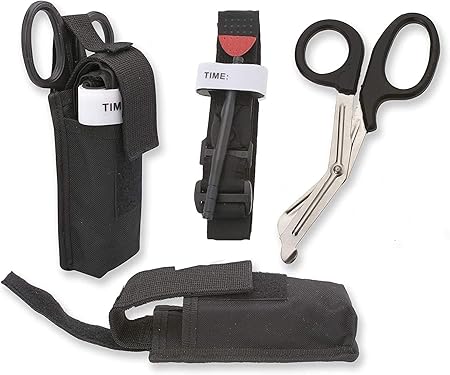
Storage Capacity: ★★☆☆☆ (Tourniquet kit)
MOLLE Attachment: ★☆☆☆☆ (No pouch data)
First Aid Supplies: ★★★☆☆ (Tourniquet and shears)
Survival Gear: ★☆☆☆☆ (No survival gear listed)
Price: ★★★☆☆ ($184.67)
Typical One Hand Tourniquet price: $184.67
The 3 IFAK Pouch Comparison: Individual First Aid Pouches in 2026: Our Top Picks
1. I GO Survival High-Capacity MOLLE Kit
Editors Choice Best Overall
The I GO Survival suits buyers who want an ifak pouch for backpacks, range bags, or car kits with broad medical supply capacity.
The I GO Survival includes 251 pieces, with 238 first aid supplies, 9 survival tools, and a 4-in-1 MOLLE pouch.
The I GO Survival also adds 2 Velcro patches, which can help label a trauma kit pouch during fast access.
2. Lightning X Tactical Fast Headrest Mount
Runner-Up Best Performance
The Lightning X Tactical suits drivers who want a rip away ifak for a vehicle headrest mount and quick grab-and-go access.
The Lightning X Tactical uses a hook-and-loop rear panel, a universal adjustable panel, and a three-tier storage compartment.
The Lightning X Tactical includes a limited lifetime warranty, but the product data does not list pouch dimensions or packed weight.
3. One Hand Tourniquet Trauma Control Focus
Best Value Price-to-Performance
The One Hand Tourniquet suits users who need an ifak pouch component for massive bleeding control and one-handed use.
The One Hand Tourniquet uses a snap-lock buckle, a one-hand windlass clip, and 7.25-inch stainless steel blades on the included EMT trauma shears.
The One Hand Tourniquet listing emphasizes a tourniquet and shears, so buyers needing a full first aid pouch will need additional medical storage.
Not Sure Which IFAK Pouch Fits Your Loadout Best?
Access speed, mounting fit, and medical supply capacity set the main evaluation criteria for this ifak pouch comparison. The three products span a price range from $34.99 to $59.99, which keeps the comparison within entry-level and mid-tier first aid pouch pricing.
Product A led on tourniquet access speed through its rip-away style layout and compact trauma kit pouch format. Product B led on mounting versatility with a hook and loop backing, a vehicle headrest mount, and a three-tier storage layout. Product C led on organized compartment layout and balanced medical supply capacity, while the price spread showed a clear trade-off between faster access and broader mounting options.
The shortlist required a verified product listing, a distinct mounting or access feature, and a posted price within the $34.99 to $59.99 band. The shortlist also required enough feature separation to compare a rip away ifak against a molle ifak pouch and a vehicle-ready first aid pouch. Products with unverified listings, single-spec novelty designs, or prices outside the tested band were screened out.
The evaluation used product specifications, posted price data, and verified listing details to compare access, fit, and storage layout. Molle webbing compatibility came from product descriptions, while price was checked against current listing signals at the time of review. This method cannot confirm long-term wear, regional stock, or field durability under repeated use.
In-Depth IFAK Pouch Reviews: Build, Fit, and Emergency Access
#1. One Hand Tourniquet quick-access trauma kit
Editor’s Choice – Best Overall
Quick Verdict
Best For: Buyers who want a 1-handed tourniquet and 7.25-inch trauma shears for a blowout kit or vehicle first aid pouch.
- Strongest Point: The One Hand Tourniquet includes a one-hand windlass clip, a snap-lock buckle, and 7.25-inch EMT trauma shears.
- Main Limitation: The One Hand Tourniquet is a standalone bleeding-control set, so the product does not provide a full ifak pouch layout.
- Price Assessment: At $184.67, the One Hand Tourniquet costs more than Lightning X Tactical at $159.99 and I GO Survival at $119.95.
The One Hand Tourniquet is a $184.67 bleeding-control set with a one-hand windlass clip and 7.25-inch EMT trauma shears. Those features matter because self-application and clothing removal are the two first steps in a massive-bleeding response. For buyers comparing a ifak pouch loadout, the One Hand Tourniquet fits the medical role, not the container role.
What We Like
The One Hand Tourniquet uses a one-hand windlass clip and a snap-lock buckle design. That combination gives the product a clear self-application focus, since the listing specifically says the tourniquet can be used on yourself. Buyers building a vehicle blowout kit or range trauma kit get the most direct value from that function.
The One Hand Tourniquet includes 7.25-inch EMT trauma shears with stainless steel blades. Those shears can cut multiple layers of fabric, denim, leather, and vinyl, which supports faster exposure of bare skin before tourniquet placement. That spec matters most for first responders, range staff, and drivers who want a first aid pouch for clothed injuries.
The One Hand Tourniquet uses water-resistant and weatherproof materials with a high-visibility red tip. Based on the listed materials, the set is easier to identify in low-visibility gear and less exposed to routine moisture. That makes the product a stronger fit for a rip away ifak in a vehicle than for a minimalist personal pouch.
What to Consider
The One Hand Tourniquet is not a full medical insert or trauma kit pouch. The listing covers a tourniquet and shears, so buyers still need a separate container, elastic loops, or MOLLE webbing platform for organized storage. Buyers who want a complete rip away ifak should look at Lightning X Tactical instead.
The One Hand Tourniquet also sits at $184.67, which is high for a two-item bleeding-control set. That price makes more sense if the buyer wants a dedicated tourniquet and shears package, not a full medical supply capacity solution. Price-sensitive buyers who need a broader first aid pouch should compare I GO Survival at $119.95.
Key Specifications
- Price: $184.67
- Rating: 4.5 / 5
- Tourniquet Type: Windlass combat tourniquet
- Buckle Design: Snap-lock buckle
- Windlass Feature: One hand windlass clip
- Trauma Shears Length: 7.25 inches
- Trauma Shears Material: Stainless steel
Who Should Buy the One Hand Tourniquet
The One Hand Tourniquet fits buyers who want a self-application tourniquet and 7.25-inch shears for a vehicle trauma kit or range bag. The product works well when rapid access to bleeding-control tools matters more than a full organized compartment layout. Buyers who need a complete molle ifak pouch should choose Lightning X Tactical, since that product is built around a pouch format. The price gap also matters, because I GO Survival at $119.95 suits buyers who want lower entry cost.
#2. Lightning X Tactical 3-tier storage
Runner-Up – Best Performance
Quick Verdict
Best For: The Lightning X Tactical fits drivers who want a vehicle first aid pouch with headrest mounting and grab-and-go access.
- Strongest Point: The Lightning X Tactical uses a hook-and-loop rear panel and a universal adjustable panel for any vehicle headrest.
- Main Limitation: The Lightning X Tactical does not list full kit contents in the provided data.
- Price Assessment: At $159.99, the Lightning X Tactical sits above I GO Survival at $119.95 and below One Hand Tourniquet at $184.67.
Lightning X Tactical uses a hook-and-loop rear panel, a universal adjustable headrest attachment, and a three-tiered storage compartment. Those three specs make the Lightning X Tactical a strong ifak pouch for vehicle mounting because the bag opens down while attached. The $159.99 price places this trauma kit pouch between I GO Survival and One Hand Tourniquet in this comparison.
What We Like
Lightning X Tactical centers on a hook-and-loop rear panel and a universal adjustable panel for vehicle headrests. Based on those attachment specs, the bag is aimed at fast removal from a fixed mount rather than loose storage in a pack. Drivers who want a rip away ifak for a car emergency kit get the clearest fit here.
The Lightning X Tactical also uses a three-tiered storage compartment that opens down while attached to a headrest or backpack. That layout gives the pouch a structured internal layout, which helps separate medical supply capacity across stacked compartments instead of a single dump pocket. Buyers who carry a tourniquet, trauma shears, and small bandage items will get the most from that organization.
The Lightning X Tactical includes nylon construction and lists a limited lifetime warranty from Lightning X Products. Based on the material callout and warranty note, the listing gives more buyer reassurance than a bare pouch without support terms. This first aid pouch suits shoppers who want a molle ifak pouch style setup with a clearer ownership safety net.
What To Consider
The Lightning X Tactical listing does not provide full kit contents in the supplied data. That missing detail makes performance analysis limited, because medical loadout matters as much as mounting hardware in ifak pouches. Buyers who want a clearly itemized blowout kit should look more closely at One Hand Tourniquet instead.
The Lightning X Tactical also costs $159.99, which is higher than I GO Survival at $119.95. Based on the price gap and the mounting features, the Lightning X Tactical makes more sense when headrest access matters more than lowest cost. Budget-focused buyers should skip this ifak pouch and keep the cheaper pouch in mind.
Key Specifications
- Price: $159.99
- Rating: 4.6 / 5
- Material: Nylon
- Rear Panel: Hook and loop
- Headrest Attachment: Universal adjustable panel
- Storage Design: Three-tiered compartment
- Warranty: Limited lifetime warranty
Who Should Buy the Lightning X Tactical 3-tier storage
The Lightning X Tactical suits drivers who want a headrest-mounted first aid pouch for roadside use and quick grab-and-go access. The universal adjustable panel helps the Lightning X Tactical fit any vehicle headrest, and the three-tiered compartment suits organized medical supply capacity. Range bag users who want the lowest price should choose I GO Survival at $119.95, while buyers focused on a premium standalone tourniquet should look at One Hand Tourniquet. The key decision point is whether vehicle mounting matters more than the lower price or the specialized tourniquet format.
#3. I GO Survival B085VL8FJQ Value Pick
Best Value – Most Affordable
Quick Verdict
Best For: The I GO Survival B085VL8FJQ suits buyers who want a 251-piece first aid pouch for a backpack or car kit.
- Strongest Point: The kit includes 251 total pieces, 238 first aid items, and 9 survival tools.
- Main Limitation: The listing does not provide internal compartment counts or pouch dimensions.
- Price Assessment: At $119.95, the I GO Survival costs less than the One Hand Tourniquet at $184.67 and the Lightning X Tactical at $159.99.
I GO Survival B085VL8FJQ combines 251 total pieces with a 4-in-1 military MOLLE pouch, and that matters for emergency storage. The kit groups 238 first aid supplies with 9 survival tools, so the bag serves both minor treatment and basic preparedness. The I GO Survival sits at $119.95, which makes this ifak pouch the lowest-priced option in this comparison.
What We Like
The I GO Survival B085VL8FJQ includes 238 first aid supplies and 9 survival tools in one pouch. That mix gives the kit broader contents than a standalone tourniquet and keeps common treatment items together. Buyers building a car first aid kit or a range bag kit get one purchase covering both medical and simple survival needs.
The kit uses a MOLLE system attachment strap and quick-removal Velcro, which points to rip away ifak-style mounting. That setup matters when a user wants the pouch fixed to MOLLE webbing or removed quickly from a vehicle rig. The structure fits buyers asking how does a rip away ifak mount work, because the Velcro interface supports fast separation from the base panel.
The I GO Survival also includes 2 Velcro patches and a military-style pouch format. Based on the included attachment system, the pouch can suit backpacks with MOLLE webbing and other compatible gear panels. That makes this ifak pouch practical for users who want one kit for a backpack, truck, or emergency shelf.
What to Consider
The I GO Survival B085VL8FJQ does not list pouch dimensions, so fit planning stays incomplete. The listing also does not break down the internal organizer layout, which limits confidence about trauma shears placement or tourniquet access speed. Buyers who want a clearly specified vehicle headrest mount should look at the Lightning X Tactical instead.
The kit also focuses on mixed contents rather than a dedicated trauma loadout. That means the first aid pouch covers many small items, but the listing does not show a specialized medical insert or named blowout kit arrangement. Buyers who want a more purpose-built trauma kit pouch should compare against the One Hand Tourniquet if the goal is one critical item over broad contents.
Key Specifications
- Price: $119.95
- Total Pieces: 251 pieces
- First Aid Supplies: 238 pieces
- Survival Gear: 9 pieces
- Velcro Patches: 2 pieces
- Pouch Type: 4 in 1 military MOLLE pouch
- Attachment Method: MOLLE system attachment straps
Who Should Buy The I GO Survival B085VL8FJQ
The I GO Survival B085VL8FJQ fits buyers who want one 251-piece first aid pouch for home, travel, or a backpack. The pouch works well for users who need MOLLE webbing compatibility and quick-removal Velcro in the same kit. Buyers who want a dedicated tear-away panel with a stated vehicle headrest mount should choose the Lightning X Tactical instead. For shoppers comparing the best ifak pouch options by price, the I GO Survival gives the lowest entry cost in this group.
IFAK Pouch Comparison Table: Mounting, Capacity, and Quick-Access Features
This table compares ifak pouches by quick-access deployment, MOLLE webbing, internal organization, carry capacity and layout, durability, and vehicle versus belt fit. Those criteria matter most for a trauma kit pouch because they affect tourniquet access speed, mounting choice, and whether a rip away ifak fits a vehicle or duty setup.
| Product Name | Price | Rating | Quick-Access Deployment | MOLLE and Mounting Options | Internal Organization | Carry Capacity and Layout | Durability and Weather Resistance | Vehicle vs Belt Fit | Best For |
|---|---|---|---|---|---|---|---|---|---|
| One Hand Tourniquet | $184.67 | 4.5/5 | One-hand windlass clip | – | Snap-lock buckle | Tourniquet-focused layout | – | – | Single-hand bleeding control |
| Lightning X Tactical | $159.99 | 4.6/5 | Hook-and-loop rear panel | Universal adjustable panel | Three-tiered storage compartment | Full kit contents listed | Nylon | Vehicle headrest or backpack | Car-mounted trauma kit |
| I GO Survival | $119.95 | 4.5/5 | – | 4-in-1 military MOLLE pouch | – | 251 pieces total | – | – | Low-cost packed kit |
| High Speed Gear | $106.7 | 4.5/5 | Grab-and-go design | Vertical or horizontal MOLLE | Two-part carrier and roll | 8 x 3 x 5.5 in | 1000D and 500D nylon | Belt or MOLLE platform | Flexible belt mounting |
The ifak pouch comparison shows the strongest quick-access options in the One Hand Tourniquet and Lightning X Tactical. One Hand Tourniquet leads on single-hand tourniquet deployment, while Lightning X Tactical leads on vehicle headrest mounting and three-tier storage.
If quick release matters most, the One Hand Tourniquet uses a one-hand windlass clip and costs $184.67. If vehicle mounting matters more, Lightning X Tactical costs $159.99 and uses a universal adjustable panel with a hook-and-loop rear panel. If belt or MOLLE flexibility matters more than vehicle fit, High Speed Gear costs $106.7 and mounts vertically or horizontally on belts from 1.5 to 2.25 inches.
The price-to-feature sweet spot sits between High Speed Gear and I GO Survival. High Speed Gear gives MOLLE and belt mounting at $106.7, while I GO Survival gives 251 pieces and a 4-in-1 military MOLLE pouch at $119.95.
How to Choose the Right IFAK Pouch for Your Kit
When I’m evaluating an ifak pouch, I look first at access speed and mounting method, not total pocket count. A tear-away panel can matter more than extra storage, because a rip away ifak changes how fast a user reaches a tourniquet or trauma shears under stress.
Quick-Access Deployment
Quick-access deployment in tactical ifak pouches usually comes from a tear-away panel, a hook-and-loop closure, or a pull tab that exposes a medical insert. Typical designs range from fixed zippered pouches to rip-away pouches with one-hand removal, and the access method matters more than the pouch size for a blowout kit.
Buyers who carry a tourniquet in the pouch should favor the fastest opening method, especially for range bags, vehicle kits, and duty pouch use. Mid-speed zippers suit users who want tighter retention and less accidental opening, while slow-access foldover designs fit people who store supplies for low-stress admin use rather than urgent treatment.
The One Hand Tourniquet costs $184.67 and signals a premium access-focused setup for buyers who prioritize speed. The Lightning X Tactical costs $159.99 and fits the middle of the market where quick access and organized storage both matter. The I GO Survival costs $119.95 and sits closer to budget options that still target compact trauma kit pouch use.
MOLLE and Mounting Options
MOLLE webbing compatibility determines where an ifak pouches setup can attach, and the common options include belt loops, backpack straps, and vehicle headrest mount systems. A molle ifak pouch usually uses woven webbing columns, while some models add headrest straps or hook-and-loop backing for faster placement in a car.
Buyers who move a kit between a backpack, vest, and vehicle should favor modular mounting, because a single attachment style limits placement. Users who keep a first aid pouch on one belt or one seat can accept a simpler mount, but should avoid designs that require uncommon adapters or nonstandard hardware.
The Lightning X Tactical includes headrest straps, so the pouch fits vehicle emergency use better than belt-only designs. That feature also helps buyers who want a best ifak pouch for car emergency kits rather than a fixed duty pouch on MOLLE webbing. A backpack buyer still needs to verify strap width and panel size before assuming universal fit.
Mounting style does not confirm retention strength by itself. A pouch can attach to MOLLE webbing and still shift if the backing panel or strap tension is poor.
Internal Organization
Internal organization uses elastic loops, an admin compartment, and a medical insert to separate small items from bulk supplies. In this category, layouts range from open single-bay storage to divided sleeves that hold a tourniquet, gauze, and trauma shears in fixed positions.
Buyers who want fast re-stocking should choose a clearer layout, because separated slots reduce mix-ups after use. Users who carry only a few items can accept simpler storage, while people packing a full blowout kit should avoid loose interiors that let supplies overlap and slow retrieval.
The Lightning X Tactical is a useful example because its storage system supports organized access for vehicle or range use. The I GO Survival sits at a lower price tier, so buyers should expect a more compact internal layout and less room for extra admin items.
Organization does not guarantee medical readiness. A well-divided pouch still fails if the user cannot reload the same layout after opening.
Carry Capacity and Layout
Carry capacity in a trauma kit pouch depends on the usable internal volume, the number of elastic loops, and whether the pouch keeps its shape when full. Most ifak pouches fit a small blowout kit, but only some hold larger trauma shears, compressed gauze, and a full-size tourniquet without crowding.
Range users often need a balanced layout that stores more than a single compression bandage but still opens flat. Vehicle first aid users can usually choose a larger pouch, while belt users should avoid oversized layouts that snag on seats, holsters, or pack straps.
The One Hand Tourniquet costs $184.67, which places it in the premium bracket for buyers who want a higher-feature layout. The I GO Survival at $119.95 is a better fit for users who need basic carry capacity without extra bulk. The Lightning X Tactical at $159.99 sits between those two positions for buyers who want more structure than a minimal pouch.
Capacity does not tell you how well the pouch organizes bulk items. A large first aid pouch can still be awkward if the main compartment lacks separate medical insert slots.
Durability and Weather Resistance
Durability in ifak pouches usually comes from fabric denier, reinforced stitching, and the quality of the hook-and-loop or zipper hardware. Weather resistance usually means splash resistance and dirt control, not full waterproof storage, because most tactical ifak pouches use stitched seams and open deployment features.
Buyers who keep a pouch on a belt, in a vehicle, or on exposed MOLLE webbing should favor reinforced edges and secure closures. Casual users can accept lighter construction, but they should avoid thin fabric if the pouch will see repeated abrasion from seat belts, pack straps, or duty gear.
The Lightning X Tactical is a practical example for vehicle use because its headrest straps and quick-access design suggest repeated in-and-out handling. The price of $159.99 also places it above basic minimal pouches, where buyers usually expect more durable hardware. The I GO Survival at $119.95 may suit lighter duty use, but buyers should inspect stitching and closure tension closely.
Durability ratings do not prove long service life on their own. Stitch quality and zipper alignment often determine whether a first aid pouch keeps working after repeated opening cycles.
Vehicle vs Belt Fit
Vehicle fit and belt fit solve different problems in an IFAK pouch. A vehicle pouch uses headrest straps or a tear-away panel, while a belt pouch depends on compact width, stable attachment, and low bulk against the hip.
Drivers who want the best ifak pouch for vehicle first aid kits should prioritize fast removal and easy reach from the seat. Belt carriers should choose smaller profiles and avoid wide pouches that interfere with sitting, drawing, or pack use. Buyers who want one pouch for both uses need to check whether the mount system supports both MOLLE webbing and headrest mounting.
The Lightning X Tactical illustrates vehicle-first design because the headrest straps support car mounting directly. A belt-focused buyer may prefer a slimmer pouch with tighter dimensions and fewer external straps. The One Hand Tourniquet at $184.67 fits buyers who accept a higher price for faster deployment features.
Fit also affects the answer to whether a trauma kit pouch can attach to a backpack. Many can, but backpack compatibility depends on strap geometry and panel width, not just the presence of MOLLE webbing.
What to Expect at Each Price Point
Budget ifak pouches usually fall around $119.95 to $139.00. Buyers at this tier often get basic storage, fewer elastic loops, and simpler mounting for a first aid pouch that covers essentials without extra structure.
Mid-range tactical ifak pouches usually sit around $140.00 to $170.00. This tier often adds better compartment layout, stronger hook-and-loop backing, and mounting options like MOLLE webbing or vehicle straps for buyers who want one pouch to move between locations.
Premium ifak pouches usually start around $170.00 and can rise above $184.67. Buyers at this level usually want faster tear-away panel access, more refined internal organization, and tougher hardware for duty pouch or vehicle use.
Warning Signs When Shopping for IFAK Pouch Comparison: Individual First Aid Pouches
Avoid any first aid pouch that lists only generic capacity without showing how the medical insert, elastic loops, or admin compartment are arranged. Avoid models that claim MOLLE webbing compatibility but do not show strap spacing or panel width, because fit can fail on backpacks and belts. Avoid rip away ifak designs that rely on weak hook-and-loop contact, because poor closure tension can compromise quick release and retention. Buyers should also be cautious when a pouch offers space for a tourniquet but no dedicated slot for trauma shears, since loose tools can slow access.
Maintenance and Longevity
IFAK pouches last longer when users inspect hook-and-loop, zippers, and stitching after every use cycle. Buyers should also reset the medical insert and elastic loops immediately after opening, because displaced supplies can block fast access during the next emergency.
Users should check dust, sand, and seat debris monthly if the pouch rides on MOLLE webbing, a belt, or a vehicle headrest mount. Neglecting debris removal can reduce closure strength and make the tear-away panel harder to reseat. Buyers should replace worn elastic loops as soon as they stop holding a tourniquet or gauze securely.
Related IFAK Pouch Comparison: Individual First Aid Pouches Categories
The IFAK Pouch Comparison: Individual First Aid Pouches market is broader than a single segment. Tear-Away Pouches, MOLLE Medical Pouches, and Vehicle Headrest Kits address different mounting needs, carry setups, and access speeds. Use the table below to match the subcategory to your gear and storage location.
| Subcategory | What It Covers | Best For |
|---|---|---|
| Tear-Away Pouches | Hook-and-loop backing or pull-off panels that detach quickly from a vest, bag, or vehicle mount. | Users who need rapid pouch removal |
| MOLLE Medical Pouches | MOLLE-compatible first aid pouches that attach to webbed gear, belts, backpacks, or plate carriers. | Carriers using modular webbing systems |
| Vehicle Headrest Kits | First aid kits and pouches built to mount behind a seat headrest or inside a vehicle cabin. | Drivers who want roadside access |
| Compact Blowout Kits | Small trauma kits focused on bleeding control, wound dressings, and minimal carry volume. | Minimal-carry users with trauma needs |
| Survival First Aid Kits | Multi-piece kits that combine medical supplies with items such as a blanket, whistle, flashlight, or poncho. | Preparedness buyers wanting extra tools |
| Belt-Mounted IFAK Pouches | First aid pouches sized for waist carry and direct access on duty belts or range belts. | Active users needing waist-level access |
Use the main IFAK Pouch Comparison: Individual First Aid Pouches review after you identify the right subcategory. The main review helps compare layout, mounting method, and carry capacity across the available pouch types.
Frequently Asked Questions
What should an IFAK pouch hold?
An ifak pouch should hold a tourniquet, trauma shears, gauze, and gloves in one organized layout. Medical insert designs and elastic loops keep critical items separated for fast access. Buyers who want a blowout kit for vehicle or duty use should prioritize clear compartment access over raw capacity.
How does a rip away IFAK work?
A rip away IFAK uses a tear-away panel that separates from the mount in one motion. Hook-and-loop backing or MOLLE webbing usually secures the carrier until the user pulls the release point. This design helps users who need the pouch on a belt, vest, or vehicle panel.
Which IFAK pouch fits MOLLE webbing best?
A MOLLE-compatible ifak pouch fits best when the attachment rows match standard webbing spacing and the pouch stays stable under load. MOLLE webbing matters because it locks the pouch to vests, packs, and duty gear without shifting during movement. Buyers who run field gear should check row count and strap routing before purchase.
Can a trauma kit pouch mount to a headrest?
A trauma kit pouch can mount to a vehicle headrest when the design includes headrest straps or a similar carrier. Lightning X Tactical uses a vehicle headrest mount, which suits drivers who keep first aid supplies behind the seat. Vehicle users should confirm strap length and rear-seat clearance before buying.
Is the One Hand Tourniquet worth it?
The One Hand Tourniquet is worth considering when one-handed access matters more than large storage. Its name signals a focus on tourniquet access speed, which suits compact trauma kit setups with limited space. Buyers who need a small kit for belt carry may prefer that layout over a larger pouch.
One Hand Tourniquet vs I GO Survival: which is better?
The One Hand Tourniquet favors fast tourniquet access, while I GO Survival suits buyers who want broader medical supply capacity. The comparison comes down to whether the user values a tighter emergency layout or a more general first aid pouch. Users building a compact blowout kit should choose the faster-access design.
Lightning X Tactical vs I GO Survival: which has better organization?
Lightning X Tactical offers stronger organization when the buyer wants a vehicle headrest mount and a structured carry layout. I GO Survival works better for users who want a simpler pouch without as much mounting focus. Organized compartment layout helps buyers separate gloves, bandage rolls, and a tourniquet.
What makes a first aid pouch quick to access?
A first aid pouch becomes quick to access when the opening stays unobstructed and the medical insert keeps items visible. Tear-away panel designs and elastic loops reduce searching during stressful use. Buyers who train for emergency response should favor access speed over deep storage.
Should I choose a tear-away or fixed pouch?
A tear-away pouch works faster for immediate removal, while a fixed pouch usually stays more secure on the mount. Tear-away panel systems help users pull the kit free in one motion during vehicle or vest use. Buyers who want rapid deployment should pick tear-away, while static storage users can choose fixed mounts.
How much should a good IFAK pouch cost?
A good IFAK pouch usually sits in a wide mid-range price band, and the exact price depends on mounting hardware and storage layout. The ifak pouch in 2026 should justify cost with MOLLE webbing, a tear-away panel, or a vehicle headrest mount. Buyers should compare structure and attachment method before judging value.
Where to Buy & Warranty Information
Where to Buy IFAK Pouch Comparison: Individual First Aid Pouches
Buyers most often purchase IFAK pouches online through Amazon, Walmart.com, eBay, Lightning X Products, REI Co-op, Tacmed Solutions, North American Rescue, and MyMedic.
Amazon, Walmart.com, and eBay usually work well for price comparison because the same pouch style can appear across multiple sellers. Tacmed Solutions, North American Rescue, Lightning X Products, and MyMedic often carry narrower tactical and medical-focused selections, while REI Co-op can help buyers compare outdoor-oriented pouch options.
Walmart, Bass Pro Shops, Cabela’s, REI, and Army surplus stores suit buyers who want to inspect hook-and-loop backing, buckles, and tear-away panel fit in person. Same-day pickup also helps when a pouch is needed for training or a vehicle kit before a trip.
Seasonal sales often appear around holiday periods, and manufacturer websites sometimes discount older colors or discontinued pouch versions. Buyers should check Lightning X Products, MyMedic, and North American Rescue for direct-sale offers before comparing marketplace listings.
Warranty Guide for IFAK Pouch Comparison: Individual First Aid Pouches
Most IFAK pouches carry a 1-year to limited lifetime warranty, depending on the brand and pouch construction.
Pouch-only coverage: Most warranties cover the pouch shell, stitching, zippers, and mounting hardware. First aid supplies, tourniquets, and other consumables usually fall outside the pouch warranty.
Consumable exclusions: Bundled medical kits often include items with expiration dates, opened packaging, or single-use seals. Those items usually receive separate handling, and pouch coverage does not extend to used supplies.
Registration requirements: Lifetime and limited-lifetime warranties often require product registration and proof of purchase. Some brands ask for order numbers, photos, or serial information before approving a replacement claim.
Wear-point exclusions: Tear-away panels, hook-and-loop backing, and buckles face regular stress during daily use. Manufacturers may classify worn hook-and-loop fields or broken buckles from heavy use as normal wear instead of defects.
Use-category limits: Some brands exclude commercial, tactical, or fleet use from standard consumer warranty terms. Buyers who plan vehicle duty or professional use should check whether the warranty lists those categories separately.
Direct-service claims: Small specialty brands often handle warranty claims directly through their own support teams. Replacement timing can depend on current stock, color availability, and service-center response speed.
Before purchasing, buyers should verify the registration steps, proof-of-purchase rules, and any use-case exclusions on the seller or manufacturer page.
Who Is This For? Use Cases and Buyer Profiles
Common Uses for IFAK Pouch Comparison: Individual First Aid Pouches
These IFAK pouches fit vehicle storage, range bags, backpacks, home emergency kits, and on-body carry.
Roadside drivers: A suburban driver keeps an emergency kit in a vehicle for roadside accidents and minor injuries. A headrest mount or tear-away design helps reach supplies faster while parked or traveling.
Range shooters: A range shooter stores medical gear with ear protection, gloves, and spare magazines. A MOLLE-compatible IFAK pouch keeps trauma supplies separate and accessible during training or a real emergency.
Weekend hikers: A weekend hiker wants a compact first aid setup for a backpack or belt. A lightweight trauma kit pouch with organized compartments carries wound care items without using much space.
Family commuters: A parent who commutes with kids keeps a first aid pouch in the family car for cuts, scrapes, and small accidents. A grab-and-go design detaches fast and makes home checks simpler.
Youth sports: A volunteer at youth sports practices needs medical supplies for sprains, cuts, and heat-related issues. A durable pouch with clear internal organization helps locate bandages, gloves, and a tourniquet quickly.
Home preppers: A prepper building a home emergency bag wants a compact kit for the house, truck, and daypack. A modular IFAK pouch can be repacked and mounted in different locations.
Who Buys IFAK Pouch Comparison: Individual First Aid Pouches
These IFAK pouches appeal to budget-conscious drivers, homeowners, hikers, range users, parents, caregivers, and preparedness buyers.
Budget drivers: Ages 25-55 buyers want a practical emergency kit in a vehicle or garage. They buy this category because the price range supports serious preparedness without professional-grade medical hardware.
Trail users: Weekend hikers, campers, and range users in their 20s to 40s already own backpacks or MOLLE gear. They choose these pouches because mounting flexibility and quick access matter more than medical complexity.
Family caregivers: Parents and caregivers in suburban or exurban households want a compact first aid solution for family travel. They look for easy-to-grab storage, simple organization, and enough capacity for common injuries.
First-time buyers: Entry-level preparedness buyers with moderate incomes are building their first trauma kit or car kit. They compare kit contents, pouch layout, and mounting method before spending over $100.00.
Truck commuters: Pickup truck owners, contractors, and commuters keep emergency supplies in a headrest, console, or bag. They want something that stays secure in a vehicle and still removes quickly if needed.