Legally required marks for a projector headlamp generally focus on electrical safety and electromagnetic compatibility, ensuring the device does not cause fires or interfere with other electronics. Voluntary but meaningful certifications often cover ingress protection and battery safety, providing data on how the headlamp handles moisture or high-stress environments. Decorative marks, such as generic “high-power” icons or non-standardized “professional” badges, offer no verifiable data and should be ignored during the selection process.
IEC and EN Electrical Safety Standards
IEC and EN electrical safety standards are issued by international and European bodies to ensure a projector headlamp does not pose a risk of electric shock or thermal injury. These standards guarantee that the internal wiring, housing materials, and charging circuits meet specific insulation and heat resistance requirements. They do not guarantee the longevity of the LEDs or the brightness of the beam, as these are performance metrics rather than safety requirements. For a buyer, these marks ensure that the charging port and internal circuitry are built to withstand standard electrical loads without overheating.
Where these choices show up in our reviews
From $113.01 to $159.95: the 3 in this category we have reviewed in full.
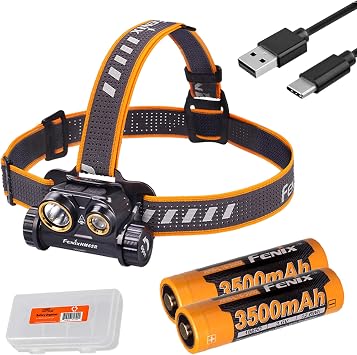
Fenix HM65R Dual Beam Headlamp
$113.01 price checked August 2026
Read our full Fenix HM65R review
You can also compare the best headlamp with bluetooth app control to see how different connectivity features impact your user experience.


Ledlenser MH11 Rechargeable Headlamp
Professionals requiring intense illumination should view our list of high lumen headlamps for work to find the right brightness.
$159.95 price checked August 2026
IP Ratings for Water and Dust Resistance
IP ratings are issued by the International Electrotechnical Commission to define a product’s resistance to solids and liquids. For a projector headlamp, an IP67 rating indicates the device can withstand immersion in water up to 1 meter deep for 30 minutes and is protected against dust ingress. This rating does not guarantee the device is waterproof for high-pressure sprays or heavy rain over long periods, as the rating is based on specific static test conditions. If you require a headlamp for wet environments, the IP rating is the primary metric to verify against the manufacturer’s claims.
UN38.3 Battery Certification
The UN38.3 certification is a standard required for the transport of lithium-ion batteries, ensuring they can withstand vibration, shock, and extreme temperatures. This mark guarantees that the battery cells within the projector headlamp are stable and less likely to undergo thermal runaway during shipping or storage. It does not guarantee the battery’s cycle life, its capacity over time, or its performance in extreme cold. Because many high-performance headlamps use high-density lithium cells, this certification ensures the power source meets international safety thresholds for volatile materials.
To understand how far your light will reach, research the necessary beam distance for headlamps before making a purchase.
Safety Failure Modes in Projector Headlamps
Safety failure modes in projector headlamps primarily involve thermal management and battery stability. Standardized safety marks address these by regulating the maximum operating temperature of the housing and the internal circuitry.
Thermal Management and Heat Limits
Thermal management is addressed by standards that limit the surface temperature of the headlamp housing during peak output. Because a projector headlamp concentrates high-intensity light, the housing can reach temperatures that cause skin irritation or melting of nearby gear. Safety certifications ensure the heat dissipation design meets a maximum threshold to prevent burns during extended use.
Battery Thermal Runaway
Battery thermal runaway is addressed by the UN38.3 and IEC battery safety standards. These standards require cells to maintain structural integrity when exposed to high-temperature environments. This prevents the battery from venting gas or catching fire if it is left in a hot vehicle or subjected to a physical impact.
How to Verify a Certification Mark
Verifying a certification mark involves checking for specific identifiers that distinguish a genuine safety rating from a marketing graphic.
- Check for a specific certification number or a QR code that links directly to a laboratory’s registry.
- Verify the logo matches the official branding of the issuing body, such as the specific shape of the CE or UL mark.
- Look for the specific IP rating number (e.g., IP67) rather than a generic “waterproof” icon.
- Confirm the presence of a manufacturer’s declaration of conformity, which is often required by law to accompany the safety marks.
Non-Negotiable vs. Optional Marks
Non-negotiable marks for a projector headlamp include the IEC/EN electrical safety standards and the UN38.3 battery certification, as these protect against catastrophic failure. You should prioritize these marks to ensure the device is safe to charge and handle. Voluntary marks like IP67 should be weighed against your specific use case; for example, a hiker in a rainy climate needs the IP67 rating, while a workshop user may find it less critical. Decorative badges or non-standardized “power” symbols should be disregarded entirely as they provide no verifiable safety or performance data.