You need between 50 lm and 1,000 lm depending on your specific use case. Most general-purpose tasks require a mid-range output of 200 lm to 400 lm for effective visibility.
Recommended Lumens for Flashlight Batteries by Use Case
| Use Case | Recommended Lumens | Why this number? |
|---|---|---|
| Emergency Signaling | 500 lm to 1,000 lm | High output is required to be visible from a distance or to cut through heavy fog. |
| Tactical / Self-Defense | 300 lm to 600 lm | This range provides enough “punch” to disorient without instantly blinding the user or draining the battery in seconds. |
| Worksite / Construction | 400 lm to 800 lm | High-intensity light allows for clear visibility of tools and materials in large, unlit indoor spaces. |
| General Household / EDC | 100 lm to 300 lm | Lower output is sufficient for finding items in a room or walking a dog at night. |
| Reading / Close Detail | 20 lm to 100 lm | Lower brightness prevents eye strain and preserves battery life for long-duration stationary tasks. |
Where these choices show up in our reviews
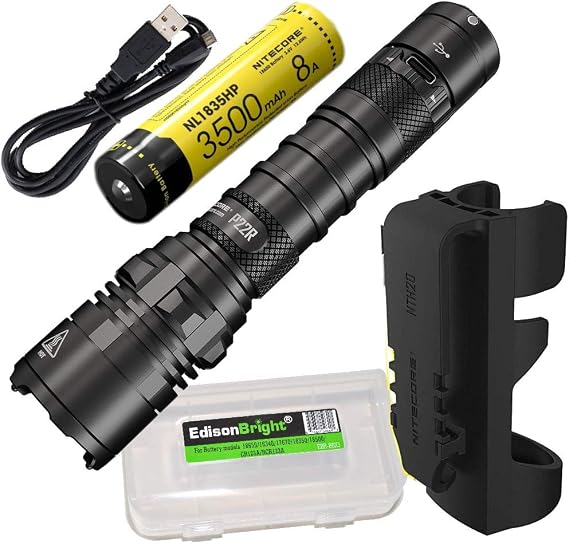
3 reviewed options, $109.95 to $139.95, with the full write-up behind each name.
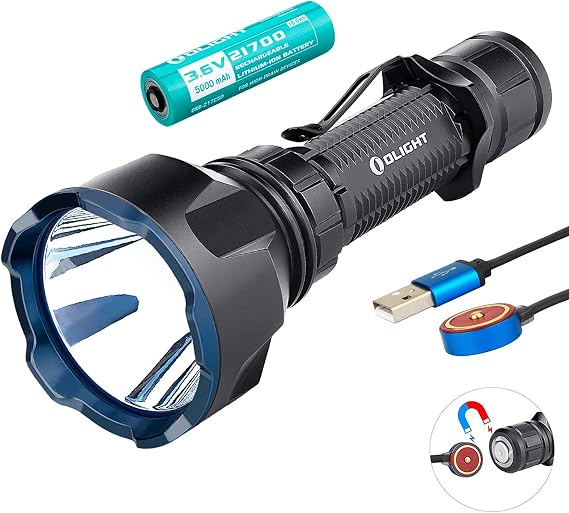
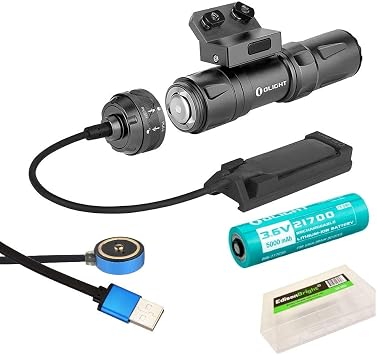
OLIGHT Odin Mini
$139.95 price checked August 2026
Read our full Odin Mini review
If you are on a budget, compare the best flashlight batteries under $200 to find your perfect match.
Risks of Under-Provisioning or Over-Buying Flashlight Batteries
Under-provisioning occurs when the lumen output is too low for the environment, resulting in poor visibility and safety risks. If you choose a battery setup that provides less than 50 lm for outdoor use, you may find it difficult to identify hazards or navigate uneven terrain safely.
The Risk of Insufficient Lumens
When the lumen count is too low, the beam fails to reach the intended distance. This forces you to move closer to objects to see them clearly, which can be dangerous in high-traffic areas or when navigating obstacles. You may also find that the light “washes out” in bright conditions, making it useless for anything other than close-up tasks.
The Real Cost of Over-Buying Lumens
Over-buying lumens creates a significant trade-off in runtime and heat management. Higher lumen outputs require more current from the battery, which generates heat and causes the voltage to drop more rapidly.
For specialized low-light applications, view the best rechargeable flashlight batteries for night vision to see which specs excel.
If you select a high-output battery for a task that only requires 100 lm, you are wasting the potential energy of the cell. The battery will deplete much faster than necessary, and the heat generated by a high-lumen output can degrade the internal chemistry of the battery over time, shortening its overall cycle life. You pay for a high-performance capacity that you cannot utilize without sacrificing the longevity of your power source.
The Mistake of Optimizing for Lumens Instead of Runtime
The most common mistake is choosing a battery based solely on its maximum lumen output rather than its capacity and discharge rate. Many users assume a higher lumen rating is always better, but in practice, the most useful battery is the one that maintains a usable brightness for the duration of your specific task.
Optimizing for Sustained Performance
You should prioritize the milliamp-hour (mAh) rating and the constant current output in relation to your needs. A battery that can produce 1,000 lm for 30 seconds is less useful for a long hike than a battery that provides a steady 300 lm for three hours. Look for the balance between the maximum burst and the sustained output to ensure you are not left in the dark when you need the light most.
How Lumens Interact with Other Flashlight Battery Specs
Lumens are not an isolated metric; they are strictly limited by the battery’s physical capacity and the internal resistance of the cell. A high lumen figure is wasted if the battery cannot provide the necessary current to sustain it.
The Impact of Discharge Rates
Every battery has a maximum continuous discharge rating. If you attempt to draw a high lumen output that exceeds this rating, the voltage will sag, and the light will dim or flicker regardless of the “rated” lumen count. You must ensure the battery’s discharge rate matches the requirements of the flashlight’s high-output modes.
The Relationship Between Heat and Lumens
Heat is the primary enemy of high-lumen performance. As a battery generates heat during high-output use, its efficiency drops. This means that a battery’s peak lumen output is often a “turbo” mode that can only be maintained for a very short time before the system must throttle the brightness to prevent damage. If your use case requires long periods of high brightness, you need a battery with a high thermal tolerance and a large enough capacity to handle the sustained draw.
Voltage and Beam Distance
While lumens measure total light output, the voltage of the battery determines how far that light can travel. A battery with a higher nominal voltage can often push the beam further, even if the total lumen count is lower than a high-capacity, low-voltage pack. When choosing, consider whether you need a wide pool of light (high lumens) or a long-reaching beam (higher voltage/efficient circuitry).
Every Flashlight Battery guide in this category
- Best Rechargeable Flashlight Batteries for Duty Use
- Affordable Flashlight Batteries Under $200 Compared
- Which Rechargeable Flashlight Batteries Are Best for Night Vision?
- Best Replacement Flashlight Batteries for Heavy Duty Use
- Long Throw Rechargeable Flashlight Batteries Compared
- Choosing the Best Flashlight Batteries for Compact Tactical Lights