Typical EDC knife warranties range from one to five years, though many manufacturers offer a limited lifetime guarantee on specific components. The most common reason a claim in this category is refused is “user abuse,” which often includes blade chips, scratches, or damage caused by using the tool on materials harder than the steel’s Rockwell hardness.
What Does an EDC Knife Warranty Usually Cover?
An EDC knife warranty usually covers manufacturing defects in the mechanical locking system, the handle construction, and the structural integrity of the blade’s tang. Because these items are critical to safety, manufacturers prioritize their protection over cosmetic issues.
Standard coverage typically includes:
- Failure of the locking mechanism (e.g., a Liner Lock or Frame Lock failing to engage).
- Structural cracks in the handle scales or spacers.
- Manufacturing flaws in the blade geometry that cause “blade roll” or uneven deployment.
- Defects in the pivot hardware or washers that cause excessive friction.
Most warranties specifically exclude the following from coverage:
- Edge damage, including nicks, chips, or dullness caused by regular use.
- Cosmetic wear such as scratches on the blade surface or fading of the handle finish.
- Damage caused by “improper use,” such as using the knife as a pry bar or screwdriver.
- Corrosion resulting from exposure to salt water or harsh chemicals without proper maintenance.
- Modifications made by the owner, such as custom grinding or handle swaps.
Reviewed examples from this category
3 reviewed options, $109 to $332.87, with the full write-up behind each name.
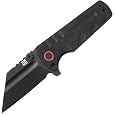


Kizer Drop Bear 2 Folding Knife
If you need a blade for field use, view our comparison of the best edc knife for hunting.
$109 price checked August 2026
How Does the Seller Affect Your Warranty?
The source from which you purchase an EDC knife significantly impacts your ability to successfully file a warranty claim. The manufacturer’s ability to verify the product’s origin is often the first step in their review process.
Purchasing directly from the maker or an authorized retailer provides the most straightforward path to coverage. These sources provide a clear chain of custody, and the manufacturer can easily verify the purchase date and authenticity of the item.
Buying from a marketplace seller or a third-party vendor introduces more variables. If the seller is not authorized, the manufacturer may refuse to honor a claim because they cannot verify the product’s provenance or ensure it is not a counterfeit item. In these cases, you may be forced to rely on the marketplace’s own return policy rather than the manufacturer’s warranty.
Refurbished or open-box items often carry limited or no manufacturer warranty. While these products might come with a short-term guarantee from the reseller, the original manufacturer’s warranty is frequently voided once the item leaves the primary distribution chain. Grey-market imports from international sellers are the highest risk; these items often lack the necessary documentation for regional warranty support and may be subject to different manufacturing standards.
What Actions Void an EDC Knife Warranty?
Actions that void an EDC knife warranty usually involve any modification or extreme use that deviates from the intended purpose of a folding knife. Manufacturers look for evidence that the tool was pushed beyond its engineered limits.
Unauthorized Modifications
Modifying the blade geometry, changing the handle scales, or altering the locking mechanism voids the warranty. Even “minor” adjustments to the pivot tension or the sharpening of the blade to an extreme angle can be cited as a reason to deny a claim.
Misuse and Hard-Use
Using an EDC knife as a heavy-duty tool, such as a pry bar or a wedge, often results in structural damage that manufacturers classify as user abuse. If the blade is used on materials that exceed the steel’s hardness, the resulting edge rolling or cracking is rarely covered.
Environmental Neglect
Failure to maintain the knife can void coverage. If a blade develops deep pitting or heavy corrosion because it was left in a wet environment without a protective coating or oil, the manufacturer may rule this as a failure of ownership rather than a manufacturing defect.
What to Do Before Buying to Ensure Coverage?
Taking specific steps before you purchase an EDC knife ensures that you have the necessary documentation and condition to make a claim successful in the future.
- Keep the original receipt or a digital copy of the invoice from the point of sale.
- Register the product on the manufacturer’s website immediately after purchase, if an option exists.
- Take clear photos of the knife’s condition upon arrival to document that no manufacturing defects were present at the start.
- Confirm the specific warranty duration and coverage limits for your region on the manufacturer’s official documentation before ordering.
- Verify that the seller is an authorized dealer to ensure the chain of custody remains intact.
An extended warranty is generally only worth it for high-end professional tools where the cost of replacement is significant and the tool is used in high-frequency environments. For most everyday carry knives, the standard manufacturer warranty is sufficient, provided you maintain the tool and avoid using it for tasks outside its intended design. Always confirm the specific warranty terms for the product you are buying, as these rules vary by brand and region.
The other Edc Knife guides we have published
- The Folding Camping Knives That Work Best for Outdoor Use
- EDC Knives for Hunting Compared
- Choosing the Best Tactical Folding Pocket Knife for Everyday Carry
- The Compact Folding EDC Knives That Work Best for Everyday Carry
- Which Lightweight Folding Knife Is Best for Everyday Carry?
- Best Titanium Handle EDC Knives