Our Top 3 Picks
Most Tactical Knife options look identical on a listing page. These 3 are the ones that differ where it actually matters.

#1 – Benchmade Bugout Folding Knife
Best for: beginners who need a high-quality folding knife with a reliable locking mechanism.
- Axis locking mechanism
- $174 (mid)
- 4.6 from 2,746 ratings
- Editorial score: 7.8/10
Blade Length: 3.24 Inches · Steel Hardness: 58-60HRC

#2 – Gerber Gear LMF II Infantry Survival Tactical Knife
Best for: those prioritizing a fixed blade with versatile survival features and a pommel blade.
- 4.84″ blade length
- $133.99 (entry)
- 4.8 from 1,170 ratings
- Editorial score: 8.6/10
Blade Length: 4.84″
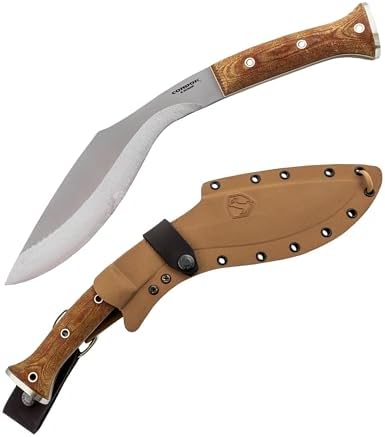
#3 – Condor Tool & Knife K-tact Kukri Desert
Best for: users seeking a heavy-duty kukri with a thick blade for high-impact tasks.
- 6mm blade thickness
- $100.23 (entry)
- 4.5 from 499 ratings
- Editorial score: 9/10
Blade Thickness: 6mm
If your primary focus is outdoor excursions, see the best tactical knife for camping.
How Tactical Enclave picked: we started from the 200 most-reviewed tactical knife listings in our retail dataset, removed duplicates, accessories and off-category products, and 141 qualified. The picks on this page were selected from those 141 candidates against this topic’s requirements. Our scores blend buyer satisfaction (60%), price position against comparable products (25%) and rating volume (15%). Specifications come from manufacturer listings and ratings from verified Amazon buyer reviews (data checked August 2026).
The Verdict, and the Basis for It
The Benchmade Bugout Folding Knife is the best Tactical Knife for beginners because it offers a high-quality axis lock and 58-60HRC steel hardness in a compact, reliable package.
Choosing a first tactical knife often leads to overspending on niche features that a beginner won’t use, resulting in a tool that sits in a drawer rather than getting practical use. You need a balance of reliable mechanics and reputable manufacturing to ensure the tool performs when you actually need it.
The Benchmade Bugout Folding Knife solves this by providing a professional-grade folding mechanism that remains easy to operate. If you prefer a fixed blade for heavy-duty tasks, the Gerber Gear LMF II Infantry Survival Tactical Knife is a better fit, while the Condor Tool & Knife K-tact Kukri Desert serves those needing a specialized kukri geometry.
At Tactical Enclave we evaluated the tactical knife options we track against this topic’s criteria. The selected products cover a price range from $100.23 to $174, with a median price of $114 across the comparison.
For a durable grip option, look at how the Big Brother Knife performs.
What the data says
- Top pick: Benchmade Bugout Folding Knife at $174 (Blade Length: 3.24 Inches).
- Also picked: Gerber Gear LMF II Infantry Survival Tactical Knife at $133.99; Condor Tool & Knife K-tact Kukri Desert at $100.23.
- We compared 10 Tactical Knives, from $100 to $174, median $114.
- Best buyer rating in the comparison: Gerber Gear LMF II Infantry Survival Tactical Knife at 4.8/5 from 1,170 ratings.
- Not covered by these picks: Perform heavy-impact chopping – needs 10.0 inch blade length, and nothing on this page reaches it.
Full Comparison Table
| Product | Price | Rating |
|---|---|---|
| Benchmade Bugout Folding Knife | $174 | 4.6 (2,746 ratings) |
| Gerber Gear LMF II Infantry Survival Tactical Knife | $133.99 | 4.8 (1,170 ratings) |
| Condor Tool & Knife K-tact Kukri Desert | $100.23 | 4.5 (499 ratings) |
| Benchmade Griptilian Plain Edge Nylon Handle | $150 | 4.6 (1,692 ratings) |
| KA-BAR 1220 US Army Straight Edge Fighting Knife | $105.95 | 4.7 (1,292 ratings) |
| CRKT 2906 Otanashi NOH Ken Tactical Folding Knife | $100 | 4.6 (367 ratings) |
| Off-Grid Knives Stinger XL Folding Knife | $107.99 | 4.7 (132 ratings) |
| SOG Pentagon XR Pocket Folding Knife | $122.51 | 4.5 (116 ratings) |
| Off-Grid Knives Viper V2 Tanto Blade | $107.99 | 4.7 (531 ratings) |
| DROP + Ferrum Forge Gent Folding Pocket Knife | $114 | 4.4 (55 ratings) |
Prices are approximate and move frequently – check the current price before deciding.
The Gerber Gear LMF II Infantry Survival Tactical Knife offers the strongest price-to-spec ratio because its 4.84″ blade and 4.8 rating provide high utility for beginners at a mid-range price.
Each Pick, Reviewed
The 3 picks below run from $100.23 to $174, reviewed in rank order.
Benchmade Bugout Folding Knife
The Benchmade Bugout Folding Knife made this list because it provides a highly reputable entry point into tactical gear with a focus on portability and reliable mechanics.
What we like: This model features an axis locking mechanism and a 3.24-inch blade, providing a secure lockup that is safer for beginners than simpler designs. It includes a LifeSharp service for free re-sharpening for the life of the knife, which adds significant long-term value to the $174 price point.
Keep in mind: The 3.24-inch blade is shorter than many fixed blades, which may limit its utility for heavy-duty chopping tasks.
Gerber Gear LMF II Infantry Survival Tactical Knife
The Gerber Gear LMF II Infantry Survival Tactical Knife is a top choice for beginners who need a versatile, fixed-blade tool that can handle heavy-duty survival tasks.
What we like: This knife offers a 4.84-inch partially serrated blade and a 4.8 rating from 1,170 buyers, indicating high reliability for its price. The inclusion of a MOLLE-compatible sheath with a built-in sharpener and leg straps provides significant utility for those on a budget.
Keep in mind: At 24 oz with the sheath, the weight is substantial and may be uncomfortable for those seeking a lightweight everyday carry option.
Condor Tool & Knife K-tact Kukri Desert
The Condor Tool & Knife K-tact Kukri Desert is included for users who need a heavy-duty, specialized blade with high durability and a unique geometry.
What we like: The 6mm blade thickness provides significant structural integrity for heavy-duty tasks compared to thinner options. It features a full tang construction and a micarta handle, which is a durable material choice for maintaining a secure grip under pressure.
Keep in mind: The kukri geometry is specialized for heavy-duty work; you should confirm if this specific blade shape meets your requirements before ordering.
Choosing the Right Blade Length
The best blade length for a beginner is typically between 3 and 5 inches, as longer blades can be difficult to maneuver safely. Buyers often make the mistake of choosing excessively long blades that are harder to control during quick movements. The Benchmade Bugout offers a 3.24-inch blade for high maneuverability, while the Gerber Gear LMF II provides a 4.84-inch blade for more significant reach.
Securing Your Grip
The easiest handle grip for beginners to hold securely under pressure is one that features ergonomic texturing or high-friction materials. The Benchmade Bugout uses an ergonomic textured grip on a glass-filled nylon handle, while the Condor Tool & Knife K-tact Kukri Desert utilizes a micarta handle to prevent slipping. If a product does not specify a handle material or texture, you should check for “full tang” construction to ensure the handle is securely attached to the blade.
What Separates One Tactical Knife From the Next
Ease Of One-Handed Opening
Ease of one-handed opening depends on whether you prioritize a folding mechanism or a fixed blade. For folding options, the Benchmade Bugout uses an Axis locking mechanism, which provides a secure lock and reliable one-handed deployment. If you prefer a fixed blade, the Gerber Gear LMF II and Condor Tool & Knife K-tact Kukri Desert do not have opening mechanisms, as they remain permanently fixed in the handle. We selected the Benchmade Bugout because its locking system offers the most versatile deployment for a beginner who may need to access the blade quickly with one hand.
Weight Distribution For Balance
Weight distribution for balance is determined by the blade’s center of gravity and handle material. The Gerber Gear LMF II weighs 11.67 oz without its sheath, providing a substantial feel for a survival tool. In contrast, the Benchmade Bugout focuses on a lightweight profile using a glass-filled nylon handle to keep the weight low. For heavy-duty tasks, the Condor Tool & Knife K-tact Kukri Desert offers a 6mm thick blade, which shifts the balance toward the tip to facilitate heavy chopping. You should choose a lighter weight for everyday carry and a heavier, forward-weighted blade for clearing brush.
Blade Profile Versatility
Blade profile versatility determines whether a knife is suited for slicing, piercing, or heavy-duty hacking. The Condor Tool & Knife K-tact Kukri Desert features a kukri geometry, which is specialized for heavy-duty tasks and provides a distinct mechanical advantage for chopping. The Gerber Gear LMF II offers a 4.84″ partially serrated fixed blade, providing a different utility for sawing through fibrous materials. For general-purpose slicing, the Benchmade Bugout provides a 3.24″ blade. We found that the Kukri geometry separated the field for heavy-duty work, while the Bugout provided the most versatile profile for general utility.
Handle Grip Ergonomics
Handle grip ergonomics require a secure surface that prevents the hand from slipping under stress. The Condor Tool & Knife K-tact Kukri Desert uses a Micarta handle, a durable material that provides a high-friction grip even when wet. The Benchmade Bugout features an ergonomic textured grip on a Grivory handle, designed for a comfortable hold during repetitive tasks. The Gerber Gear LMF II relies on a standard handle and a 420HC stainless steel blade. For a beginner, a textured or Micarta surface is often more reliable than smooth polymer when the blade is under load.
Maintenance Requirements
Maintenance requirements for a first tactical knife involve balancing edge retention with corrosion resistance. Beginners should look for high-carbon steel or stainless steel with specific hardness ratings; the Benchmade Bugout features a steel hardness of 58-60HRC. To keep the edge sharp, the Bugout includes a LifeSharp service for re-sharpening, while the Gerber Gear LMF II uses 420HC stainless steel which is easier to maintain against rust. For the Condor Tool & Knife K-tact Kukri Desert, the high carbon steel requires more frequent oiling to prevent oxidation. Check the specific steel grade and hardness on the listing to ensure the blade will hold an edge for your intended use.
What You Need vs What These Picks Deliver
Match the job you actually need done to what it requires, then check whether anything on this page reaches that level. Where nothing does, the row says so.
| What you want to do | What that needs | What clears it here |
|---|---|---|
| Learn basic blade handling and safety | Axis or Liner lock mechanism | Bugout |
| Perform basic self-defense maneuvers | 4.0 inch blade length | LMF II |
| Execute heavy-duty survival tasks | Kukri geometry | K-tact Kukri Desert |
| Perform heavy-impact chopping | 10.0 inch blade length | None of these; a heavy-duty survival hatchet is required |
Thresholds are the levels this category is generally held to, not manufacturer claims. Check them against your own workload before buying.
Who Buys Tactical Knives, and What It Really Costs
Who buys a Tactical Knife, and what each one needs
- Security guards — a reliable Lock Mechanism to ensure the blade remains secure during high-stress interactions
- Outdoor survival students — specific Blade Geometry like a Drop Point for versatile piercing and slicing utility
- Construction site supervisors — high-end production standards for manufacturing consistency and daily reliability
- Camp counselors — a grip that avoids Poor Ergonomics to ensure the tool remains functional in wet or high-stress environments
- Property maintenance workers — a blade that avoids Material Fatigue or Brittle Fracture when cutting through heavy cordage
What to budget for on top of the Tactical Knife
- Sharpening stones — necessary to maintain the edge retention established by the metallurgy of the blade
- Cleaning lubricant — required to prevent friction and wear on the Lock Mechanism over time
- Sheath or holster — necessary for safe carry and to prevent accidental deployment
What you can leave out of the budget
- Decorative display stands — unnecessary for functional use or safety
- Specialized sharpening jigs — unnecessary for beginners who can use a standard stone
- Custom forge work — unnecessary for beginners who require the reliability of high-end production models
Where this kind of product is normally sold
- Specialized cutlery retailers — provides expert advice on Blade Geometry and access to manufacturer warranties
- Online marketplaces — offers competitive pricing but requires the buyer to verify the Lock Mechanism for safety
- Tactical gear shops — provides bundling options with sheaths and ensures the tool meets specific field requirements
You can find our full Viper V2 spec breakdown to see how this tanto blade performs.
Questions Buyers Ask Before Choosing
Which type of blade is better for a beginner?
Beginners often choose a folding knife for easier carry, but a fixed blade offers a simpler mechanical design with no moving parts to fail. The Benchmade Bugout Folding Knife provides an entry point into folding mechanics with an Axis lock, while the Gerber Gear LMF II Infantry Survival Tactical Knife offers the structural simplicity of a fixed blade.
What are the legal restrictions on carrying a tactical knife in my area?
Legal restrictions on tactical knives vary significantly by country, state, and city. You should confirm the specific laws for your local jurisdiction before ordering any blade to ensure compliance with local regulations.
Beginners should first learn the different types of tactical knives.
Who Should Skip These Tactical Knives
If you need to perform heavy-impact chopping, none of the options on this page reach the 10.0-inch blade length required for that specific task. These selections focus on entry-level utility and portability rather than large-scale wood processing.
Every Tactical Knife guide in this category
- Tactical Folding Knives for Hunting Under $200 Compared
- Choosing the Best Tactical Kukri for Gardening
- Which Tactical Knife with Leather Sheath Is Best?
- Best Tactical Knives with Titanium Handles
- The Tactical Folding Knives That Work Best for Everyday Carry
- Which Fixed Blade Tactical Knife Is Best for Survival?