Blade length refers to the measurement of the cutting edge from the tip to the point where the blade meets the handle or guard. Your specific requirements for a tactical knife depend on your physical proportions, the intended environment of use, and the specific mechanical tasks you need to perform.
Which blade length is right for my situation?
| If this is you | The Blade Length that suits you | Why |
|---|---|---|
| You need a tool for concealed carry or everyday transport in a compact sheath. | 2.5 in to 3.5 in | Shorter blades offer better maneuverability in tight spaces and are easier to conceal while maintaining a functional cutting edge. |
| You require a versatile tool for general utility, camp tasks, and heavy-duty cutting. | 4 in to 6 in | This range provides a balance between reach and control, allowing for significant material removal without becoming unwieldy. |
| You perform heavy clearing, wood processing, or significant outdoor utility work. | 7 in to 10 in | Longer blades provide the leverage and surface area necessary for heavy-duty tasks where reach is a priority over portability. |
| You have smaller hands or require high-precision work in confined areas. | Under 3 in | A shorter blade reduces the risk of the blade hitting your own hand and allows for more delicate, controlled movements. |
| You prioritize reach and high-leverage slicing for heavy materials. | Over 10 in | Extended lengths provide maximum reach, though they require more space to operate safely and are harder to transport. |
Tactical Knives covered by our own reviews
From $100.23 to $135.09: the 3 in this category we have reviewed in full.

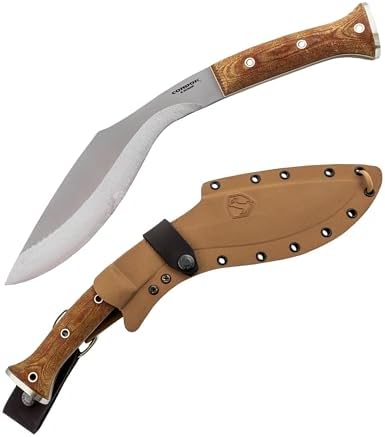
Condor Tool & Knife K-tact Kukri Desert
If you prefer a lightweight build, see our roundup of titanium handle options.
$100.23 price checked August 2026
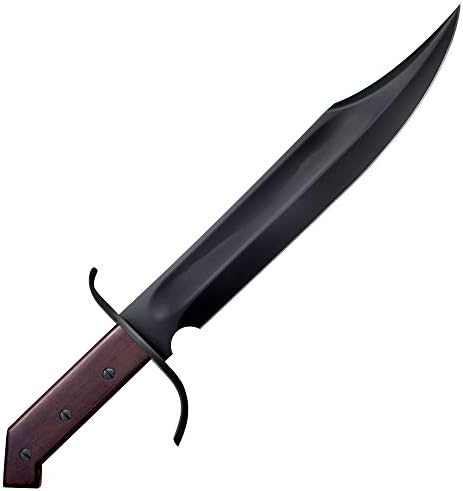
Cold Steel 88CSAB 1917 Frontier Bowie
$135.09 price checked August 2026
Read our full 1917 Frontier Bowie review
Understanding the profile is key, so learn about different blade geometry styles.
How do I measure my required blade length?
To establish your ideal blade length, you should measure your own hand span and the specific workspace you intend to use the knife in. A common starting point is to measure your hand from the base of your palm to the tip of your middle finger; for many, a blade length that does not exceed this measurement allows for a very secure, “close-to-hand” grip.
Using hand span as a guide
Hold your hand out flat with your thumb tucked against your palm. The distance from the base of your palm to the tip of your middle finger provides a baseline for “compact” utility. If you prefer a knife that feels like an extension of your reach, you can look for a blade that is 1.5 in to 2 in longer than this measurement.
Measuring the task area
If you are choosing a knife for a specific task, such as clearing brush or processing large items, measure the largest object you expect to work on. Measure the distance from where you will hold the handle to the furthest point you need to reach. This measurement, minus the width of your grip, tells you the minimum blade length required to reach the target effectively.
Locating the length on a product
The blade length is almost always listed in inches (in.) on the manufacturer’s technical specifications. Look for “Blade Length” or “Blade Size.” Ensure you are looking at the length of the blade alone, not the “Overall Length,” which includes the handle and any guard or pommel.
What happens if the blade length is the wrong size?
Selecting a blade length that is too short for your intended task results in a lack of reach, forcing you to move your body into awkward positions to complete a cut. This can lead to poor leverage and increased fatigue because you cannot use the length of the blade to do the work for you.
Grip comfort depends on size, so compare various tactical handle length options.
Risks of an undersized blade
When a blade is too short for the task, you may find yourself having to “saw” at a material rather than slicing through it. This increases friction and can cause the blade to bind or stick. In heavy-duty scenarios, an undersized blade can also result in the knife being unable to penetrate thick material, making the tool functionally ineffective for that specific job.
Risks of an oversized blade
A blade that is too long for your grip or your environment can become a safety hazard. If the blade is significantly longer than your comfortable reach, you may find it difficult to control the tip during a cut, increasing the risk of the blade striking an unintended object or your own body. Furthermore, longer blades are harder to maneuver in confined spaces, where the tip may hit walls or obstacles before the cut is complete.
What should I do if I am between two blade lengths?
When your requirements fall exactly between two standard sizes, such as 4 in and 5 in, you should choose based on the “worst-case” requirement of your primary task. If the task requires reach, go to the longer size; if the task requires maneuverability, go to the shorter size.
Choosing the longer option
Select the longer blade if your primary concern is the ability to cut through large objects or reach deep into a workspace. It is easier to manage a slightly longer blade in an open area than it is to compensate for a short blade that cannot reach the target. If you have large hands, the longer blade will also feel more proportional and easier to control.
Choosing the shorter option
Select the shorter blade if your primary concern is speed, portability, or working in tight spaces. A shorter blade is inherently more stable because the center of gravity is closer to your hand. If you are unsure about your strength or experience level, the shorter blade offers a higher margin for error and better control during the initial stages of learning the tool.
Before ordering, always check the specific return and sizing policies of the provider. Because blade length is a physical dimension that cannot be adjusted after purchase, ensuring the item can be returned if the scale is incorrect is a vital step in your decision process.
The other Tactical Knife guides we have published
- Tactical Folding Knives for Hunting Under $200 Compared
- Choosing the Best Tactical Kukri for Gardening
- The Tactical Knives That Work Best for Beginners
- Which Tactical Knife with Leather Sheath Is Best?
- Best Tactical Knives with Titanium Handles
- The Tactical Folding Knives That Work Best for Everyday Carry