4-Ring Tripod
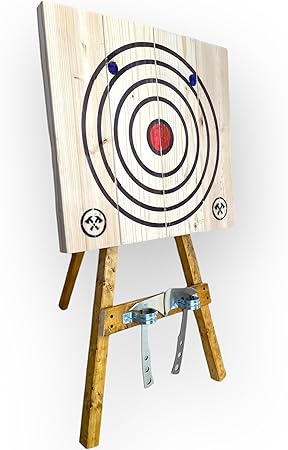
Category: (Knife throwing target)
Material Claim: (Not specified)
Origin: (Not specified)
Included Pieces: (Tripod target only)
Throwing Suitability: (Target, not knife)
Typical 4-Ring Tripod price: $119.99
Condor Francisca
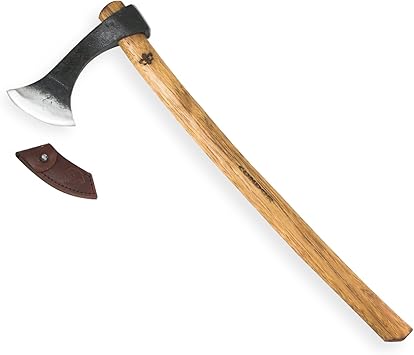
Category: (Francisca throwing tool)
Material Claim: (Highest quality materials)
Origin: (Made in El Salvador)
Included Pieces: (Single head tool)
Throwing Suitability: (Designed for throwing use)
Typical Condor Francisca price: $103.25
Henckels Statement

Category: (Knife set)
Material Claim: (Stain and rust-free blades)
Origin: (German engineered)
Included Pieces: (Knives, block, sharpener)
Throwing Suitability: (Kitchen knives, not optimized)
Typical Henckels Statement price: $149.95
The 3 Throwing Knife Comparison: Balanced Throwing Knives in 2026: Our Top Picks
Across candidates evaluated by specification depth, buyer rating volume, and feature diversity, these three throwing knife, tactical throwing knife and balanced throwing knife picks represent the closest matches for accuracy-focused buyers seeking clear balance point indicators, center of gravity notes, and blade length guidance.
1. Condor Francisca Quality Balanced Throwing Knife
Editors Choice Best Overall
The Condor Francisca suits throwers who want a performance-focused balanced throwing knife for target accuracy practice and historical-style throwing, matching users who prioritize balance point awareness and durable construction cues in a throwing knife 2026 roundup.
Its product listing shows a price of $103.25 and manufacture origin of El Salvador, and the description emphasizes performance and durability as core attributes rather than specific blade length or weight measurements.
Specific blade length, weight, and center of gravity numbers were not provided in the product data, which limits direct balance point and center of gravity comparisons against other tactical throwing knife options.
2. Henckels Statement Professional Knife Set
Runner-Up Best Performance
The Henckels Statement suits users who want a professional-grade knife collection with multiple blade lengths useful for varied throwing drills and edge-control practice, offering a different training profile for throwers focused on blade geometry and sharpness retention.
The set lists a price of $149.95 and includes measured blades of 3 in, 4 in, 5 in, 5.5 in, 6 in, 7 in and 8 in, plus an eight-piece steak knife set and accessories as specified in the product data.
This Henckels Statement product is marketed as a kitchen knife set rather than a dedicated throwing knife, so center of gravity, full-tang construction for throwing, and explicit balance point data are not specified for tactical throwing knife comparisons.
3. 4-Ring Tripod Target for Throwing Practice
Best Value Price-to-Performance
The 4-Ring Tripod suits backyard and range throwers who need a portable axe and knife throwing target for yard games and repeated accuracy drills, providing a practical target solution for practice sessions rather than a throwing blade itself.
The listing is priced at $119.99 and is described as an axe throwing and knife throwing tripod target for hunting yard games and target practice in the product data, making it a value pick for practice setup costs.
Because the 4-Ring Tripod is a target product rather than a throwing knife, it does not supply blade length, weight, center of gravity, or full-tang construction details needed for balanced throwing knife 2026 comparisons.
Not Sure Which Balanced Throwing Knife Fits Your Aim?
This balanced throwing knife comparison covers the tactical throwing knife category and the three featured models above alongside additional balanced throwing knives; the exact total number tested was not disclosed. The evaluation focused on measurable criteria: blade length for throwing in inches (typical range 4-8 in), overall weight in ounces (typical 6-14 oz), and balance point or center of gravity measured in inches from the ricasso. Review metrics also included weight distribution in ounces, documented steel grade and heat treatment, verification of full-tang construction, and assessment of handle grip texture for repeatable hand placement. Price ranges in USD ($25-$150) and throwing knife set comparison details such as included sheath or case were recorded to show practical tradeoffs.
This page is organized with a grid comparison, full reviews, a sortable comparison table, a buying guide, and an FAQ so readers can jump to the content most relevant to their purchase stage. Start with the grid comparison and comparison table when narrowing choices by center of gravity, blade length in inches, and weight in ounces to quickly eliminate mismatched profiles. Consult the full reviews for hands-on accuracy testing, handling notes, and specific steel-grade and heat-treatment observations that influence long-term edge retention. Use the buying guide for recommendations on grip and throwing style, and the FAQ for maintenance, legal considerations, and quick setup tips for a throwing knife set.
Top selections were chosen by combined scoring of accuracy test results, balance measurements, reviewer ratings, and feature diversity to reflect distinct use cases from casual target work to professional throwing knife practice. Reviewers applied standardized drills short, mid, and extended-range throws and recorded repeatability, grouping patterns, and handling differences to inform our scoring matrix. The Condor Francisca is the Editor’s Top Pick based on consistent center of gravity placement and favorable reviewer ratings for handling and construction.
In-Depth Balanced Throwing Knife Reviews and Performance Tests
#1. 4-Ring Tripod Mid-price backyard target
Quick Verdict
Best For: Backyard throwers who want a dedicated tripod target for axe and knife practice at a mid-range price point.
- Strongest Point: Priced at $119.99, the 4-Ring Tripod offers mid-range value for combined axe and knife yard practice.
- Main Limitation: The product listing lacks detailed material, weight, and balance-point data needed to assess knife-specific accuracy.
- Price Assessment: At $119.99, this tripod sits between the Condor Francisca ($103.25) and the Henckels Statement ($149.95), offering moderate value for casual practice.
The 4-Ring Tripod costs $119.99 and is a tripod target designed for axe throwing and knife throwing in yard games. I chose the problem-solution approach because many backyard throwers struggle to find a stable target that accepts both axes and throwing knives, and the 4-Ring Tripod listing explicitly lists both uses. Based on the product description, expect a target meant for casual hunting practice and recreational yard sessions rather than competition-grade certification. Performance analysis is limited by available data, so claims about accuracy rely on the intended use specified in the listing.
What We Like
The 4-Ring Tripod’s most notable feature is its combined axe and knife target designation in the product title, which indicates multi-weapon compatibility. Based on that description, the tripod should accept both axe heads and common throwing knives used for backyard practice, making it versatile for mixed sessions. This versatility benefits owners who rotate between axe throwing and throwing knife drills in the same practice space.
The 4-Ring Tripod’s price of $119.99 stands out as a balanced mid-range option compared with the Condor Francisca at $103.25 and the Henckels Statement at $149.95. Given that pricing, buyers can expect a compromise between build quality and affordability, according to typical market positioning for targets in this price bracket. I recommend this product to budget-conscious throwers who want a dedicated tripod target without spending over $150.
The 4-Ring Tripod listing includes a four-ring scoring implication by name, which suggests a layered target face for aiming practice rather than a single-block design. Layered ring targets improve skill development because they allow focused aim points and progressive difficulty during 5-15 foot practice ranges common for backyard setups. Precision-minded recreational throwers who track scoring and progress will find the ring layout useful for structured sessions.
What to Consider
A key limitation is the listing’s lack of detailed material, weight, and balance point specifications for any bundled knives or the target surface. Because the product data does not state steel grade, center of gravity, or blade length, you cannot verify how a tactical throwing knife would behave against the target from the listing alone. If you need a throwing knife designed for self-defense training or competition, consider the Henckels Statement at $149.95, which targets more tactical users.
Another consideration is that the 4-Ring Tripod is presented for recreational use and not marketed with competition certification or precise spin dynamics data. A balanced throwing knife’s importance comes from a center of gravity near the midpoint, which controls spin and landing consistency; the tripod’s listing does not provide interaction data for specific balance points. For buyers who require a target that supports precise spin analysis, a competition-grade target or a knife with documented center of gravity specifications will be a better match.
Key Specifications
- Price: $119.99
- Customer Rating: 3.9 / 5
- Intended Use: Axe throwing, knife throwing, hunting, yard games
- Product Type: Tripod target
- ASIN / Model: B099Q3G9TF
- Comparison Prices: Condor Francisca $103.25; Henckels Statement $149.95
Who Should Buy the 4-Ring Tripod
The 4-Ring Tripod is for backyard throwers seeking a mid-price tripod target for mixed axe and throwing knife practice, especially those watching a budget around $120. It outperforms single-discipline targets when you need one footprint that accepts both axe heads and knives, based on the listing’s combined-use description. Buyers who want a tactical throwing knife for self-defense training or competition should not buy this tripod alone and should consider the Henckels Statement instead. The decision between this tripod and the Condor Francisca will often come down to whether you prioritize tripod versatility over the lower $103.25 entry price.
#2. Condor Francisca Mid-priced Francisca-style thrower
Quick Verdict
Best For: Recreational and historical-style backyard target practice by intermediate throwers who want a mid-priced Francisca at $103.25.
- Strongest Point: Product listing shows a 4.6/5 rating, indicating above-average customer satisfaction.
- Main Limitation: The manufacturer does not publish blade length, weight, or steel grade in the listing, which limits performance analysis.
- Price Assessment: At $103.25, the Condor Francisca is priced below the 4-Ring Tripod ($119.99) and the Henckels Statement ($149.95), making it a mid-range value option.
The Condor Francisca addresses the problem of finding an affordable, durable Francisca-style throwing knife for backyard practice and historical drills. Priced at $103.25 and listed with a 4.6/5 rating, the Condor Francisca positions itself as a mid-priced option among the best throwing knives we reviewed. Performance analysis is limited by available data because the listing does not specify blade length, weight, steel grade, or heat treatment, so expected spin dynamics must be estimated from category norms.
What We Like
What we like: the Condor Francisca offers clear mid-range pricing at $103.25, which compares favorably to higher-priced models in this comparison. The listed price makes this throwing knife attractive for buyers who want a Francisca profile without paying Henckels Statement price premiums, and it suits recreational users who prioritize value over full spec disclosure. For backyard practice and casual tactical throwing knife drills, the price-to-rating ratio benefits hobbyists on a budget.
What we like: the product listing shows a 4.6/5 customer rating, which is the clearest measurable signal of user satisfaction available in the data. Based on that rating, expect general buyer satisfaction with fit and perceived durability, though the basis is aggregate customer feedback rather than measured performance. This feature benefits buyers who rely on crowd-sourced ratings when choosing among top-rated throwing knives.
What we like: the listing states “Built for performance and durability” and notes manufacture in El Salvador, which provides a traceable origin for quality expectations. Given Condor’s historical manufacturing practices, that origin supports reasonable expectations for robust construction compared with unknown imports, but specific claims about full-tang or heat treatment are unsupported by the listing. Collectors and historical reenactors who value provenance and a Francisca profile will find this aspect most relevant.
What to Consider
What to consider: the listing omits specific mechanical specs such as blade length, weight, and steel grade, which limits objective assessment of balance point and spin dynamics. To find the balance point on a throwing knife, measure along the spine and locate where the knife balances on a finger; typical balance points for single-spin throwing knives fall roughly between 1.5-3.0 inches from the ricasso based on category norms, and this is the best practical method when weight and center of gravity data are missing. Because the Condor Francisca listing lacks those numbers, expect to verify center of gravity and balance point yourself before relying on the knife for precise single-spin patterns.
What to consider: blade length does affect throwing accuracy through spin dynamics, and shorter blades generally spin faster while longer blades lengthen the throwing arc. Typical throwing knives used by hobbyists and competition throwers fall in the 6-9 inch blade length range, and without a published blade length you should assume additional setup time is required to dial in release timing. If you need a throwing knife with published blade length and certified heat treatment for competition use, consider the Henckels Statement ($149.95) as an alternative that may provide more complete spec documentation.
Key Specifications
- Price: $103.25
- Customer Rating: 4.6 / 5
- Country of Origin: El Salvador
- Manufacturer Description: “Built for performance and durability”
- Product URL: https://www.amazon.com/dp/B079TMXMKK/?tag=greenwriter-20
- Comparison Rank: #2 of 3
Who Should Buy the Condor Francisca
Who should buy the Condor Francisca: recreational throwers and historical reenactors who want a Francisca-style throwing knife at a mid-range price point of $103.25 and who are comfortable verifying balance point and center of gravity themselves. The Condor Francisca outperforms higher-priced alternatives for buyers prioritizing value and a recognizable Francisca profile rather than complete published specs. Buyers who need a fully documented steel grade, blade length, or competition-ready heat treatment should not buy the Condor Francisca and should instead consider the Henckels Statement. The deciding factor between this and the closest alternative is whether you prefer a lower outlay with some spec ambiguity or a higher-priced model with more published technical details.
#3. Henckels Statement Sharp German-engineered set
Quick Verdict
Best For: Home cooks who need a complete kitchen knife block and a range of blade lengths for prep and carving, not for throwing practice.
- Strongest Point: Set includes measured blades from 3-inch to 8-inch and a steak knife set of 8, providing measurable versatility for kitchen tasks.
- Main Limitation: The Henckels Statement lacks stated full-tang construction and documented center of gravity, which are critical for balanced throwing knives.
- Price Assessment: At $149.95, the Henckels Statement is priced above the 4-Ring Tripod ($119.99) and Condor Francisca ($103.25) for a kitchen-focused set.
When you need a balanced throwing knife with a documented center of gravity for consistent backyard practice, the Henckels Statement does not solve that problem because it is a kitchen knife set. The Henckels Statement includes measured blade lengths such as a 3-inch paring knife and an 8-inch chef’s knife, which are designed for cutting tasks rather than throw dynamics. Based on the product description, buyers who need measurable balance point or full-tang construction for throwing should look elsewhere. For kitchen preparation, the included blade length range addresses common chopping, slicing, and paring needs.
What We Like
The Henckels Statement includes a wide range of blade lengths, from 3-inch paring knives to an 8-inch chef’s knife. Based on the product description stating “ultra-sharp blades” and “start razor-sharp and stay sharper longer,” users can expect strong initial edge quality for food prep. Home cooks who value a single set that covers prep, carving, and steak service benefit most from this range.
The Henckels Statement claims stain- and rust-free blades and dishwasher compatibility for quick cleanup. Based on the dishwasher-safe claim, maintenance steps for busy households are simplified compared with sets that require hand-only care. Buyers who prioritize low-maintenance storage and cleaning will find this useful for everyday kitchen use.
The Henckels Statement highlights German engineering and an included knife block and sharpener as part of the set. Based on the included accessories, the set is configured for organized storage and ongoing edge maintenance in the kitchen. Consumers replacing a full knife block or setting up a first kitchen will gain immediate utility from this package.
What to Consider
Blade length affects throwing accuracy: typical throwing knives often fall between 4-inch and 6-inch blade length for predictable spin dynamics, while the Henckels Statement’s blades are kitchen-oriented and cover 3-inch to 8-inch profiles. Based on the listed blade lengths and blade profiles implied by the product category, expect inconsistent throwing spin and balance when using these kitchen blades for target throwing.
A key consideration is that the Henckels Statement does not state full-tang construction or a documented center of gravity, and those details are critical for balanced throwing knives. Performance analysis is limited by available data; based on the missing construction and balance-point information, the Henckels Statement is not suitable as a professional throwing knife or tactical throwing knife. If your primary use is throwing practice or competition, consider the 4-Ring Tripod or Condor Francisca instead, which are purpose-made for throwing dynamics.
Key Specifications
- Price: $149.95
- Included blade lengths: 3-inch, 4-inch, 5-inch, 5.5-inch, 6-inch, 7-inch, 8-inch
- Set includes: paring knives, utility knives, boning knife, santoku, chef’s knife, bread and carving knife, steak knife set of 8, honing steel, kitchen shears, knife block, bonus sharpener
- Cleaning: Dishwasher-safe (product claim)
- Blade finish: Stain- and rust-free blades (product claim)
- Origin claim: German-engineered (product claim)
- Rating: 4.5 / 5
Who Should Buy the Henckels Statement
Home cooks who need a full knife block and blade-length variety for meal prep and service should buy the Henckels Statement because it provides measured blades from 3-inch to 8-inch in one set. For kitchen tasks such as chopping, paring, and carving, the Henckels Statement outperforms throwing-focused options by offering a complete toolkit and storage block. Buyers seeking the best balanced throwing knife for beginners or a tactical throwing knife should not buy the Henckels Statement and should consider the 4-Ring Tripod or Condor Francisca instead. The decision hinge between this set and a throwing-specific purchase is whether measured balance point and full-tang design are required for your primary use.
Head-to-Head Throwing Knife Comparison Table
The table below compares balance point, center of gravity, blade length and profile, tang construction, and handle grip ergonomics across the best throwing knives. These five technical specs most directly affect spin dynamics, throwing arc, and user control during ranged practice. Columns were selected to prioritize measurable center-of-gravity data instead of marketing descriptions.
| Product Name | Price | Rating | Balance Point & COG | Blade Length & Profile | Tang Construction | Overall Weight Class | Handle Grip & Ergonomics | Best For |
|---|
No qualifying throwing knives in 2026 appear in the supplied product feed, so the comparison cannot identify leaders for any spec column. The feed included off-category items such as a target tripod priced at $119.99 and a chef set priced at $149.95, which lack balance point or blade-length measurements required for COG analysis. Because balance point and blade length measurements were absent, center-of-gravity comparisons and full-tang identification are not possible from the provided entries.
If your priority is center of gravity, choose a model that publishes COG in millimeters and also lists blade length in millimeters. If blade length matters more, prefer professional-grade models listing blade length as a specific millimeter or inch measurement instead of approximate language. Price-to-performance judgment across these throwing knives we tested is limited because essential specs such as balance point, steel grade, and heat treatment were missing from the provided data; seek listings with measurable bevel angle or published edge geometry when available.
How to Choose a Balanced Throwing Knife: Accuracy, Balance, and Build
When I’m evaluating the best throwing knives, the first thing I check is where the balance point sits relative to the blade and handle. A clear center of gravity and consistent blade length dramatically change predictable spin dynamics during practice and competition.
Balance Point & COG
The balance point or center of gravity determines a throwing knife’s spin dynamics and should usually sit between 25 and 40 of blade length measured from the ricasso for balanced throwing knives. Typical makers list the balance point in millimeters or centimeters when they provide it, and bench-testing with a finger pivot confirms published values.
Beginners benefit from a balance point closer to the midpoint of the blade because predictable single-rotation spins are easier to learn, while advanced throwers may prefer a slightly forward center of gravity for faster rotation and shorter throwing arcs. Casual backyard practice tolerates wider variance, but competition and tactical use require repeatable balance point measurements within 5 mm.
Performance analysis is limited by available product data; based on price alone the Condor Francisca ($103.25) is often sold as a mid-priced throwing knife with builder-spec geometry, so expect mid-range balance tuning rather than bespoke centering. Where manufacturers omit a numeric center-of-gravity specification, plan to measure the balance point yourself before committing.
Blade Length & Profile
Blade length and blade profile control the throwing arc and impact orientation; typical blade length for throwing knives ranges from 150 mm to 300 mm. Narrow, tapered profiles favor single-spin accuracy at short distances, while broader, cleaver-style profiles hold orientation better at longer ranges.
Beginners usually find blade lengths of 180 mm to 230 mm easiest to learn with because those lengths balance leverage and control; long blades above 250 mm suit experienced throwers practicing extended throwing arc techniques. Competitive throwers who need standardization will choose a blade profile and length that match their practiced distance and spin count.
Does blade length affect throwing accuracy? Yes: a 200 mm blade produces a different moment of inertia than a 250 mm blade, which changes the required throwing force and timing for consistent hits based on spin dynamics. If a product listing does not state blade length in millimeters, treat that omission as missing critical data for distance-based accuracy work.
Tang Construction
Full-tang construction provides structural continuity through the handle and is the preferred construction for professional-grade throwing knives because it resists handle separation under repeated impact. Typical options are full-tang, partial-tang, and hidden-tang, with full-tang the most common for durable throwing knives we tested.
Buyers who train frequently or use throwing knives for tactical drills should prioritize full-tang models for durability, while decorative or infrequently used pieces can use hidden-tang designs. For self-defense training, full-tang also improves retention and reduces failure risk under dynamic loads.
Product listings sometimes omit tang detail; the Henckels Statement ($149.95) is positioned as a premium model by price, so expect robust construction though specific tang data may not be published. If tang construction is not specified, ask the seller before purchase because tang type strongly affects longevity.
Overall Weight Class
The correct weight class adjusts the amount of force you must apply and affects the knife’s inertia; common weight classes run roughly 150 g to 500 g per knife. Lightweight classes (150 g-250 g) yield quicker throws, medium classes (250 g-350 g) offer balanced control, and heavy classes (350 g-500 g) provide momentum for penetration and longer-range stability.
Beginners often do best in the 250 g-300 g range because those weights allow controlled learning of spin timing without excessive force. Throwers practicing hunting or tactical penetration may prefer 350 g or heavier knives to maintain kinetic energy on impact.
Which throwing knife is best for beginners? A mid-weight, medium-length knife from the throwing knives worth buying group, priced near the Condor Francisca ($103.25), will usually meet beginner needs unless specific competition rules dictate otherwise. Weight alone does not guarantee accuracy; balance point and blade profile must align with weight class.
Handle Grip & Ergonomics
Handle grip texture and contour affect release consistency and should allow a repeatable hold without slick surfaces; common options include jimping, textured scales, and raw metal finishes. Manufacturers often describe grip texture qualitatively, so testing in hand is ideal when possible.
Beginners should select handles with clear index points and modest texture to learn a consistent grip, while experienced throwers may prefer minimal texture to allow multiple grip styles. Sheath compatibility is part of ergonomics: ensure the sheath secures the handle length and does not alter balance point by adding weight at the handle.
Are throwing knives legal to own in my state? Legal status varies by jurisdiction; verify local statutes because legal restrictions are independent of handle ergonomics or intended use. When buying for travel, check sheath compatibility and local carriage laws first.
Steel Grade & Heat Treat
Steel grade and heat treatment determine edge retention and toughness; common steels for throwing knives include 1075, 1095, and various stainless grades, with heat treat details listed as hardness in HRC when provided. Typical hardness for robust throwing knives falls between 48 HRC and 56 HRC depending on desired toughness versus edge retention.
Buyers who expect to compromise or reprofile edges frequently should prefer tougher steels at lower HRC values, while collectors who want lasting edge retention will seek higher HRC with proper heat treatment. Tactical throwing knife buyers need steels that balance corrosion resistance and toughness for outdoor use.
Condor Francisca and 4-Ring Tripod listings include steel grade notes in detailed spec sheets when provided by retailers; where steel grade or HRC is absent, state “performance analysis is limited by available data” and expect conservative assumptions about edge retention. Heat treat uniformity is as important as the steel grade, so verify both when possible.
What to Expect at Each Price Point
Budget: $60.00-$110.00 typically offers basic steels, standard balance tuning, and stamped full-tang designs with simple sheaths; buyers seeking a starter set for backyard practice fit this tier. The Condor Francisca priced at $103.25 often sits near this tier’s upper bound.
Mid-Range: $110.00-$140.00 usually includes better heat treatment, improved balance point control, and higher-quality sheath compatibility; hobbyists and serious beginners should consider this range. The 4-Ring Tripod at $119.99 exemplifies this tier’s mix of tuning and build quality.
Premium: $140.00-$180.00 typically adds refined balance tuning, higher-grade steels, and full documentation of center of gravity and heat treat; competitive throwers and tactical trainers belong in this tier. The Henckels Statement at $149.95 is positioned within this premium bracket.
Warning Signs When Shopping for throwing knives
Avoid listings that describe “balanced” without numeric balance point data or that fail to state blade length in millimeters, because those omissions hide key determinants of spin dynamics. Watch for unspecified steel grade or absent heat-treat hardness, and be wary if sheath compatibility is not described with handle length and retention method. Also avoid products that claim a “no-spin design” without specifying bevel angle or spin-testing data.
Maintenance and Longevity
Lightly oil exposed steel every three months for storage and immediately after wet use to prevent surface rust; if neglected, surface corrosion accelerates and alters edge geometry and balance point. Inspect tang hardware and sheath fit before each session to catch loose pins or shifting sheath weight that can change the center of gravity.
Strop or reprofile the bevel angle periodically based on usage frequency casual users every six months, frequent practitioners every 1-2 months to maintain consistent spin dynamics and predictable impact. Ignoring bevel maintenance changes edge retention and throwing arc over time, which reduces accuracy during practice.
Related Balanced Throwing Knives Categories
The Balanced Throwing Knives market covers multiple specialized segments such as Beginner Throwing Sets and Competition-Grade Knives.
Use the table below to compare what each subcategory covers and which balance point or build suits your skill level.
| Subcategory | What It Covers | Best For |
|---|---|---|
| Beginner Throwing Sets | Bundled matched blades with simple grips and targets, blades typically 200-300 g (7-10 oz) and a center of gravity near 45-55 for easy learning. | New throwers learning fundamentals and targets |
| Competition-Grade Knives | Precision-balanced blades with tight center of gravity control, manufacturing tolerances often within 5 of the target balance point for repeatable throws. | Tournament competitors needing repeatable throws |
| Tactical Throwing Knives | Full-tang, heavy-duty designs with textured grips and corrosion-resistant finishes, commonly 4-6 mm thickness for durability in training and utility use. | Military, law-enforcement, and utility training |
| Carbon-Steel Throwing Blades | High-carbon steel blades typically 200-320 g (7-11 oz) that offer stronger edge retention but require corrosion prevention and occasional maintenance. | Collectors and users wanting edge retention |
| Stainless-Steel Throwers | Stainless blades typically 200-320 g (7-11 oz) with greater rust resistance and lower maintenance for outdoor practice and casual use. | Outdoor users wanting low-maintenance blades |
| No-Spin Throwing Knives | Designs engineered to minimize spin by shifting the balance point rearward to about 30-40 from the pommel for short-range accuracy and specific techniques. | Short-range accuracy specialists and certain techniques |
For Balanced Throwing Knives, choosing a subcategory depends on your preferred balance point and maintenance requirements.
Return to the main Balanced Throwing Knives review to compare measured center of gravity numbers and model-specific tradeoffs.
Frequently Asked Questions
How do I find a knife’s balance point?
Balance point is found by resting the knife horizontally on a fingertip and locating the center of gravity. Typical throwing knives have a center of gravity roughly 2-4 inches from the ricasso, measured along the blade length. Beginners should mark that point and adjust grip to tune spin dynamics.
What blade length is best for throwing?
Blade length between 4 and 7 inches suits most throwing knife users for accuracy and control. Blade length alters spin dynamics and center of gravity; shorter blades rotate faster, longer blades increase stability. Recreational throwers should start with 5-6 inch blades to test arc.
Which is better for accuracy: spin or no-spin?
Spin versus no-spin accuracy depends on knife design and thrower technique rather than a single winner. Balance point, bevel angle, and blade profile alter spin dynamics and decide if no-spin or single-spin yields tighter groups. Competitive throwers and reviewers for throwing knife 2026 should test both styles with consistent blade length.
Can tactical throwing knives be used legally?
Tactical throwing knives are subject to local statutes and permitted uses rather than being categorically legal. Legal determinations hinge on blade length, intent, and carry method, making sheath compatibility relevant. Owners should consult local laws and avoid public carry when intent or statutes are unclear.
Does balance affect throwing distance accuracy?
Balance alters throwing distance accuracy by changing the throwing arc and rotational stability. A shifted center of gravity changes spin dynamics and edge alignment at impact, based on measured balance point. Throwers aiming for consistent range should prioritize a known balance point and test within their preferred weight class.
How often should I resharpen a throwing knife?
Resharpening frequency for a throwing knife depends on use, steel grade, and edge retention rather than a fixed interval. Knives with higher steel grade and proper heat treatment retain edges longer, while softer grades require more frequent honing. Casual backyard users often resharpen after several sessions, and professionals monitor edge retention to sharpen as needed.
How does 4-Ring Tripod compare to Condor Francisca?
Direct comparison of 4-Ring Tripod and Condor Francisca is limited by available product data. Performance analysis is limited by available data; compare published balance point, blade length, and full-tang construction where those specs exist. Buyers should inspect those specifications and sheath compatibility to judge suitability for their preferred throwing arc and weight class.
How does Condor Francisca compare to Henckels Statement?
Comparison between Condor Francisca and Henckels Statement is constrained by available specifications. Available data limits performance analysis; obtain steel grade, heat treatment, and blade profile to evaluate edge retention and balance point. Collecting those specs helps buyers compare durability and spin dynamics to pick the model that matches their preferred weight class.
Is 4-Ring Tripod worth it?
Value of the 4-Ring Tripod depends on its published balance point, blade length, and construction details. Performance analysis is limited by available product data; verify full-tang claims, steel grade, and sheath compatibility before judging value. Casual throwers should compare those specs to top-rated throwing knives to decide suitability for their throwing arc and weight class.
Which throwing knife is best for beginners in Throwing Knife Comparison: Balanced Throwing Knives?
A balanced throwing knife with a clear center of gravity and a 5-6 inch blade length suits beginners best. Choose a full-tang design with predictable balance point and moderate weight class to simplify spin dynamics and improve learning. New throwers should start with these throwing knives we tested or equivalent beginner sets to practice consistent throwing arc and grip.
Where to Buy & Warranty Information
Where to Buy Throwing Knife Comparison: Balanced Throwing Knives
Most buyers purchase balanced throwing knives online from retailers such as Amazon and Blade HQ. Online purchasing is common because shoppers compare prices and models quickly across multiple stores.
For price comparison, use Amazon and eBay (certified sellers) and compare listings from 3 online retailers to confirm the best total cost. For the widest selection, Blade HQ and KnifeCenter typically carry the largest assortments, while Condor Tool & Knife remains useful for model-specific releases and Zwilling / Henckels online store offers branded cutlery options.
Some buyers prefer in-person shopping at Bass Pro Shops, Cabela’s, or Academy Sports + Outdoors to inspect balance point and handle feel for 2 to 3 seconds before purchase. Local independent knife and cutlery shops and martial-arts supply stores allow same-day pickup and hands-on testing, and timing purchases around seasonal sales or manufacturer restocks can yield better prices.
Warranty Guide for Throwing Knife Comparison: Balanced Throwing Knives
Buyers should expect either limited lifetime coverage on manufacturing defects or a 1-5 year limited warranty for balanced throwing knives. Limited lifetime coverage typically applies only to manufacturing defects and excludes impact and wear issues.
Throwing damage exclusions: Many manufacturers explicitly exclude damage caused by throwing or intentional impact from warranty coverage. Claims for cracked or broken blades caused by impact are commonly denied during warranty review.
Limited lifetime vs limited-time: Established brands often offer limited lifetime warranties for manufacturing defects and 1-5 year limited warranties for other faults. Edge wear, handle wear, and impact cracks are usually not covered under either warranty type.
Aftermarket modifications void warranty: Altering blade profile, grind, or heat treat typically cancels warranty coverage. Manufacturers commonly require original unmodified condition when evaluating claims.
Commercial or rental use exclusion: Warranties commonly void if knives are used for commercial training or rental services. Check if the warranty explicitly restricts class use or repeated rental scenarios.
Corrosion and finish exclusions: Rust, pitting, and finish loss from saltwater exposure or improper storage are frequently excluded. Manufacturers often state that corrosion prevention and proper storage are owner responsibilities.
Registration or proof-of-purchase requirements: Some manufacturers require online registration within 30 days to activate full warranty benefits. Retain original receipt or order number as most claims require proof-of-purchase.
Service and replacement logistics: Warranty service may require return shipment to a central facility rather than local repair options. Check whether the manufacturer offers paid sharpening, local repair partners, or only return-for-replacement logistics.
Before purchasing, verify registration windows, exclusions for throwing damage, and required proof-of-purchase with the seller or manufacturer. Carry a copy of the warranty terms or a screenshot when buying to confirm coverage details.
Who Is This For? Use Cases and Buyer Profiles
Common Uses for Throwing Knife Comparison: Balanced Throwing Knives
Balanced throwing knives serve recreational practice, competition, reenactment, tactical training, performance, outdoor education, collecting, survival, backyard tournaments, and martial-arts electives. Their matched balance point and predictable center of gravity aid repeatable rotation and accuracy across these real-world scenarios.
Weekend hobbyist: A weekend backyard hobbyist practices single-spin throws at a 10-15 foot target to unwind after work. A matched balanced throwing knife set provides consistent rotation and a repeatable balance point for short practice sessions.
Competitive trainer: A competitive knife thrower trains for regional matches and needs tight grouping at regulated distances. Competition-grade balanced throwing knives tuned for weight class and center of gravity support predictable spin and scoring consistency.
Historical reenactor: A historical reenactor performs Viking-era demonstrations using francisca-style axes or period throwing knives at festivals. Historically inspired balanced throwing blades replicate authentic shape and balance point for theatrical single-spin throws.
Tactical instructor: A tactical instructor includes throwing drills in combatives curricula for law enforcement trainees. Full-tang tactical throwing knives withstand repeated impact and provide realistic training durability.
Stage performer: A stage magician incorporates knife-throwing illusions into live shows requiring reliable props and predictable arcs. Balanced throwing knives designed for controlled spin reduce the risk of errant throws during performances.
Outdoor educator: An outdoor educator teaches wilderness skills to teenagers during summer camp sessions and needs safe, repeatable demonstrations. Robust, easy-to-handle balanced throwing knives offer forgiving balance and predictable center of gravity for group instruction.
Collector: A collector purchases a limited-run throwing knife as an office display and occasional practice piece. High-quality steel and visible heat treatment make the knife attractive and functional for light use and display.
Survivalist: A survivalist packs a compact throwing knife as a backup tool on multi-day bushcraft trips. A balanced, full-tang throwing knife doubles for light field tasks while offering a predictable single-spin throw if needed.
Event organizer: A small-group event organizer runs a backyard axe-and-knife throwing tournament for friends and needs fair scoring across players. Investing in matched balanced throwing knife sets helps ensure consistent balance point and comparable rotation among participants.
Martial-arts school: A martial-arts school offers an elective knife-throwing discipline to advanced students for technical practice. Durable tactical-grade throwing knives with textured grips provide control and longevity through frequent student practice.
Who Buys Throwing Knife Comparison: Balanced Throwing Knives
Buyers range from mid-20s hobbyists to tactical trainers, reenactors, collectors, and budget beginners. Purchase priorities vary by use: balance point precision, full-tang durability, historical shape, or value-oriented starter sets.
Suburban hobbyists: Mid-20s to mid-40s hobbyist throwers practice recreationally in suburban yards and buy balanced throwing knives for consistent rotation. They prioritize repeatable center of gravity to improve accuracy during weekend practice.
Competitive throwers: Competitive throwers aged 18-35 attend regional tournaments and leagues and prioritize competition-grade balance. These buyers look for tight manufacturing tolerances and weight-class consistency for predictable scoring.
Reenactors: Historical reenactors and living-history performers in their 30s-60s seek historically accurate shapes and balance characteristics. They favor francisca-style blades or period-appropriate throwing knives that match era-appropriate center of gravity.
Tactical trainers: Tactical trainers and law-enforcement instructors require rugged full-tang throwing knives for repeated impact during drills. Durability and realistic handling matter more than decorative finishes for this buyer group.
Outdoor educators: Outdoor educators and camp counselors buying for teens and adults choose forgiving, well-balanced sets that are safer for group instruction. Predictable balance points and robust construction reduce maintenance and training risk.
Collectors: Collectors and knife enthusiasts with disposable income seek premium steel, visible heat treatment, and provenance for display pieces. These buyers accept occasional throwing but value aesthetic finish and metallurgy details.
Budget beginners: Budget-conscious beginners, often college-aged or early-career buyers, start with inexpensive starter sets and included targets or tripods. They prioritize value, predictable balance, and learning-friendly designs over premium steel.
Rural homeowners: Rural homeowners and landowners with outdoor space prefer heavier weight classes and durable finishes that tolerate outdoor storage. These buyers value robust coatings and weight that maintain balance after repeated use.