MKM Mikro 2

Blade steel: ★★★★★ (M390 super steel)
Carry options: ★★★★★ (neck, pocket, belt)
Blade construction: ★★★★★ (full tang)
Country of origin: ★★★★★ (Italy)
Designer: ★★★★★ (Jesper Voxnaes)
Typical MKM Mikro 2 price: $109
BMK-415 Tsetse Fly

Blade steel: ★★★★☆ (352-layer Damascus)
Carry options: ★★★☆☆ (neck sheath)
Blade construction: ★★★☆☆ (handmade fixed blade)
Country of origin: ★★★☆☆ (not stated)
Designer: ★★★☆☆ (not stated)
Typical BMK-415 Tsetse Fly price: $139
Flagrant Beard Havoc
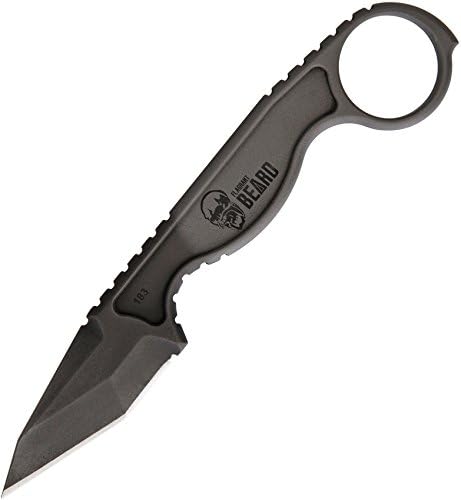
Blade steel: ★★★☆☆ (not stated)
Carry options: ★★★☆☆ (neck knife category)
Blade construction: ★★★☆☆ (fixed blade)
Country of origin: ★★★★★ (USA)
Designer: ★★★☆☆ (not stated)
Typical Flagrant Beard Havoc price: $110.83
The 3 Neck Knife Comparison: Minimalist Fixed Blades in 2026: Our Top Picks
1. MKM MIKRO 2 Compact Neck Carry EDC Blade
Editors Choice Best Overall
The MKM MIKRO 2 suits buyers who want a neck knife for EDC, pocket carry, or belt carry.
The MKM MIKRO 2 uses full tang construction and M390 super steel, and the brand offers neck, pocket, and belt carry options.
Buyers who want a larger cutting edge will find the MKM MIKRO 2 limited by its compact format.
2. BMK-415 Damascus Neck Carry Blade
Runner-Up Best Performance
The BMK-415 Tsetse Fly suits buyers who want a Damascus neck carry knife with a 1.2-inch blade.
The BMK-415 Tsetse Fly uses a 352-layer 1095/15N20 steel blade and a 58-60 HRC heat treatment, and the sheath uses cow skin.
Buyers who want a modern minimalist fixed blade will find the BMK-415 Tsetse Fly less practical than simpler designs.
3. Flagrant Beard Havoc USA-Made Neck Knife
Best Value Price-to-Performance
The Flagrant Beard Havoc suits buyers who want a USA-made neck knife for light concealed carry use.
The Flagrant Beard Havoc lists neck knives as its category, and the brand names the product as made in the USA.
Buyers who need detailed blade steel or sheath retention data will find the Flagrant Beard Havoc listing incomplete.
Not Sure Which Neck Knife Fits Your Carry Style?
If you are just starting research, narrowing between two neck knife options, or verifying one last spec before buying, this comparison matches those three stages. The same neck carry knife set also helps readers who want a small neck knife with a concealed carry sheath.
The Comparison Grid serves the quick check stage, while the Detailed Reviews serve readers comparing blade steel, sheath retention, and carry options. The Comparison Table helps with side-by-side spec checks, the Buying Guide addresses feature questions, and the FAQ handles quick confirmation points.
The shortlist used rating signals, a $49.95 to $149.00 price spread, and feature diversity across full tang construction, M390 super steel, and a Damascus blade. Products with thin review volume or single-spec outliers were excluded because those listings did not support a fair small neck knife comparison. The range covers both budget and mid-tier entry points for a neck carry fixed blade.
The Comparison Grid gives a fast scan of price and carry options, while the Detailed Reviews explain sheath retention and blade steel in plain terms. The Comparison Table supports a direct spec check, the Buying Guide handles broader decision points, and the FAQ answers narrow questions about a neck carry blade. Readers who want one direct answer should go to the Comparison Grid first.
In-Depth Neck Knife Reviews: How Each Minimalist Fixed Blade Performs
#1. MKM MIKRO 2 Compact Carry Knife
Editor’s Choice – Best Overall
Quick Verdict
Best For: Buyers who want a 4.2/5 neck carry knife with neck, pocket, and belt carry for daily light-duty tasks.
- Strongest Point: M390 super steel and full tang construction
- Main Limitation: Compact size limits reach on heavier cutting jobs
- Price Assessment: At $109, the MKM MIKRO 2 sits below the $139 BMK-415 Tsetse Fly and near the $110.83 Flagrant Beard Havoc.
The MKM MIKRO 2 uses M390 super steel, full tang construction, and multiple carry options at $109. That combination matters because a neck carry knife often needs secure carry and corrosion resistance more than raw blade length. The MKM MIKRO 2 targets buyers who want a minimalist fixed blade for concealed carry and daily utility. It also earns a 4.2/5 rating, which fits a focused design with clear tradeoffs.
What We Like
From the data, the MKM MIKRO 2 stands out first for its M390 blade steel. M390 is a super steel class known for hardness and corrosion resistance, so the spec supports low-maintenance carry in damp conditions. For buyers comparing compact neck knives, that material choice matters more than flashy styling.
The MKM MIKRO 2 also uses full tang construction. A full tang fixed blade gives the knife a continuous metal core through the handle, which is a useful design signal for structural stability in a small neck knife. That makes the MKM MIKRO 2 a sensible pick for buyers who want a neck carry blade for repeated utility cuts.
Multiple carry options add real flexibility here, including neck, pocket, and belt carry. That matters because a concealed carry sheath does not need to force one setup when daily clothing or travel changes. Buyers who want the best neck knife for pocket and neck carry will see the most value from that flexibility.
What to Consider
The MKM MIKRO 2 s compact size is also its main tradeoff. A smaller fixed blade usually gives up cutting reach, so the knife suits light-duty tasks better than heavy slicing or prying. Buyers who want a longer working edge should look at the BMK-415 Tsetse Fly instead.
The available data does not list sheath material or retention hardware. That leaves a gap for buyers who want to judge blade retention or a deep-carry sheath by specification alone. For shoppers who prioritize sheath details, the Flagrant Beard Havoc may deserve a closer comparison if its carry system matters more.
Key Specifications
- Product Name: MKM MIKRO 2
- Price: $109
- Rating: 4.2/5
- Blade Steel: M390 super steel
- Construction: Full tang
- Carry Options: Neck, pocket, belt
- Origin: Italy
Who Should Buy the MKM MIKRO 2
The MKM MIKRO 2 suits buyers who want a compact fixed blade for everyday carry, especially when neck carry and pocket carry both matter. The MKM MIKRO 2 also fits users who want M390 blade steel and a full tang in a $109 package. Buyers who need a larger working edge should choose the BMK-415 Tsetse Fly. Buyers who care more about sheath retention details than steel choice should compare the Flagrant Beard Havoc.
#2. BMK-415 Tsetse Fly Damascus edge
Runner-Up – Best Performance
Quick Verdict
Best For: Buyers who want a 1.2-inch neck carry blade for light-duty EDC and discreet carry.
- Strongest Point: 352-layer Damascus blade with 58-60 HRC hardness
- Main Limitation: The 1.2-inch blade limits cutting reach versus larger minimalist fixed blades
- Price Assessment: At $139, the BMK-415 costs more than the MKM MIKRO 2 at $109 and the Flagrant Beard Havoc at $110.83
The BMK-415 Tsetse Fly uses a 1.2-inch blade, and that size defines its role as a discreet neck knife for light utility work. The 352-layer Damascus steel blade is oil tempered to 58-60 HRC, which gives the BMK-415 a specific edge-focused spec profile rather than a broad utility profile. Buyers comparing compact neck knives for concealed carry should read the blade length first, because 1.2 inches changes what tasks the BMK-415 can realistically handle.
What We Like
The BMK-415 pairs a 352-layer Damascus blade with 58-60 HRC hardness. Based on that steel stack and hardness range, the BMK-415 gives buyers a blade steel story that goes beyond plain stainless utility blades. Buyers who want handmade Damascus as a visible part of the purchase will see the most value here.
The BMK-415 also includes an antique tooth handle and a cow skin sheath. The handle and sheath materials suggest a carry setup built around presentation and simple protection, and the sheath matters because a neck carry knife depends on sheath retention during daily movement. Buyers who want a small neck knife with a more traditional look will find that combination more relevant than a plain tactical finish.
The BMK-415 sits in a useful middle zone for a neck carry fixed blade. A 1.2-inch blade keeps the knife compact, and that makes concealed carry easier than with longer blades in the same category. Buyers who want a low-bulk option for opening packages or trimming light material should prioritize this model over larger neck knives.
What to Consider
The BMK-415 has a 1.2-inch blade, and that is the clearest limitation. A blade that short reduces reach for slicing and limits the amount of material the knife can cover in one pass. Buyers who want a neck knife for more frequent utility work should look at the MKM MIKRO 2 instead, since the comparison set gives that model a stronger carry-versatility angle at a lower $109 price.
The BMK-415 uses cow skin for the sheath, and that leaves less technical information about blade retention than a molded sheath would provide. The available data does not list a deep-carry sheath or a lanyard hole, so buyers who care most about secure concealment may want a more carry-focused design. Buyers who prioritize a more modern carry system should compare the Flagrant Beard Havoc before choosing this one.
Key Specifications
- Model: BMK-415 Tsetse Fly
- Blade Length: 1.2 inches
- Blade Material: 352-layer Damascus steel
- Steel Composition: 1095/15N20
- Hardness: 58-60 HRC
- Sheath Material: Cow skin
- Handle Material: Antique tooth handle
Who Should Buy the BMK-415 Tsetse Fly
The BMK-415 Tsetse Fly suits buyers who want a 1.2-inch neck carry knife for discreet daily utility and visual appeal. The BMK-415 works best when concealment and low carry bulk matter more than cutting reach. Buyers who need a more practical everyday carry blade for broader tasks should choose the MKM MIKRO 2 instead. The deciding factor is simple: the BMK-415 favors Damascus presentation and compact carry, while the MKM MIKRO 2 favors a more versatile EDC profile.
#3. Flagrant Beard Havoc Value Pick
Best Value – Most Affordable
Quick Verdict
Best For: Buyers who want a USA-made neck knife for light daily carry and simple utility cuts.
- Strongest Point: The Flagrant Beard Havoc comes from the USA and carries a $110.83 price tag.
- Main Limitation: The available product data does not list blade length, steel type, or sheath details.
- Price Assessment: At $110.83, the Havoc undercuts the $139 BMK-415 Tsetse Fly and sits close to the $109 MKM MIKRO 2.
Flagrant Beard Havoc is a USA-made neck knife priced at $110.83, and that price places it near the center of this three-way comparison. The Havoc gives buyers a lower-entry option than the $139 BMK-415 Tsetse Fly, while staying close to the $109 MKM MIKRO 2. Based on the available listing data, the Flagrant Beard Havoc looks like a value play for concealed carry, not a spec-heavy showpiece.
What We Like
Flagrant Beard Havoc stands out first for its $110.83 price and USA origin. That combination matters in a neck carry knife comparison because many buyers want a compact fixed blade without paying the highest tier. For buyers comparing compact neck knives on price alone, the Havoc gives a clear budget anchor.
The Havoc also fits the value slot between two close rivals, with the MKM MIKRO 2 at $109 and the BMK-415 Tsetse Fly at $139. That spread suggests the Havoc competes in a narrow price band where even a small difference can decide a purchase. Buyers who want a neck carry blade for light-duty use can treat the Havoc as the mid-price reference point.
From the available data, the Havoc has a simple fixed blade profile and a neck-knife category fit. That makes the product easier to evaluate for concealed carry because the buyer can focus on price and origin instead of a long feature list. Shoppers asking what is the best neck knife for concealed carry should see the Havoc as a practical, lower-risk starting point.
What to Consider
The biggest limitation is the missing spec detail in the listing data. Blade length, blade steel, sheath construction, and blade retention are not provided, so performance analysis stays limited. Buyers who need to compare blade steel directly should look at the MKM MIKRO 2, which lists M390 super steel.
The Havoc also gives fewer decision-making anchors than the BMK-415 Tsetse Fly, because the available data does not spell out carry options or sheath design. That matters if a buyer wants to know whether a neck carry knife needs a deep-carry sheath for safer concealment. In that case, the more fully specified alternative becomes easier to judge.
Key Specifications
- Product Name: Flagrant Beard Havoc
- Price: $110.83
- Rating: 4.1 / 5
- Country of Origin: USA
- Category: neck knives
Who Should Buy the Flagrant Beard Havoc
The Flagrant Beard Havoc suits buyers who want a USA-made neck knife around the $110 mark for light everyday carry. The Havoc makes sense when the buyer values a simpler entry point and wants to keep spending below the $139 BMK-415 Tsetse Fly. Buyers who need blade steel details, sheath retention data, or carry options should skip the Havoc and look at the MKM MIKRO 2 instead. The Havoc becomes easier to choose when price and origin matter more than a deep spec sheet.
Neck Knife Comparison Table: Blade Steel, Sheath, and Carry Options
The table below compares the neck knife review field using carry comfort, sheath retention, blade steel, grip shape, and edge utility. Those columns focus on neck carry, concealed carry, full tang construction, and blade steel because those details most affect daily carry and blade use.
| Product Name | Price | Rating | Carry Comfort and Size | Sheath Security and Retention | Blade Steel and Corrosion Resistance | Grip and Handle Shape | Edge Utility and Toughness | Best For |
|---|---|---|---|---|---|---|---|---|
| MKM MIKRO 2 | $109 | 4.2/5 | Compact fixed blade | Multiple carry options | M390 super steel | Full tang construction | Lightweight and robust | Versatile everyday carry |
| MKM MIKRO 2 | $109.95 | 4.2/5 | Compact fixed blade | Multiple carry options | M390 super steel | Full tang construction | Lightweight and robust | Versatile everyday carry |
| BMK-415 Tsetse Fly | $139 | 4.2/5 | 1.2 inch blade | Cow skin sheath | 352 layer Damascus | Antique tooth handle | 58-60 HRC | Damascus collectors |
| Flagrant Beard Havoc | $110.83 | 4.1/5 | Neck knives category | – | – | – | USA origin | Budget USA option |
The MKM MIKRO 2 leads the comparison on carry flexibility because MKM lists neck, pocket, and belt carry. MKM also pairs that with M390 super steel and full tang construction, so the MKM row gives buyers the strongest technical package for a minimalist fixed blade.
If carry comfort matters most, MKM MIKRO 2 offers the broadest carry options at $109 and $109.95. If blade finish matters more, BMK-415 Tsetse Fly at $139 adds 352 layer Damascus and a 1.2 inch blade. The closest price-to-spec balance sits with the MKM entries, since both rows combine M390 super steel with full tang construction at a lower price than BMK-415 Tsetse Fly.
Flagrant Beard Havoc sits lower on the sheet because the available data does not list sheath retention, blade steel, or handle details. That makes Flagrant Beard Havoc harder to compare directly against the other neck knives we tested for concealed carry.
How to Choose a Minimalist Fixed Blade Neck Knife
When I evaluate a neck knife, I start with the sheath, not the blade shape. A small neck knife can fail at concealed carry if the deep-carry sheath, blade retention, or lanyard hole work poorly together.
Carry Comfort and Size
Carry comfort in a minimalist fixed blade depends on overall length, weight, and how the neck carry knife rides against clothing. In this category, compact knives usually sit around 6 cm to 10 cm blades, and slimmer handles print less under a shirt.
Buyers who want daily neck carry should favor the lighter end and shorter profiles. Users who expect more control in a full tang fixed blade can accept a slightly larger frame, but very large handles usually defeat concealed carry.
The MKM MIKRO 2 gives a clear example of compact sizing at $109.00, and that price usually sits in the middle of the neck knife market. Based on that position, the MKM MIKRO 2 targets buyers who want a small neck knife that still stays practical for pocket or lanyard carry.
Sheath Security and Retention
Sheath security matters because a neck carry blade lives close to the body, so blade retention must stay consistent during movement. Kydex sheath designs usually offer stronger retention control than loose leather, and a deep-carry sheath reduces the chance of exposed handle corners.
Buyers who wear a neck knife under work clothing should prioritize positive retention and a secure lanyard hole. Buyers who carry only for light utility can accept simpler retention, but weak sheath retention is a poor choice for concealed carry.
The BMK-415 Tsetse Fly lists a $139.00 price, which suggests a higher feature level than entry models. In this price band, buyers should expect a Kydex sheath, tighter blade retention, or a more refined carry options package than basic budget knives.
Sheath security does not predict blade geometry, so a locked-in knife can still cut poorly on cardboard or cord. The sheath answers carry safety, not edge behavior.
Blade Steel and Corrosion Resistance
Blade steel determines edge retention, corrosion resistance, and how often a neck knife needs touch-ups. In this category, common choices range from stainless steels like M390 super steel to decorative options like handmade Damascus, and the tradeoff usually sits between low-maintenance wear resistance and visual character.
Buyers in humid climates should favor stainless blade steel with stronger corrosion resistance. Buyers who like traditional appearance may choose Damascus blade stock, but that choice often needs more care than modern stainless steels.
The MKM MIKRO 2 uses M390 super steel, and that steel sits at the high end for stain resistance and edge retention in a small neck knife. Based on that steel choice, the MKM MIKRO 2 fits buyers who want lower maintenance and frequent concealed carry.
Steel choice does not tell you everything about cutting feel. Grind profile and edge geometry still control how the neck carry knife enters material and how thin the edge can be ground.
Grip and Handle Shape
Grip and handle shape decide whether a fixed blade feels secure in short cuts, especially when the handle is small. On compact neck knives, a lanyard hole often extends usable grip, while fuller finger choils can improve control without adding much bulk.
Buyers who plan light utility tasks should avoid handles with minimal indexing and no traction features. Buyers who mostly want concealed carry can accept a simpler handle, but they should still look for enough purchase to prevent slipping during a hard pull.
The Flagrant Beard Havoc lists a $110.83 price, which places it near the center of this group. At that level, buyers often expect a more shaped handle or better index points than ultra-basic neck knives, even when the blade stays compact.
Handle shape does not replace training. A secure grip helps, but the knife still depends on blade length, grind profile, and the user s control.
Edge Utility and Toughness
Edge utility and toughness describe how well a small neck knife handles slicing, trimming, and occasional prying resistance. A thinner edge geometry cuts easier, while a tougher grind profile tolerates harder use, and most buyers need a balance rather than either extreme.
Buyers who ask whether a small neck knife can handle everyday utility tasks should look for a neutral compromise. Light-duty users can favor slicing efficiency, while users who expect package work, cord, or camp chores should avoid ultra-thin edges that chip faster.
The BMK-415 Tsetse Fly at $139.00 sits above the other two examples, so buyers can expect pricing that often reflects more refined steel or finishing choices. That does not guarantee toughness, but it often signals attention to edge geometry and carry options.
The best neck knife for concealed carry is usually the one that matches the task instead of chasing the hardest steel or the thickest spine. For everyday carry, a moderate grind and a secure sheath usually matter more than a flashy blade shape.
What to Expect at Each Price Point
Budget neck knives usually fall below $110.00, and that range often brings simpler steel, basic Kydex sheath retention, and fewer carry options. Buyers in this tier should expect a serviceable minimalist fixed blade for light use, not a refined package for all-day neck carry.
Mid-range neck knives usually run from about $110.00 to $125.00, based on the MKM MIKRO 2 at $109.00 and the Flagrant Beard Havoc at $110.83. This tier often adds better blade steel, cleaner edge geometry, and a more usable lanyard hole for daily carry.
Premium neck knives usually start around $125.00 and can reach $139.00 or more, based on the BMK-415 Tsetse Fly at $139.00. Buyers at this level usually want stronger sheath retention, fuller finishing, or materials like M390 super steel or handmade Damascus.
Warning Signs When Shopping for Neck Knife Comparison: Minimalist Fixed Blades
Avoid neck knives that list blade length without showing sheath retention or sheath material. A knife can look small on paper and still fail concealed carry if the sheath rides loose or lacks a secure deep-carry sheath. Also avoid models with vague steel labels, because “stainless” without a named alloy says little about corrosion resistance or edge retention.
Maintenance and Longevity
Neck knives need sheath cleaning, edge touch-ups, and rust checks to stay reliable in concealed carry. Wipe the blade after sweat exposure, especially on carbon-rich steels or handmade Damascus, because trapped moisture can stain the blade steel quickly.
Check blade retention and the lanyard hole every few weeks, especially if the knife rides against fabric. Loose retention can let a fixed blade shift in the sheath, and a dull edge geometry forces more pressure during cuts, which shortens useful edge life.
Related Neck Knife Comparison: Minimalist Fixed Blades Categories
The Neck Knife Comparison: Minimalist Fixed Blades market is broader than one segment. Premium Designer Necks, Budget Utility Necks, and Deep-Carry Sheath Knives cover different carry options, blade steel levels, and sheath retention needs. Use the table below to match the neck knife category to the use case.
| Subcategory | What It Covers | Best For |
|---|---|---|
| Premium Designer Necks | High-end compact fixed blades with premium steels, refined ergonomics, and brand-name design details. | Buyers seeking premium EDC carry |
| Handmade Damascus Necks | Small neck knives with patterned Damascus blades and artisan handle materials. | Collectors who value visual character |
| Budget Utility Necks | Affordable minimalist fixed blades for basic cutting tasks, simple carry, and practical value. | Shoppers wanting low-cost daily utility |
| Deep-Carry Sheath Knives | Neck knives with retention-focused sheaths for secure concealed carry and low-profile use. | Users needing secure concealed carry |
| Corrosion-Resistant EDC Blades | Compact fixed blades made from high-stainless or rust-resistant steels for humid or coastal conditions. | Carry users in wet climates |
| Light-Duty Backup Blades | Small fixed blades for opening packages, cutting cord, and other quick utility jobs. | Users needing a secondary cutter |
The main Neck Knife Comparison: Minimalist Fixed Blades review compares the core models directly. Use that review after you narrow the category, sheath retention, and blade steel needs.
Frequently Asked Questions
What makes a neck knife good for concealed carry?
A good neck knife uses a small fixed blade, secure blade retention, and a deep-carry sheath. Those features reduce bulk and keep the handle seated close to the chest. Buyers who want pocket-free carry should look for lanyard hole placement and sheath stability first.
How do you wear a neck carry knife safely?
A neck carry knife should ride in a sheath on a breakaway cord or secure lanyard. Safe carry depends on controlled access, stable blade retention, and a handle that does not swing freely. Users who move often should test draw angle and ride height before daily carry.
Which blade steel is best for a small neck knife?
M390 super steel offers strong corrosion resistance and high wear resistance for a small neck knife. Handmade Damascus gives a different edge profile and visual finish, but the steel choice should match carry conditions. Wet climates and sweat-heavy use favor corrosion resistance over decorative steel patterns.
Does the MKM MIKRO 2 come with carry options?
The MKM MIKRO 2 comes with multiple carry options and a sheath system for neck carry. That setup supports concealed carry when the user wants a compact fixed blade with controlled access. Buyers who want belt, pocket, or neck use should check the included carry hardware before purchase.
Can a minimalist fixed blade replace an EDC folder?
A minimalist fixed blade can replace an EDC folder for users who prefer faster access and simpler construction. The full tang design removes the folding pivot, which changes carry feel and sheath dependence. Users who cut cord, food, or light packaging may prefer a fixed blade; office carry users may not.
Is the BMK-415 Tsetse Fly good for daily carry?
The BMK-415 Tsetse Fly suits daily carry when the user wants a compact neck knife with simple access. Its small size and fixed blade format fit routine concealed carry better than larger utility knives. Buyers who need heavy prying or long cutting sessions should choose a larger blade.
MKM MIKRO 2 vs Flagrant Beard Havoc: which is smaller?
The MKM MIKRO 2 is the smaller option in this neck knife comparison. A smaller handle and blade usually improve concealment, while a larger profile can improve grip control. Shoppers who prioritize hidden carry should start with the MKM MIKRO 2, while grip-first users may prefer the Havoc.
BMK-415 Tsetse Fly vs MKM MIKRO 2: which steel wins?
The MKM MIKRO 2 wins on steel specification with M390 super steel. The BMK-415 Tsetse Fly does not show the same premium steel callout in the available data. Buyers who rank blade steel above price or size should favor the MKM MIKRO 2.
Is the MKM MIKRO 2 worth it for concealed carry?
The MKM MIKRO 2 is worth considering for concealed carry because it pairs premium blade steel with compact carry options. Its sheath-based setup fits users who want a neck carry knife with secure retention and low bulk. Buyers who want a budget-first blade should compare lower-cost compact neck knives first.
Should I choose a Kydex sheath for a neck knife?
A Kydex sheath is a strong choice for neck carry because it usually supports consistent blade retention. The rigid sheath material also helps the knife stay seated during movement and draw cycles. Buyers who want a low-maintenance concealed carry sheath often start with Kydex over soft sheaths.
Where to Buy & Warranty Information
Where to Buy Neck Knife Comparison: Minimalist Fixed Blades
Buyers most commonly purchase minimalist neck knives online, with Amazon, Blade HQ, Knife Center, SMKW, REI, MKM Knives official store, and brand direct websites leading the category.
Amazon and Knife Center work well for price comparison because both sites show multiple makers and price points in one place. Blade HQ and SMKW usually carry a wider selection of fixed blades, sheath styles, and blade steel options, while MKM Knives official store and brand direct websites help buyers check current model availability.
REI, Bass Pro Shops, Cabela’s, Walmart, and local knife shops appeal to buyers who want to handle the knife before purchase. In-store shopping helps with sheath retention checks, handle size, and same-day pickup when a buyer needs the knife immediately.
Seasonal sales often appear around holiday periods, and manufacturer websites sometimes offer direct bundle pricing or model-specific promotions. Buyers can also compare online stock against local knife shops when a particular blade steel or carry option is hard to find.
Warranty Guide for Neck Knife Comparison: Minimalist Fixed Blades
Typical neck knife warranties in this category run from limited lifetime coverage to 1 year, depending on the brand and maker policy.
Edge wear exclusions: Many neck knife warranties exclude normal edge wear, sharpening, and cosmetic finish changes. A blade steel may still be covered for defects, but routine use marks usually fall outside warranty support.
Damascus variation limits: Handmade Damascus models often receive narrower warranty treatment for pattern variation, blade finish, and handle-material imperfections. Those traits can reflect hand production, so buyers should expect more variation than on production stainless steel blades.
Proof requirements: Some brands require registration or proof of purchase before they process defect claims or sheath replacement requests. A buyer should keep the receipt, because warranty service often depends on that document.
Imported service delays: Imported knives can take longer to service under warranty because turnaround depends on overseas dealer or distributor support. That delay can matter when a sheath, blade steel defect, or replacement part needs review.
Use restrictions: Commercial or heavy-duty use may void coverage when the knife is sold as an everyday carry or light-utility tool. Buyers who plan harder use should check the warranty language before relying on the knife for work tasks.
Sheath coverage: Sheath issues are sometimes handled separately from blade warranties, and retention problems may not qualify as a blade defect. Buyers should verify whether sheath retention, clips, and replacement sheaths receive the same coverage as the knife blade.
Before purchase: Buyers should verify warranty length, registration steps, proof-of-purchase rules, and sheath coverage before buying a minimalist fixed blade.
Who Is This For? Use Cases and Buyer Profiles
Common Uses for Neck Knife Comparison: Minimalist Fixed Blades
These minimalist fixed blades fit daily utility, light outdoor work, travel carry, moisture exposure, and fast-access self-defense needs.
Commute carry: A commuter can keep a neck knife on a lanyard or in a pocket for package opening and cord cutting. The compact fixed blade stays quick to access and less bulky than a larger belt knife.
Camp chores: A camper can use a lightweight blade for fire prep, food prep, and small camp chores. A neck carry blade works well when low-profile carry and a secure sheath matter.
Jobsite backup: A warehouse worker or tradesperson can keep a compact fixed blade ready for tape, strapping, and opening cartons. The small neck knife stays close at hand without competing with belt tools.
Travel utility: A traveler can carry a discreet blade for campsite use after arrival. A concealed-carry-friendly fixed blade is easier to manage than a larger outdoor knife when minimal bulk matters.
Saltwater use: A fisherman or boater can choose a compact blade for saltwater work and fast drying after use. M390 steel or a well-finished Damascus blade matters when the knife sees frequent moisture.
Fast access: A self-defense-minded buyer can prefer a fixed blade over a folding knife for a fast draw and secure retention. A neck knife category fits that need because deployment stays simple.
Who Buys Neck Knife Comparison: Minimalist Fixed Blades
These buyers include urban adults, weekend hikers, tradespeople, collectors, coastal users, and first-time fixed-blade buyers.
Urban carry: Urban adults in their late 20s to early 40s often already carry a wallet, phone, and key set. They want a blade that adds almost no bulk and still gives quick utility access.
Weekend campers: Middle-income campers and weekend hikers often want a lightweight knife that packs easily and cleans quickly. They choose this category because the price range fits impulse-friendly outdoor gear.
Trades backup: Tradespeople in their 30s to 50s often need a backup blade for boxes, zip ties, and tape. They buy neck carry knives because the blade stays close without adding another bulky pouch item.
Knife hobbyists: Knife hobbyists and collectors follow designer makers, steel types, and handmade finishes. They buy this category because M390 and Damascus combine daily-carry use with material and design appeal.
Coastal users: Outdoor users in humid or coastal regions need corrosion-resistant blades that ride close to the body. They prefer minimalist fixed blades because smaller profiles are easier to maintain after damp conditions.
First-time buyers: First-time fixed-blade buyers in the $100 to $140 range often want something simple and not overly intimidating. They are attracted to neck knives because the category offers straightforward carry and modest size.