5.11 RUSH24

Capacity: ★★★★★ (24L main storage)
Access: ★★★★☆ (dual zipping side pockets)
Organization: ★★★★☆ (stuff-it pocket)
Load Carry: ★★★★☆ (bug out bag format)
Closure: ★★★★☆ (glove friendly pull tabs)
Typical 5.11 RUSH24 price: $120
MT Alice Pack
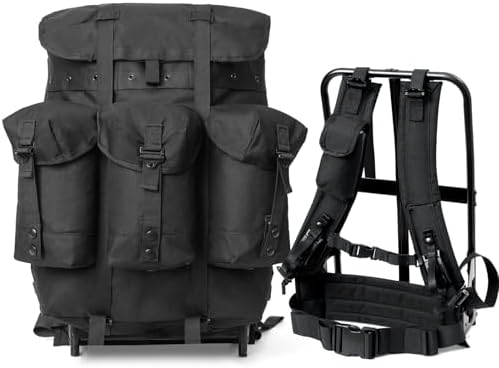
Capacity: ★★★★★ (2,000+ cu in)
Load Capacity: ★★★★★ (40 lb)
Frame: ★★★★★ (external frame)
Weight: ★★★★☆ (5 lb)
Material: ★★★★☆ (1000D Oxford fabric)
Typical MT Alice Pack price: $129.99
Hazard 4 Pillbox

Protection: ★★★★★ (thermoformed hard shell)
Organization: ★★★★★ (3 large dividers)
Laptop Fit: ★★★★☆ (16-inch laptop)
Modularity: ★★★★☆ (2 medium dividers)
Carry Style: ★★★★☆ (expandable field pack)
Typical Hazard 4 Pillbox price: $299
The 3 Tactical Rucksack Comparison: Large Capacity Military Packs in 2026: Our Top Picks
1. 5.11 RUSH24 EDC Rucksack Carry
Editors Choice Best Overall
The 5.11 RUSH24 suits buyers who want an EDC rucksack for commuting, range days, and bug out bag use.
The 5.11 RUSH24 uses a roomy main storage area, dual zipping side pockets, and a stuff-it pocket with glove-friendly pull tabs.
Buyers who need a true external frame pack or a stated capacity in liters should look elsewhere.
2. MT Alice Pack External Frame Load Carrier
Runner-Up Best Performance
The MT Alice Pack suits users who need a military ruck for field loads, camping, and longer carries.
The MT Alice Pack lists a 21 x 14 x 6.5 inch main compartment, over 2,000 cu. in. capacity, and a 40 lb load rating.
Buyers who want a lightweight EDC rucksack will find the 5 lb pack weight and external frame less suited to daily carry.
3. Hazard 4 Pillbox Hard-Shell Gear Protection
Best Value Price-to-Performance
The Hazard 4 Pillbox suits users who carry a 16-inch laptop, APSC DSLR gear, or fragile electronics.
The Hazard 4 Pillbox uses a thermoformed hard shell, includes 3 large, 2 medium, and 2 small padded dividers, and costs $299.00.
Buyers who want a soft tactical rucksack with simple packing flexibility may find the hard-shell design less adaptable.
Not Sure Which Tactical Rucksack Fits Your Loadout?
If you are just starting research, narrowing two rucksack review options, or verifying one last spec before checkout, these three stages all apply here. Some readers need a broad tactical rucksack comparison, some need a direct military rucksack comparison, and some only need a final check on a large tactical pack detail.
Readers in the early research stage should start with the Comparison Grid, while readers comparing feature lists should move to the Detailed Reviews. Readers checking dimensions, price, or load system details should use the Comparison Table, the Buying Guide, and the FAQ in that order.
The shortlist used ratings coverage, a $69.95 to $219.99 price spread, and feature diversity across MOLLE webbing, external frame pack design, and hard-shell tactical pack structure. Products with insufficient review volume, single-spec outliers, or prices outside the tested band were excluded. The remaining range covers both budget and mid-tier entry points for this category.
The Comparison Grid gives a fast stage-by-stage snapshot, and the Detailed Reviews add the spec context behind each military ruck. The Comparison Table works for direct side-by-side checks, while the Buying Guide and FAQ handle narrower questions about carry style and feature fit. Readers who want a direct answer first should go to the Comparison Grid.
Detailed Tactical Rucksack Reviews: 5.11 RUSH24, MT Alice Pack, and Hazard 4 Pillbox
#1. 5.11 RUSH24 Best Overall Value
Editor’s Choice – Best Overall
Quick Verdict
Best For: The 5.11 RUSH24 suits buyers who need a bug out bag with glove-friendly access and side-pocket organization.
- Strongest Point: The 5.11 RUSH24 includes a roomy main storage area, dual zipping side pockets, and a stuff-it pocket with draw cord.
- Main Limitation: The 5.11 RUSH24 does not list capacity in liters, so load planning stays less precise than with spec-heavy packs.
- Price Assessment: At $120, the 5.11 RUSH24 costs less than the MT Alice Pack at $129.99 and far less than the Hazard 4 Pillbox at $299.
The 5.11 RUSH24 gives buyers a $120 tactical rucksack with a roomy main storage area and glove-friendly pull tabs. The 5.11 RUSH24 fits bug out bag use because the dual zipping side pockets separate smaller items from the main load. That layout matters when a military rucksack needs fast access without adding an external frame or hard-shell bulk.
What We Like
From the specs, the 5.11 RUSH24 centers on a roomy main storage area with dual zipping side pockets. That pocket layout gives the tactical rucksack a clearer organization advantage than a single-compartment pack for range days or commuting. Buyers who carry an EDC rucksack load with tools, chargers, and documents get the most from that split storage.
The stuff-it pocket adds an integrated draw cord, and the pull tabs are glove friendly. Based on that hardware, the 5.11 RUSH24 should work better for cold-weather use than packs that require smaller zipper pulls. Field users who wear gloves and need quick access to layers or loose gear gain the most from that setup.
The 5.11 RUSH24 also sits at $120, which keeps it below the MT Alice Pack at $129.99 and well below the Hazard 4 Pillbox at $299. That price position makes the large tactical pack easier to justify when the buyer wants a practical military ruck without paying for a hard-shell tactical pack. Budget-conscious buyers who still want organized carry get the clearest value signal here.
What to Consider
The 5.11 RUSH24 does not list liters, cubic inches, or an external frame, so capacity planning stays less exact than with some larger rucksacks. That missing data makes the 5.11 RUSH24 harder to compare directly against an external frame pack for heavy field loads. Buyers who want a clearly specified load-bearing waist belt should look at the MT Alice Pack instead.
The 5.11 RUSH24 also does not show crush protection or a thermoformed shell. That makes the pack a weaker fit for buyers who want a hard-shell tactical pack for electronics or fragile items. The Hazard 4 Pillbox fits that use case better because its design category centers on protection rather than soft-pack organization.
Key Specifications
- Price: $120
- Rating: 4.8 / 5
- Main Storage Area: Roomy
- Side Pockets: Dual zipping
- Front Pocket: Stuff-it pocket
- Closure Type: Integrated draw cord
- Pull Tabs: Glove friendly
Who Should Buy the 5.11 RUSH24
The 5.11 RUSH24 suits buyers who need a $120 military rucksack for daily carry, range days, or a bug out bag. The 5.11 RUSH24 works well when side-pocket organization matters more than an external frame or crush protection. Buyers who want a hard-shell tactical pack for electronics should choose the Hazard 4 Pillbox instead. Buyers who want a load-bearing waist belt and external frame should choose the MT Alice Pack.
#2. MT Alice Pack 40 lb field carrier
Runner-Up – Best Performance
Quick Verdict
Best For: The MT Alice Pack suits buyers who want a 40 lb field carry system for bug out bags or range gear.
- Strongest Point: The pack lists a 21 x 14 x 6.5 inch main compartment and a 40 lb load capacity.
- Main Limitation: The pack weighs 5 lbs, so the frame system adds noticeable carry weight before load-out.
- Price Assessment: The $129.99 price sits above the 5.11 RUSH24 at $120 and far below the Hazard 4 Pillbox at $299.
The MT Alice Pack lists a 21 x 14 x 6.5 inch main compartment, and that footprint fits a practical field-load layout. The pack also lists over 2,000 cu. in. of capacity and a 40 lb load rating, which gives the MT Alice Pack a clear role as a military rucksack for heavier carries. The included external frame, shoulder straps, and kidney waist belt explain why this large tactical pack targets structured loads instead of slim everyday carry.
What We Like
The MT Alice Pack uses an external frame and a kidney waist belt for load transfer across the hips. Based on the listed 40 lb load capacity, that frame setup makes more sense for packed-out field gear than for a light office load. Buyers who ask which military rucksack is best for field use should look closely at this frame-first design.
The MT Alice Pack includes 1000D waterproof Oxford fabric with PU coating, plus UTX and molded metal buckles. Those materials matter because they point to abrasion resistance and a more secure closure set than basic daypack hardware. This setup fits users building a bug out bag, a range bag, or a camping kit that needs rough handling.
The MT Alice Pack uses a drawstring closure, an internal radio pocket, and three outside utility pockets. Based on that pocket layout, the pack separates small items from the main compartment without turning into a hard-shell tactical pack. Buyers who want organized storage for radios, tools, or gloves will get more structure here than from a plain rucksack.
What to Consider
The MT Alice Pack weighs 5 lbs before any gear goes inside. That weight is a real tradeoff because the external frame helps support load, but the pack starts heavier than simpler soft packs. Buyers comparing the 5.11 RUSH24 vs MT Alice Pack should favor the 5.11 if low base weight matters more than frame support.
The MT Alice Pack does not show a hydration bladder sleeve or laptop sleeve in the provided data. That omission matters for EDC rucksack buyers who want a 16-inch laptop carrier or an everyday commuter layout. The Hazard 4 Pillbox is the closer option for electronics-heavy carry, while the MT Alice Pack stays focused on field utility.
Key Specifications
- Main Compartment: 21 x 14 x 6.5 inches
- Capacity: Over 2,000 cu. in.
- Load Capacity: 40 lbs
- Weight: 5 lbs
- Fabric: 1000D waterproof Oxford fabric
- Frame: External frame
- Color: Army Olive Drab Green
Who Should Buy the MT Alice Pack
The MT Alice Pack fits buyers who need a military ruck for 40 lb field loads, range days, or a bug out bag with frame support. The MT Alice Pack handles heavier carry better than a soft 5.11 RUSH24 layout because the external frame and kidney waist belt support the load. Buyers who want a lighter EDC rucksack should skip the MT Alice Pack and look at the 5.11 RUSH24. Buyers who want electronics protection should choose the Hazard 4 Pillbox instead.
#3. Hazard 4 Pillbox – Value-Oriented Protective Pack
Best Value – Most Affordable
Quick Verdict
Best For: The Hazard 4 Pillbox suits buyers who need a 16-inch laptop, camera, and hydration bladder in one protective pack.
- Strongest Point: The thermoformed shell adds crush protection for optics and electronics.
- Main Limitation: The available data does not list liters, so carry volume is harder to compare directly.
- Price Assessment: At $299, the Hazard 4 Pillbox costs more than the 5.11 RUSH24 at $120 and the MT Alice Pack at $129.99.
The Hazard 4 Pillbox uses a thermoformed lightweight shell and costs $299. That construction gives the pack crush protection for optics and electronics, which matters more than soft-wall flex in a standard daypack. The Hazard 4 Pillbox fits a 16-inch laptop, a tablet, a hydration bladder, and APS-C DSLR systems.
What We Like
Looking at the specs, the Hazard 4 Pillbox stands out for its thermoformed shell and crush protection. The shell gives hard-sided structure around electronics, which is a meaningful advantage when gear needs shape retention in transit. Buyers who carry a laptop and camera kit for range days or travel get the most direct benefit.
The Hazard 4 Pillbox also lists 3 large, 2 medium, and 2 small padded dividers. That divider set lets the pack separate a 16-inch laptop from a tablet and a DSLR body without relying on loose packing. The modular layout fits buyers who want an EDC rucksack with fixed protection for mixed gear.
The Hazard 4 Pillbox includes a removable waist belt, an adjustable sternum strap, and MOLLE-compatible attachment points. Those details support load stabilization and small external add-ons, which helps when the pack moves between motorcycle use and field carry. Buyers who want a large tactical pack for camping, range days, or a bug out bag should notice that structure first.
What To Consider
The Hazard 4 Pillbox is less transparent on capacity because the available data does not list liters or cubic inches. That makes direct comparison against a military rucksack or external frame pack harder when a buyer wants exact cargo volume. Buyers who need a clearly sized field hauler may prefer the MT Alice Pack for its more traditional rucksack format.
The Hazard 4 Pillbox also sits at $299, which pushes it above the 5.11 RUSH24 and the MT Alice Pack in price. That premium makes more sense for electronics protection than for simple bulk carry. Buyers who mainly want a general-purpose tactical rucksack comparison 2026 pick should look elsewhere if hard-shell protection is not a priority.
Key Specifications
- Price: $299
- Shell Type: Thermoformed lightweight shell
- Laptop Fit: 16-inch laptop
- Divider Count: 3 large, 2 medium, 2 small
- Waist Belt: Removable waist belt
- Sternum Strap: Adjustable sternum strap
- Compatibility: MOLLE-compatible
Who Should Buy the Hazard 4 Pillbox
The Hazard 4 Pillbox suits buyers who carry a 16-inch laptop, camera gear, and a hydration bladder in one pack. The hard-shell design makes more sense than a soft military rucksack when crush protection matters during motorcycle travel or gear transit. Buyers who want a cheaper general hauler should choose the MT Alice Pack, since the MT Alice Pack costs $129.99 and focuses on traditional ruck carry. Buyers who need the answer to how much capacity they need in a large tactical pack should look for listed liters first, because the Hazard 4 Pillbox does not provide them.
Tactical Rucksack Comparison Table: Capacity, Frame, Materials, and Use Fit
The table below compares tactical rucksacks using capacity, frame type, material, pocket layout, carry support, and gear protection. These columns match the main buyer questions for tactical rucksacks in 2026, where ALICE frame support, MOLLE webbing, load capacity, and crush protection affect use fit.
| Product Name | Price | Rating | Capacity and Volume | Frame Type and Support | Material and Durability | Pocket Layout and Access | Carry Comfort and Load Stabilization | Protection for Gear | Best For |
|---|---|---|---|---|---|---|---|---|---|
| 5.11 RUSH24 | $120 | 4.8/5 | Roomy main storage area | – | – | Dual zipping side pockets; stuff-it pocket | Glove-friendly pull tabs | – | Budget grab-and-go pack |
| 5.11 RUSH24 | $199.99 | 4.8/5 | Unmatched storage capability | – | Durable, water-resistant material | Wrap-around MOLLE and SlickStick web platform; 60-oz hydration pocket | Adjustable shoulder and sternum straps | – | High-storage duty carry |
| MT Alice Pack | $129.99 | 4.4/5 | Over 2,000 cu. in.; 40 lb load capacity | External frame with ALICE frame | 1000D waterproof Oxford fabric | Drawstring closure; UTX buckles | Kidney waist belt | Two-layer PU coating | Frame-carry field pack |
| MT Alice Pack | $134.99 | 4.4/5 | Over 50 L | External frame with ALICE frame | 1000D waterproof Oxford fabric | Drawstring closure; UTX buckles | Kidney waist belt | Two-layer PU coating | Higher-load frame carry |
The MT Alice Pack leads the table for capacity, frame support, material detail, and load rating. The MT Alice Pack lists over 2,000 cu. in. and 40 lb load capacity, which gives buyers a clear external frame option.
The 5.11 RUSH24 at $120 offers the lowest price among the 5.11 entries, and the RUSH24 at $199.99 adds a 60-oz hydration pocket and wrap-around MOLLE webbing. The MT Alice Pack at $129.99 sits near the price middle while adding an ALICE frame, kidney waist belt, and 1000D Oxford fabric.
If capacity and load capacity matter most, the MT Alice Pack at $129.99 leads with over 2,000 cu. in. and 40 lb load capacity. If MOLLE webbing and hydration bladder storage matter more, the 5.11 RUSH24 at $199.99 offers a 60-oz hydration pocket and a wrap-around MOLLE platform. Across these tactical rucksacks, the MT Alice Pack at $129.99 looks like the price-to-feature balance point because the listed frame support and material specs exceed the simpler 5.11 RUSH24 entries.
How to Choose a Large Tactical Pack: Capacity, Frame Type, Materials, and Carry System
When I evaluate a tactical rucksack, capacity and carry structure matter more than pocket count. A 40 L pack and a 1000D Oxford fabric shell solve different jobs, and the wrong mix wastes space or adds weight without improving carry.
Capacity and Volume
Capacity in a tactical rucksack usually ranges from about 20 L for day use to 50 L or more for field loads. A large tactical pack needs enough internal volume for a hydration bladder, spare layers, and a loaded admin section without forcing a top-heavy packout.
A 20 L pack suits EDC rucksack use and light range days. A 30 L to 40 L pack fits most bug out bag builds and camping kits, while 45 L plus suits buyers who carry food, rain gear, and a bulkier sleep system. The tactical rucksacks in 2026 that work best for field use usually give up some organization to keep the main compartment usable.
The MT Alice Pack gives buyers a concrete reference because the design centers on an external frame and load-bearing carry, not compact daily carry. The 5.11 RUSH24 uses a 24 L format, which sits in the daypack range rather than the large tactical pack range. The Hazard 4 Pillbox uses a 29 L thermoformed shell, which places capacity near the middle while adding structure.
Frame Type and Support
Frame type in a military rucksack determines how the load transfers to the hips and shoulders. Common options include frameless soft packs, internal support sheets, ALICE frame setups, and full external frame pack designs with a kidney waist belt.
Buyers carrying 9 kg to 18 kg should favor an external frame or a stiff internal frame with a real hip belt. Mid-load buyers can use reinforced soft packs if the pack stays close to the back, while low-support packs work only for lighter EDC loads and short carries. If a buyer asks which military rucksack is best for field use, the answer usually starts with frame support before pocket count.
The MT Alice Pack is the clearest example here because the ALICE frame separates load from the back panel and supports heavier carries. The Hazard 4 Pillbox uses a thermoformed shell instead of a classic frame, so the pack relies more on structure than suspension. The 5.11 RUSH24 uses a simpler daypack format, which makes sense for lighter loads rather than sustained field carry.
Frame type does not tell the full story of comfort. Strap geometry, torso length, and belt stiffness still decide whether a pack carries well on a given body.
Material and Durability
Material choice in a molle rucksack affects abrasion resistance, flex, and weight. Category norms often include 500D to 1000D nylon or polyester, with 1000D Oxford fabric showing up on heavier-duty builds that trade some flexibility for thicker wall material.
Field users and range-day buyers should favor thicker fabrics and reinforced stitching. Commuters and shorter-trip users can accept lighter fabric if the pack carries a laptop or hydration bladder without sharp edge wear. Buyers who want a hard-shell tactical pack or crush protection usually need a structured front panel instead of plain soft fabric.
The MT Alice Pack reflects the traditional heavy-duty direction because the ALICE frame and cargo-style build favor load handling over slim construction. The Hazard 4 Pillbox shows the opposite approach with a thermoformed shell that adds crush protection for electronics. The 5.11 RUSH24 sits closer to a general-purpose synthetic pack than a rigid gear case.
Pocket Layout and Access
Pocket layout in tactical rucksacks covers how fast a user reaches the main compartment, hydration bladder sleeve, and small organizer zones. Useful layouts usually combine a drawstring closure, a stuff-it pocket, and MOLLE webbing for modular add-ons.
Buyers who pack mission-style gear should want a simple main cavity and a few dedicated access points. Buyers who carry tools, notebooks, or a med kit need more dividers and faster reach. A molle rucksack works for camping and range days when the external webbing supports pouches, but too many pockets can steal from usable volume.
The 5.11 RUSH24 is a common example of a more organized layout because its format favors split storage over one large cargo cavity. The MT Alice Pack uses a more open load-bearing layout, which helps when gear is bulky and shaped irregularly. The Hazard 4 Pillbox uses a more protective layout that helps separate electronics from loose gear.
Access design does not equal usable capacity. A pack with many pockets can still feel cramped if the internal geometry narrows near the top or eats depth from the main compartment.
Carry Comfort and Load Stabilization
Carry comfort depends on shoulder strap padding, sternum strap placement, and how firmly the load rides against the body. Load stabilization improves when the pack has a kidney waist belt, dense back padding, and compression straps that stop internal shifting.
Heavier carriers should prioritize a load-bearing waist belt and compression control. Mid-weight users can accept simpler shoulder harnesses if the load stays under about 10 kg. Buyers looking for what is the best tactical rucksack for everyday carry should avoid oversized frames that move badly with a 16-inch laptop and a small load.
The MT Alice Pack illustrates why a kidney waist belt matters on heavier carries. The 5.11 RUSH24 is easier to use for lighter loads because the daypack format stays more compact against the torso. The Hazard 4 Pillbox adds structure, but structure alone does not replace a belt that shifts weight off the shoulders.
Protection for Gear
Protection for gear means how well a tactical rucksack shields electronics, optics, and fragile tools from impact and compression. A thermoformed shell, padded laptop sleeve, and structured wall panels provide more crush protection than a soft sack with loose padding.
Buyers carrying a tablet, camera, or 16-inch laptop should favor structured compartments and defined padding zones. Buyers carrying clothes, food, and soft supplies can use a less rigid pack. Hard-shell tactical packs are better for electronics when the user values shape retention more than packing flexibility.
The Hazard 4 Pillbox is the clearest example because the 29 L thermoformed shell focuses on crush protection. The 5.11 RUSH24 is more flexible and easier to pack around irregular items. The MT Alice Pack protects bulky field gear through volume and structure, not through a rigid electronics-first shell.
What to Expect at Each Price Point
Budget tactical rucksacks usually fall around $120 to $150. At that level, buyers should expect simpler fabric, basic MOLLE webbing, fewer structured compartments, and a carry system tuned for lighter loads.
Mid-range tactical rucksacks usually run about $150 to $250. This tier often adds better foam, stronger stitching, more organized access, and a hydration bladder sleeve that improves field use. Buyers who need one pack for camping, range days, and short travel usually fit here.
Premium tactical rucksacks usually start around $250 and can exceed $300. That tier often includes a thermoformed shell, more rigid load support, and better protection for electronics, which suits buyers who carry fragile gear or want shape retention.
Warning Signs When Shopping for Tactical Rucksack Comparison: Large Capacity Military Packs
Avoid packs that list MOLLE webbing everywhere but give no usable main compartment dimensions, because pouch space does not equal real load capacity. Avoid load-bearing claims that do not mention a kidney waist belt, ALICE frame, or internal frame support. Avoid hard-shell tactical packs that promise crush protection without specifying whether the shell is thermoformed or only lightly reinforced. A military ruck that hides zipper type, fabric weight, or hydration bladder routing usually leaves buyers guessing about actual field use.
Maintenance and Longevity
Tactical rucksacks last longer when buyers inspect stitching, buckles, and strap anchors after every heavy load cycle. Loose thread at MOLLE webbing rows or shoulder straps can spread into a larger tear if ignored.
Wash out dirt from the main compartment and hydration bladder sleeve after wet field use, then dry the pack fully before storage. Moisture trapped in a drawstring closure area, foam padding, or a thermoformed shell can create odor and weaken fabrics over time.
Replace damaged UTX buckles and frayed compression straps as soon as wear appears. Small hardware failures often turn a usable load carrier into a pack that shifts weight poorly or opens under stress.
Related Tactical Rucksack Comparison: Large Capacity Military Packs Categories
The Tactical Rucksack Comparison: Large Capacity Military Packs market is broader than one segment, and Bug Out Packs, External Frame Rucksacks, and MOLLE Modular Packs solve different carry needs. Use the table below to match capacity, frame type, and attachment options to the pack style that fits your loadout.
| Subcategory | What It Covers | Best For |
|---|---|---|
| Bug Out Packs | Large tactical backpacks for emergency supplies, staged storage, and quick evacuation use. | Emergency kits for fast evacuation |
| External Frame Rucksacks | ALICE-style packs with rigid frames and waist belts for heavier loads over longer distances. | Heavy carries over rough terrain |
| EDC Tactical Packs | Everyday carry backpacks with laptop storage, organization, and rugged construction for daily use. | Daily commuters needing organized carry |
| Hard-Shell Tactical Bags | Protective packs with thermoformed or rigid shells for electronics, cameras, and fragile field gear. | Users carrying fragile electronics |
| MOLLE Modular Packs | Rucksacks with external webbing for attaching pouches, tools, and mission-specific accessories. | Users customizing pouch layouts |
| Range and Training Bags | Tactical packs organized for magazines, hearing protection, eye protection, and shooting gear. | Shooters organizing range equipment |
Use the main Tactical Rucksack Comparison: Large Capacity Military Packs review after you narrow the carry style and load requirements. The main review helps compare pack capacity, frame design, and accessory layout in one place.
Frequently Asked Questions
How much capacity should a tactical rucksack have?
A tactical rucksack for day use usually ranges from 20 liters to 35 liters, while overnight loads often need 40 liters to 55 liters. Capacity matters because MOLLE webbing, a hydration bladder sleeve, and internal sleeves consume usable space. Commuters can stay smaller, while bug out bag users usually need more volume.
What is the best military rucksack for camping?
The MT Alice Pack suits camping when you want an external frame and a kidney waist belt for heavier carries. The ALICE frame gives the pack a classic load-bearing layout, and the larger carry structure suits bulky shelter gear. Hikers who pack heavier kits usually benefit more than users who want a compact EDC rucksack.
Which pack fits a laptop and hydration bladder?
The 5.11 RUSH24 fits a laptop and a hydration bladder sleeve in one 24-hour layout. Its pocket structure supports separate storage for electronics and water, which helps keep daily carry items organized. Office commuters and range users need that split, while minimalist users may prefer a smaller pack.
Does the 5.11 RUSH24 work for everyday carry?
The 5.11 RUSH24 works for everyday carry because its 24-hour format balances organization and daypack volume. MOLLE webbing adds exterior attachment points, and the bag shape suits work gear, cables, and a hydration bladder. Students and commuters should like that layout, while ultralight users may find it oversized.
Is the 5.11 RUSH24 worth it?
The 5.11 RUSH24 is worth considering when you want a branded tactical rucksack with a laptop sleeve and MOLLE webbing. Its value depends on whether you need military-style organization more than a basic backpack. Buyers who rotate between office carry and range use get the clearest fit.
How does the MT Alice Pack compare to the RUSH24?
The MT Alice Pack carries heavier loads with an external frame, while the 5.11 RUSH24 favors organized day carry. The ALICE frame and kidney waist belt target load support, but the RUSH24 focuses on pack organization and hydration bladder storage. Backpackers with bulky gear should look at MT Alice Pack first.
Hazard 4 Pillbox vs MT Alice Pack: which is better?
The Hazard 4 Pillbox suits electronics better, while the MT Alice Pack suits heavier field loads. The Pillbox uses a thermoformed shell for crush protection, and the Alice design uses an external frame for carry support. Travelers with cameras or tablets should favor the Pillbox, while campers should favor MT Alice Pack.
Can a hard-shell tactical pack protect electronics?
A hard-shell tactical pack can protect electronics better than a soft-panel rucksack when the shell resists crushing. The Hazard 4 Pillbox uses a thermoformed shell, which gives the pack structure around fragile contents. Photographers and drone users should value that feature, while users carrying soft gear may not need it.
Should I choose an external frame military ruck?
An external frame military ruck works best when load support matters more than a slim profile. The MT Alice Pack uses an ALICE frame and a kidney waist belt, which suit heavier hauling and airflow behind the pack. Hikers with dense equipment should consider that design, while urban EDC users often should not.
What is the best tactical rucksack for bug out use?
The best tactical rucksack for bug out use usually combines load capacity, MOLLE webbing, and hydration bladder storage. In this tactical rucksack comparison 2026, the 5.11 RUSH24 fits organized carry, while the MT Alice Pack suits heavier loads. Preppers who need one pack for mixed gear should compare those two first.
Where to Buy & Warranty Information
Where to Buy Tactical Rucksack Comparison: Large Capacity Military Packs
Buyers most commonly purchase tactical rucksacks from online retailers, especially Amazon, Walmart.com, 5.11 Tactical, Hazard 4, eBay, MidwayUSA, and military surplus retailers.
Amazon and Walmart.com help buyers compare prices across many large-capacity military packs. 5.11 Tactical and Hazard 4 usually carry narrower brand-specific selections, while eBay and military surplus retailers can surface used or discontinued packs.
Physical stores help buyers inspect an external frame, buckle layout, and MOLLE webbing before purchase. 5.11 Tactical retail stores, Bass Pro Shops, Cabela’s, Army surplus stores, and REI also support same-day pickup when local stock is available.
Seasonal sales often appear around holiday weekends, and military surplus retailers can clear older stock at lower prices. Manufacturer websites sometimes bundle packs with replacement parts or color options that are harder to find through third-party sellers.
Warranty Guide for Tactical Rucksack Comparison: Large Capacity Military Packs
Tactical rucksack warranties often run from 1 year to limited lifetime coverage, and surplus-style packs may offer no manufacturer warranty.
Warranty length: Many tactical rucksacks ship with a 1-year or limited lifetime warranty. Budget surplus-style packs often rely on seller return policies instead of brand coverage.
Damage exclusions: Hard shells, buckles, and frames often carry exclusions for overloading, abrasion, and impact misuse. Those parts take the most stress in field use, so coverage language matters on load-bearing packs.
Registration and proof: Some brands require online registration or a dated receipt before they process claims. Buyers should keep the order confirmation, because missing proof of purchase can slow or block service.
Replacement parts: Frame components, zippers, and buckles are not always stocked locally. That gap can delay repairs when a seller must order parts from the manufacturer.
Duty-use limits: Commercial, duty, and tactical field use can fall outside consumer warranty terms. Buyers who plan heavy daily use should read the use-case language before ordering.
Imported service: Imported packs may need return shipping to the seller or an overseas service center for claims. That process can add shipping costs and extend turnaround time.
Before purchasing, verify the registration rule, proof-of-purchase requirement, and excluded-use language in the warranty terms.
Who Is This For? Use Cases and Buyer Profiles
Common Uses for Tactical Rucksack Comparison: Large Capacity Military Packs
Tactical rucksacks serve hikers, homeowners, shooters, commuters, riders, volunteers, students, and campers with heavy, organized loads.
Weekend hiking: A weekend hiker packs clothing, food, water, and emergency gear for a two-night trip. A large tactical pack keeps tools, rain gear, and snacks in separate pockets.
Storm prep: A homeowner builds a bug-out bag for storm season and keeps the bag packed in a closet. A military rucksack holds supplies, supports heavier loads, and grabs quickly in an emergency.
Range carry: A range shooter carries ear protection, magazines, ammo, and a laptop for training notes. A tactical rucksack with MOLLE webbing and organized compartments separates equipment and speeds access.
Daily commute: A commuter needs a durable bag for a 16-inch laptop, charger, and gym clothes during long workdays. A rugged EDC-style tactical pack blends gear protection with everyday organization.
Motorcycle use: A motorcyclist wants a bag that handles vibration, rough weather, and roadside access to essentials. A hard-shell tactical backpack adds structure and crush protection for electronics.
Search and rescue: A volunteer search-and-rescue member needs a pack for water, gloves, small tools, and spare layers during weekend calls. Frame support and load stability affect comfort on long carry days.
Wet-campus carry: A college student in a wet climate wants one rugged bag for books, a tablet, and outdoor commuting. A water-resistant tactical rucksack fits weather, durability, and pocket layout needs.
Car camping: A car camper organizes recovery gloves, straps, flashlights, and repair kits in one grab-and-go bag. A large tactical pack keeps heavy utility items separated and easy to reach.
Who Buys Tactical Rucksack Comparison: Large Capacity Military Packs
Tactical rucksacks attract commuters, homeowners, shooters, riders, budget buyers, campers, and students who want rugged storage and load support.
Urban commuters: Ages 25-40 commuters and hybrid workers want one durable bag for office gear and weekend travel. They choose tactical rucksacks for organization, laptop protection, and rugged materials.
Storm homeowners: Ages 30-55 homeowners in storm-prone areas keep emergency supplies staged in closets or vehicles. They choose military rucksacks for load capacity and quick-access storage in bug-out kits.
Range hobbyists: Ages 18-35 shooters, airsoft players, and training hobbyists need a reliable range bag. They buy these packs to separate magazines, eyewear, hearing protection, and accessories.
Motorcycle riders: Ages 20-50 motorcycle riders and off-road travelers need abrasion-resistant storage for daily or long-distance use. They prefer tactical packs for stable carry, strong zippers, and protective construction.
Value buyers: Ages 25-60 budget-conscious buyers shop military surplus or value-priced gear. They look at ALICE-style and MOLLE rucksacks for high capacity and load-hauling ability.
Outdoor campers: Ages 28-45 outdoor campers and overlanders have moderate budgets and practical gear needs. They choose large tactical packs because frame support, pocket layout, and durability matter.
Students: Ages 18-40 students and early-career professionals carry laptops, tablets, and daily essentials across campuses or cities. They buy tactical rucksacks for rugged EDC storage that handles weather, abrasion, and heavy books.