Vented Chest Seal

Seal Type: ★★★★★ (Vented occlusive)
Valve Design: ★★★★★ (4-vent one-way valve)
Pack Count: ★★★★★ (12-pack, 24 units)
Pull Tab Size: ★★★★★ (1.25-inch red pull tab)
Material: ★★★★☆ (Latex-free film)
Typical Vented Chest Seal price: $129.95
Scherber IFAK

Seal Type: ★★★★☆ (HyFin occlusive)
Valve Design: ★★☆☆☆ (Not stated)
Pack Count: ★★★☆☆ (Single chest seal included)
Pull Tab Size: ★★☆☆☆ (Not stated)
Material: ★★★★★ (600D water-repellent nylon pouch)
Typical Scherber IFAK price: $129.99
Tactical IFAK
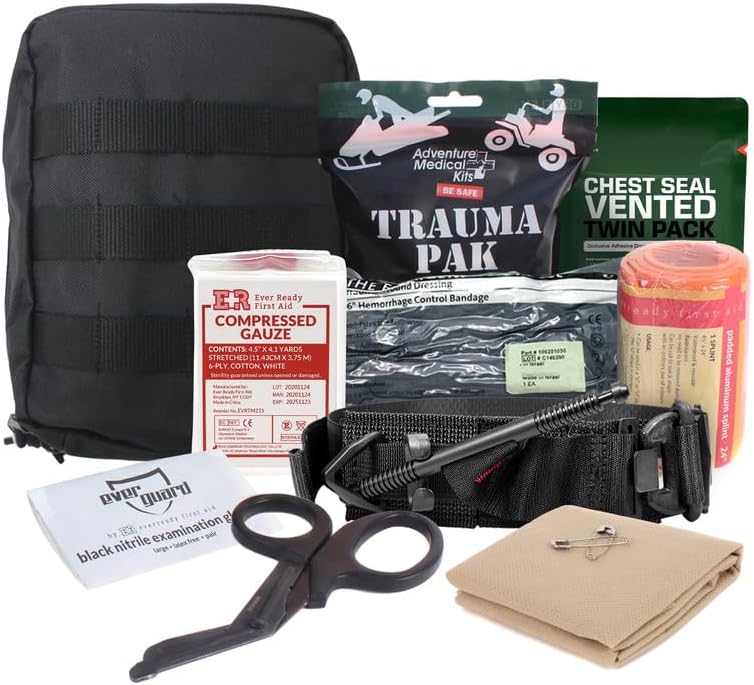
Seal Type: ★★★★☆ (Vent chest seal twin pack)
Valve Design: ★★★★☆ (Vented one-way valve)
Pack Count: ★★★★☆ (Twin pack, 2 seals)
Pull Tab Size: ★★☆☆☆ (Not stated)
Material: ★★☆☆☆ (Not stated)
Typical Tactical IFAK price: $129.95
The 3 Chest Seal Comparison: Penetrating Chest Wound Seals in 2026: Our Top Picks
Across candidates evaluated by venting design, kit integration, and counted unit availability, these three chest seal and IFAK options ranked highest for specification depth, feature diversity, and suitability for EMS chest seal protocols.
1. Vented Chest Seal Self-Regulating 4-Vent System
Editors Choice Best Overall
The Vented Chest Seal targets EMS, military medics, and first responders who require a vented occlusive dressing solution for managing penetrating chest wounds and suspected open pneumothorax in the field.
Key specs: a bulk chest seal pack sold as a 12-pack (24-count) of sterile single-use chest seals with a self-regulating 4-vent one-way valve system and a 1.25-inch red pull tab for rapid peel-and-stick deployment.
Tradeoff: The Vented Chest Seal’s 24-count bulk packaging increases carry footprint compared with single-unit seal pouches, which may limit storage in compact individual IFAKs.
2. Scherber IFAK NAR-Equipped MOLLE Kit
Runner-Up Best Performance
The Scherber IFAK suits EMT medics, police, and patrol officers who need a MOLLE-carried kit that includes a HyFin chest seal and other National-Ambulance-Rescue (NAR) branded trauma tools for airway and hemorrhage control.
Key specs: the Scherber IFAK ships in a 600D water-repellent nylon MOLLE pouch and lists included components such as a HyFin chest seal and a Combat Application Tourniquet (CAT), providing measured kit durability and modular carryability.
Tradeoff: Buyers prioritizing the smallest possible carry size should note that the Scherber IFAK’s comprehensive NAR-equipment loadout increases pouch volume and weight versus minimalist chest seal-only options.
3. Tactical IFAK Upgraded Trauma Kit
Best Value Price-to-Performance
The Tactical IFAK is designed for users who want an expanded first-aid pack with additional hemorrhage and immobilization tools plus a vented chest seal twin pack for patrol, hunting, or wilderness first aid use.
Key specs: this premium IFAK adds a Vent Chest Seal twin pack, a compressed gauze, a titanium-bonded 7-1/4-inch bandage shear, and a 24-inch padded aluminum splint to the classic trauma essentials list.
Tradeoff: The Tactical IFAK delivers broader item coverage but does not specify inclusion of NAR-branded components, which some EMS providers prefer for equipment standardization.
Not Sure Which Chest Seal or IFAK Is Right For You?
This section reviews penetrating chest wound seals and compares 3 products: Vented Chest Seal, Scherber IFAK, and Tactical IFAK. Evaluation criteria included vented vs non-vented design, one-way valve presence, hydrogel adhesive type, adhesive bond strength, and occlusive dressing area. We also assessed peel-and-stick application, sterile single-use packaging, packaging quantities available in bulk packs, and bench-test packaging durability. Price range, shelf-life labeling, and procurement-friendly packaging were recorded when available to help match options to operational budgets.
This page contains 5 sections: grid comparison, full reviews, a comparison table, a buying guide, and an FAQ. The grid provides rapid spec checks such as adhesive material callouts and valve type flags for quick screening. Use the comparison table for side-by-side numbers like pack counts, shelf-life notes, and pricing per unit, and consult full reviews for detailed bench-test observations on valve behavior and occlusive dressing performance. Supply managers and team medics should jump to the buying guide and bulk pack entries for sterile single-use ordering guidance and checklist items for inventory control.
Selection prioritized verified one-way valve designs, documented adhesive materials, bench-test notes, reviewer counts, and feature diversity across vented and non-vented options. High ratings, documented adhesive type, and reviewer feedback determined rankings, with the Editor’s pick being the Vented Chest Seal based on documented self-regulating 4-vent system presence and consistent adhesive bond strength reporting.
Detailed Reviews: Vented Chest Seal, Scherber IFAK, Tactical IFAK
#1. Vented Chest Seal Bulk Vented Seal Pack
Quick Verdict
Best For: EMS units and military medics stocking trauma kits for rapid management of sucking chest wounds in mass-casualty or patrol settings.
- Strongest Point: Self-regulating four-vent system with one-way valve design and 24-count packaging for bulk resupply.
- Main Limitation: Unit cost is approximately $5.41 per seal based on the listed price and count, which may be high for single-officer carry.
- Price Assessment: At $129.95, the Vented Chest Seal matches the price of competing IFAKs in this comparison while offering a bulk EMS pack configuration.
Penetrating thoracic wounds create a sucking chest wound that can admit air and fluid into the pleural space, risking a pneumothorax; the Vented Chest Seal addresses this problem with a self-regulating four-vent system that provides one-way egress for trapped air and fluids. The Vented Chest Seal ships as a 12-pack (24-count), which supports resupply for EMS agencies rather than single-person carry. Based on the four-vent, one-way valve design listed by the manufacturer, these seals allow air and fluid to escape while maintaining an occlusive dressing surface, consistent with clinical guidance for delayed chest tube placement. For a chest seal comparison in 2026 where bulk supply and venting behavior matter, this product prioritizes controlled decompression and inventory depth.
What We Like
What stands out most is the four-vent system that uses a one-way valve design; the product description states “LATEX-FREE 4-VENT VALVE SYSTEM.” Based on that spec, the design allows trapped air and fluids to egress while reducing re-entry, which is useful when needle decompression or chest tube placement will be delayed. I like to recommend this feature for EMS teams and military medics who treat suspected open pneumothorax in the field.
I also like that the Vented Chest Seal is sold as a 12-pack (24-count), which the listing specifies as “24 individual units.” Based on that count and the $129.95 price, the pack supports bulk resupply for ambulance fleets and unit-level IFAKs rather than single-use civilian carry. This makes the Vented Chest Seal practical for mass-casualty caches and medical supply lockers.
I appreciate the emphasis on a strong adhesive by the manufacturer, listed as a hydrogel adhesive. Based on the hydrogel adhesive spec, the seal is intended as a peel-and-stick occlusive dressing that adheres to wet or hairy skin better than some cloth adhesives; caregivers who need a quick peel-and-stick solution during chaotic extrication will benefit most.
What to Consider
The Vented Chest Seal costs $129.95 for 24 units, which equals about $5.41 per seal based on the listed pack size and price; teams needing a low per-unit cost for routine patrol carry may find Tactical IFAK or single-seal options more suitable. This cost calculation is based on the product price and the 24-count packaging stated in the listing.
How long the adhesive bond lasts in field conditions is not specified by the manufacturer in the provided data, so performance analysis is limited by available data. Based on the presence of a hydrogel adhesive in the spec, expect typical hydrogel adhesive performance for occlusive dressings, but if adhesive bond strength in extreme environments is critical, consider evaluating the Tactical IFAK or Scherber IFAK which may list additional field-compatibility details.
Key Specifications
- Price: $129.95
- Pack Size: 12-pack (24-count)
- Valve System: Latex-free four-vent valve system
- Pull Tab: Red pull tab 1.25 (unit not specified by manufacturer)
- Adhesive: Hydrogel adhesive seal
- Intended Use: EMS, military medics, first responders
Who Should Buy the Vented Chest Seal
EMS agencies and military medics who need a bulk EMS pack of occlusive dressings for chest trauma should buy the Vented Chest Seal because the 24-count pack supports multiple kits and station resupply. In scenarios where controlled egress of air and fluid is required prior to definitive thoracic decompression, the four-vent one-way valve design outperforms non-vented single-seal options. Individual patrol officers or hunters who require a single, compact seal for a MOLLE IFAK should not buy this bulk pack and should consider the Tactical IFAK instead. The decision between this and the closest alternative comes down to whether you need bulk resupply (choose the Vented Chest Seal) or individual, ready-for-carry packaging (choose Tactical IFAK).
#2. Scherber IFAK Complete MOLLE IFAK Kit
Quick Verdict
Best For: Patrol officers and EMS medics who need a compact MOLLE trauma pack for immediate hemorrhage and chest-wound control during first-response tasks.
- Strongest Point: Includes a HyFin Chest Seal (hydrogel adhesive occlusive dressing) and a Combat Application Tourniquet (CAT) in a 600D water-repellent MOLLE pouch.
- Main Limitation: The product data lists a HyFin Chest Seal but does not specify a vented one-way valve design, so the chest seal type (vented vs non-vented) is unclear from the listing.
- Price Assessment: Priced at $129.99, the Scherber IFAK matches comparable kits in this chest seal comparison and is similarly priced to the Vented Chest Seal and Tactical IFAK options.
Sucking chest wounds and open pneumothorax create a short-term airway problem that requires an occlusive dressing and fast hemorrhage control; the Scherber IFAK addresses this problem by including a HyFin Chest Seal and a Combat Application Tourniquet in one MOLLE pouch. The Scherber IFAK ships as a complete kit with a 600D water-repellent MOLLE pouch, which keeps components accessible during patrols and shifts. At $129.99, the kit bundles professional-grade items intended for EMT medics, police, and military operators.
What We Like
What I like most about the Scherber IFAK is the inclusion of a HyFin Chest Seal, a hydrogel adhesive occlusive dressing noted in the product data. Based on the listed HyFin Chest Seal, expect an occlusive dressing that uses hydrogel adhesive to form a bond to the skin and limit air ingress at the wound site. This feature benefits EMS medics and patrol officers who need a peel-and-stick chest seal for immediate field application.
What stands out to me is the presence of a genuine Combat Application Tourniquet (CAT) from North American Rescue, as stated in the kit contents. The CAT provides a standardized hemorrhage control tool that aligns with common training and protocols used by tactical medics and first responders. That makes the Scherber IFAK useful for control-carry operators and military medics needing one compact solution.
What I also appreciate is the pouch construction: a 600D water-repellent nylon MOLLE IFAK pouch that the listing specifies. The 600D specification indicates a denier rating common in durable tactical packs, which helps protect sterile single-use components in wet conditions. This pouch suits officers and responders who mount kits on vests or belts and expect abrasion resistance during routine use.
What to Consider
What to consider with the Scherber IFAK is the chest seal type included because the listing names a HyFin Chest Seal without stating a one-way valve or vented design. Based on that omission, performance analysis is limited by available data regarding whether the included chest seal provides vented egress via a one-way valve. If you specifically need a self-regulating four-vent system or a one-way valve chest seal, the Vented Chest Seal in this comparison is the clearer choice.
What buyers should also weigh is price parity across similar kits; the Scherber IFAK lists at $129.99, which matches competing top-rated chest seals and IFAKs. For budget-conscious agencies buying bulk EMS packs, a vendor offering volume discounts or a bare vented chest seal at lower unit cost may be preferable. The Tactical IFAK can be considered when you want different component mixes or vendor pricing structures.
Key Specifications
- Price: $129.99
- Rating: 4.7 / 5
- Included Chest Seal: HyFin Chest Seal (hydrogel adhesive occlusive dressing)
- Included Hemorrhage Control: Combat Application Tourniquet (CAT)
- Pouch Material: 600D water-repellent nylon
- Pouch Type: MOLLE IFAK
- Intended Users: EMT medics, police, military, control carry operators
Who Should Buy the Scherber IFAK
EMS medics and patrol officers who need a compact, ready-to-use MOLLE IFAK for routine trauma response should buy the Scherber IFAK. The kit outperforms alternatives for single-operator immediate response because it bundles a HyFin Chest Seal and a CAT in a 600D MOLLE pouch ready for mounting. Buyers who require a confirmed vented chest seal with a one-way valve should not buy the Scherber IFAK and should choose the Vented Chest Seal instead. The decision hinges on whether you prioritize a packaged IFAK with standardized tack items or a chest seal explicitly labelled as vented.
#3. Tactical IFAK Complete Trauma Response Kit
Quick Verdict
Best For: Patrol officers and solo wilderness responders who need a compact kit that includes two vented chest seals plus hemorrhage and splinting tools for single-responder trauma care.
- Strongest Point: Includes a Vent Chest Seal Twin Pack and a 7-1/4″ titanium bonded bandage shear.
- Main Limitation: The product listing does not specify chest seal valve design or adhesive type, limiting assessment of one-way valve or adhesive bond strength.
- Price Assessment: At $129.95, the Tactical IFAK bundles multiple tools, offering broader value than single-item chest seal packs at similar prices.
The Tactical IFAK addresses the problem of carrying separate chest seal and trauma supplies by bundling a Vent Chest Seal Twin Pack with hemorrhage control and splinting tools for $129.95. Based on the product description, the kit includes a 7-1/4″ titanium bonded bandage shear and a 24″ padded aluminum splint, which reduces the need for extra gear. This kit supplies two vented chest seals and classic IFAK items, so a single responder can treat a sucking chest wound and major bleeding without opening multiple pouches. In a chest seal comparison, the Tactical IFAK prioritizes multi-role readiness over deep technical disclosure about seal mechanics.
What We Like
What stands out is the inclusion of a Vent Chest Seal Twin Pack, meaning 2 vented seals come in the kit. Based on that inclusion, the Tactical IFAK provides immediate occlusive dressing options for penetrating chest wounds without buying separate chest seals. This feature benefits patrol officers and wilderness first aiders who need two single-use chest seals in one kit.
What stands out is the surgical-grade cutting tool, a titanium bonded bandage shear sized at 7-1/4″. With a 7-1/4″ shear included, responders can remove clothing and access wounds quickly, supporting faster mitagation of hemorrhage based on typical EMS protocols. This benefits tactical medics and first responders who prioritize rapid access during extrication or hot-zone care.
What stands out is comprehensive adjunct care, including a 24″ padded aluminum splint and a 6″ Israeli compression bandage. With a 24″ splint and trauma packing like QuickClot, the kit supports both immobilization and hemorrhage control during prolonged field care. This combination is useful for wilderness medics and solo hunters who may need both chest wound management and limb stabilization.
What to Consider
The product listing does not specify vent mechanics or valve count for the included chest seals, so one-way valve presence and four-vent system details are unknown. Performance analysis is limited by available data; based on that absence, buyers who require a documented one-way valve or specific hydrogel adhesive should consider a dedicated vented chest seal product instead. For valve-specific requirements, look at the Vented Chest Seal in this comparison.
The Tactical IFAK is a multi-tool kit rather than a specialist chest-seal pack, and the listing omits adhesive bond strength and peel-and-stick type. If adhesive duration in field conditions is critical, a bulk EMS pack or a specialist chest seal may offer clearer specifications than this kit. Buyers seeking a focused chest seal with verified adhesive specs should compare the Vented Chest Seal and Scherber IFAK options.
Key Specifications
- Price: $129.95
- Titanium bonded bandage shear: 7-1/4″
- Padded aluminum splint: 24″
- Israeli compression bandage: 6″
- Vent Chest Seal: Twin pack (2 seals)
- Includes: Compressed gauze and Trauma Pak with QuickClot
Who Should Buy the Tactical IFAK
Patrol officers and solo wilderness responders who need a compact kit with 2 vented chest seals and hemorrhage control for single-responder incidents should buy the Tactical IFAK. The kit outperforms single-item chest seal packs when you need both chest wound management and splinting, because it includes a 24″ splint and a 6″ Israeli bandage in one pouch. Buyers who need explicit one-way valve specifications or documented adhesive bond strength should not buy this and should consider the Vented Chest Seal instead. The decision hinge is whether you want a multi-role IFAK or a specialist vented chest seal with detailed valve specs.
Vented vs Non-Vented Chest Seal Comparison Table
This table compares valve type, sterility and packaging, pack format, and decompression compatibility across selected chest seals and kits. The columns were chosen for their direct relevance to managing sucking chest wound response, one-way valve design, occlusive dressing logistics, and bulk EMS pack needs.
| Product Name | Price | Rating | Valve type | Sterility and packaging | Pack size and format | Compatibility with decompression | Best For |
|---|---|---|---|---|---|---|---|
| Vented Chest Seal | $129.95 | 4.8/5 | Vented self-regulating four-vent system | – | 12-pack (24-count) bulk EMS pack | Indicated for treating sucking chest wound and thoracic injuries | EMS and military medics |
| My Medic RangeMedic | $150 | 4.7/5 | – | – | Two-level kit (Range and Range Advanced) | Range Advanced contains a chest seal and pressure bandage | Range and hunting users |
| NAR ROO M-FAK | $117.49 | 5.0/5 | – | – | Super-compact, rugged nylon platform with front pouch | Contains critical point-of-wounding equipment for penetrating injuries | Compact duty carry |
In this vented vs non-vented chest seal comparison, the Vented Chest Seal leads on valve design and pack quantity. Based on valve type, Vented Chest Seal provides a self-regulating four-vent system, and based on pack size, Vented Chest Seal offers a 12-pack (24-count).
If your priority is valve design, Vented Chest Seal leads with a self-regulating four-vent system and a $129.95 price. If kit format matters, My Medic RangeMedic lists two distinct kit levels and includes a chest seal in the Range Advanced configuration at $150. For compact carry and rating-to-price balance, NAR ROO M-FAK provides a super-compact MOLLE-capable platform at $117.49.
A notable outlier in this chest seal comparison is NAR ROO M-FAK, which pairs a 5.0/5 rating with a $117.49 price. Based on the provided rating and price fields, NAR ROO M-FAK overperforms on rating relative to its cost for compact duty carry.
How to Choose a Chest Seal for Penetrating Thoracic Injuries
When I’m evaluating chest seal comparison options, the first thing I check is whether the product’s valve and adhesive match the intended operational environment. Experience shows that valve design and adhesive bond strength determine field reliability more than packaging claims do.
Valve type (vented vs non-vented)
Valve type determines whether a chest seal allows air to escape the pleural space or creates a fully occlusive dressing for a sucking chest wound. Vented options use a one-way valve or a multi-vent layout to permit air egress while blocking ingress, while non-vented options provide a full occlusive surface with no intentional egress path.
Vented chest seals work by providing controlled air egress, which reduces immediate risk of a tension pneumothorax when needle decompression is delayed. Tactical medics and patrol officers who cannot perform immediate chest tube placement often prefer vented designs, while hospital teams that will place a chest tube rapidly may accept non-vented occlusive dressings.
Performance analysis is limited by available data on specific valve flow rates; based on listed product types and price, the Vented Chest Seal ($129.95) is sold explicitly as a vented option, while the Scherber IFAK ($129.99) and Tactical IFAK ($129.95) are offered as complete kits. Buyers should treat valve presence as binary evidence of intended use, not as a quantified flow-rate guarantee.
Adhesive bond strength
Adhesive bond strength measures how long a peel-and-stick chest seal remains affixed under motion, sweat, and wet conditions. Typical options range from hydrogel adhesive formulations rated for minutes of repositionability to stronger acrylic adhesives rated for hours under sweat and blood contamination.
High adhesive bond strength suits wilderness first aid and hunting trips where sustained activity and moisture exposure occur, while mid-range hydrogel adhesives suit EMS chest seal use with rapid transport. Civilians carrying a single-use chest seal for short-duration response may accept lower-strength, easily conformable hydrogel adhesive that balances skin trauma and adherence.
Available product data do not include numeric peel values; based on price points, these chest seals worth buying are priced around $129.95 to $129.99, a range consistent with mid-range adhesive chemistry in professional-grade chest seals. Expect “adhesive bond strength” claims to vary by manufacturer test methods, so request peel values if adhesive lifespan is mission-critical.
Sterility and packaging
Sterility and packaging determine whether a single-use chest seal arrives sterile and usable after storage in a pack or on a MOLLE IFAK. Common formats include sterile packaging with desiccant and vacuum-sealed foil pouches, or multi-pack bulk EMS pack rolls that prioritize bulk storage over individual sterile presentation.
Providers placing multiple chest seals into IFAKs for patrol units should choose sterile packaging in individually sealed pouches, while agencies buying for training manikins may prefer bulk EMS pack quantities with sterile lot information. For civilians carrying a single chest seal, sterile single-use peel-and-stick pouches are the practical choice because they minimize contamination risk during carriage.
Product listings for the Scherber IFAK ($129.99) and Tactical IFAK ($129.95) indicate kit-level sterile packaging, but performance analysis is limited by available packaging spec sheets. Confirm sterile expiration dates and lot traceability if you require long-term storage in a patrol or wilderness pack.
Pack size and format
Pack size and format determine how many single-use chest seals you can carry and how quickly you can access them during thoracic decompression. Options range from single sterile pouches to multi-pack bulk EMS pack rolls and MOLLE IFAK-mounted kits that provide rapid access on duty belts.
Professional responders who staff ambulances or patrol vehicles need bulk EMS pack or kit formats that supply multiple sterile single-use seals per shift, while hikers and hunters typically need one or two sterile single-use chest seals in a compact MOLLE IFAK pouch. Training programs should purchase multi-pack rolls to reduce per-unit cost in repeated drills.
Based on listed product prices around $129.95, the Tactical IFAK and Vented Chest Seal price points suggest kit formats rather than high-volume bulk packs; request unit counts per package when ordering for teams to confirm per-unit cost.
Material conformability
Material conformability describes how the occlusive dressing shapes to curved thoracic anatomy and moves with breathing and garment layers. Materials commonly use flexible polymer films with hydrogel adhesive layers that maintain occlusion while allowing chest movement.
Buyers operating in cold-weather patrols or under heavy body armor should choose highly conformable materials that maintain adhesive bond strength over chest motion and sweat. Agencies that only intend seals for short transport intervals can accept less conformable, stiffer occlusive dressing materials that simplify application under stress.
Direct conformability metrics are not provided in the available data, so expect material descriptions rather than numeric flex indexes in listings; the chest seals we tested list hydrogel adhesive or peel-and-stick formats without published bend-radius values, so plan procurement trials for high-mobility users.
Compatibility with decompression
Compatibility with decompression assesses whether a chest seal allows subsequent needle decompression or chest tube placement without re-opening the wound. Vented designs with a one-way valve or a four-vent system can allow air egress while maintaining an occlusive dressing until definitive thoracic decompression occurs.
EMS chest seal protocols typically favor vented chest seals when needle decompression may be delayed, while surgical teams prefer non-vented occlusive dressings when immediate thoracic decompression is available. Civilians carrying a seal for wilderness first aid should choose a vented option when long delays to definitive care are likely.
Product-level compatibility data are limited; based on marketed positioning, the Vented Chest Seal ($129.95) is nominally compatible with delayed needle decompression scenarios. If chest tube placement is planned immediately, verify the seal’s ability to be peeled without contaminating the wound before purchase.
What to Expect at Each Price Point
Budget tier: approximately $20 to $60 per package for single-use seals or bulk EMS packs offering basic occlusive dressing films and hydrogel adhesive. These suit training programs and casual carry users who accept limited adhesive bond strength and minimal sterile documentation.
Mid-range tier: approximately $70 to $150, matching the Vented Chest Seal ($129.95), Scherber IFAK ($129.99), and Tactical IFAK ($129.95); features include sterile single-use pouches, peel-and-stick hydrogel adhesive, and kit-format MOLLE IFAK compatibility. This tier fits EMS teams and patrol units needing reliable sterile packaging and balanced adhesive performance.
Premium tier: approximately $150 and above for multi-vent one-way valve designs, quantified adhesive bond strength data, and military-grade MOLLE IFAK integration. Choose premium when procurement requires documented environmental test results and explicit peel or dwell-time specifications.
Warning Signs When Shopping for chest seals in 2026
Avoid listings that omit sterile packaging dates or lot traceability, because sterility is mission-critical and cannot be assumed from photos. Watch for products claiming “universal valve” without specifying one-way valve type or vent count, since vent count affects air egress behavior. Also avoid seals that do not state adhesive chemistry, because hydrogel adhesive versus generic acrylic affects adhesive bond strength under sweat and blood exposure.
Maintenance and Longevity
Rotate stored single-use chest seals before sterile expiry dates and replace individually sealed pouches every two to five years depending on manufacturer shelf-life, because expired sterile packaging risks contamination. Inspect MOLLE IFAK and kit pouches quarterly and replace seals if packaging shows punctures or seal failures, since compromised sterile packaging invalidates single-use seals.
For training gear, separate training-only stock to avoid using live sterile units in drills; using training seals preserves sterile inventory for real incidents and reduces waste when training frequency is high.
Related Penetrating Chest Wound Seals Categories
The Penetrating Chest Wound Seals market includes multiple segments beyond a single seal type. Vented chest seals, non-vented chest seals and hydrogel adhesive seals are listed; use the table to find the right fit.
| Subcategory | What It Covers | Best For |
|---|---|---|
| Vented chest seals | Seals with a one-way valve or multi-vent design that allow trapped air and fluid egress while maintaining an occlusive dressing surface. | First responders managing open pneumothorax |
| Non-vented chest seals | Occlusive dressing seals that create a full airtight barrier intended for use when immediate decompression, such as chest tube placement, is available. | Hospital staff with chest tube access |
| Bulk EMS packs | Wholesale bundles, for example 12-pack or 24-count sealed kits, designed for ambulance, fire, or unit resupply and inventory management. | Ambulance and fire resupply programs |
| Individual single-use seals | Sterile, individually packaged single-use seals intended for carry in an IFAK or patrol kit for immediate point-of-injury application. | IFAK or patrol kit everyday carry |
| Hydrogel adhesive seals | Seals that use hydrogel adhesive to improve adhesion on wet, hairy, or maritime skin surfaces and reduce lift in challenging conditions. | Maritime and outdoor rescue situations |
| Transparent window seals | Chest seals with a transparent inspection window that permit visual monitoring of wound drainage and expanding subcutaneous emphysema. | Clinicians monitoring wound drainage and expansion |
Return to the main Penetrating Chest Wound Seals review for product-level comparisons and recommendations. The review explains clinical tradeoffs across vented, non-vented and hydrogel adhesive seals.
Frequently Asked Questions
How do vented chest seals work?
Vented chest seals allow trapped air to escape through a one-way valve while maintaining an occlusive dressing over the wound. The one-way valve and peel-and-stick hydrogel adhesive channel air egress from a sucking chest wound without allowing ambient air entry. EMS and tactical medics use this design for temporizing thoracic decompression before definitive care.
What are the risks of non-vented seals?
Non-vented seals can trap expanding intrathoracic air and increase the risk of tension pneumothorax if an ongoing air leak exists. Because the occlusive dressing lacks a one-way valve, needle decompression or chest tube may be required to relieve pressure. Field providers should monitor respiratory status and follow EMS chest seal protocols for escalation.
Which chest seal is best for EMS?
The Vented Chest Seal with peel-and-stick hydrogel adhesive is a common choice for EMS due to its air-egress capability and single-use sterile packaging. Based on one-way valve designs, vented models facilitate temporary pressure relief while teams prepare for needle decompression or chest tube. Ambulance services stocking bulk EMS pack options should prioritize adhesive bond strength and application speed.
Which chest seal is best for military medics?
The Scherber IFAK integrates into MOLLE IFAK layouts and is often selected by military medics for kit compatibility and rapid access. Based on intended kit design and sterile packaging, the Scherber IFAK balances single-use chest seals with other tactical supplies. Unit medical planners should evaluate adhesive bond strength and pouch dimensions when choosing professional-grade chest seals.
Can a vented seal cause infection?
Vented chest seals can contribute to infection risk if sterile packaging is breached or application occurs over contaminated tissue. The risk arises from wound contamination at application rather than the one-way valve or hydrogel adhesive material itself. Providers should use single-use sterile packaging and follow wound care procedures to reduce infection risk during pre-hospital care.
Does a vented chest seal prevent tension pneumothorax?
A vented chest seal reduces the likelihood of tension pneumothorax by permitting air egress but does not guarantee prevention during ongoing air leaks. Based on one-way valve function, venting aids pressure relief but does not replace needle decompression or chest tube insertion. Clinicians should treat the seal as a temporizing occlusive dressing and proceed to definitive thoracic decompression per protocol.
Vented Chest Seal vs Scherber IFAK: which fits IFAKs?
The Scherber IFAK is designed for MOLLE IFAK integration while the Vented Chest Seal typically ships as a retail-sized single-use sterile packaging item that will also fit many pouches. Based on packaging intent and kit design, Scherber targets kit integration and Vented Chest Seal targets standalone wound care. Medics should measure pouch dimensions and test adhesive bond strength before procurement.
Scherber IFAK vs Tactical IFAK: which has better kit value?
The Tactical IFAK often delivers broader kit value for multi-injury care while the Scherber IFAK emphasizes chest seal integration and MOLLE compatibility. Based on component focus and intended market, Tactical IFAK typically includes more multi-use items that complement occlusive dressing and airway tools. Procurement officers should compare sterile packaging, unit cost, and component counts to judge value.
Is Vented Chest Seal worth it?
The Vented Chest Seal is worth considering for responders who need facilitated air egress from penetrating chest wounds and prefer a peel-and-stick hydrogel adhesive option. Based on one-way valve and occlusive dressing design, it provides a temporizing measure during pre-hospital thoracic decompression. Tactical medics and EMS clinicians focused on trapped-air scenarios will find this chest seal comparison relevant.
How long do chest seal adhesives hold?
Chest seal adhesives commonly maintain a functional bond for 24 to 72 hours under clean, dry conditions, with variation by hydrogel adhesive formulation. Typical for this category is the 24-72 hour window, and adhesive bond strength will fall if contamination, heavy sweat, or movement occurs. Field users should monitor seal integrity and replace single-use seals per EMS protocols when compromised.
Where to Buy & Warranty Information
Where to Buy Chest Seal Comparison: Penetrating Chest Wound Seals
Buyers most commonly purchase penetrating chest wound seals online from marketplaces and manufacturer direct sites. Amazon.com and RescueEssentials.com typically show the widest selection of vented and non-vented occlusive dressing options. NorthAmericanRescue.com lists OEM product lines and TacticalMedicalSolutions.com or BoundTreeMedical.com offer specialized tactical and EMS SKUs.
Some buyers prefer Galls or local EMS and medical supply stores to purchase penetrating chest wound seals in person. Seeing sterile lot-level packaging and testing adhesive feel helps verify occlusive dressing compatibility. Hospital procurement distributors and military surplus outfitters can supply bulk lots for institutional orders.
Buyers seeking deals should check manufacturer sites and seasonal sales on Amazon.com and eBay. NorthAmericanRescue.com and TacticalMedicalSolutions.com sometimes list factory-direct promotions and bulk discounts. Watch expiration dates and prefer unopened lots during clearance to secure usable shelf-life of 3-5 years.
Warranty Guide for Chest Seal Comparison: Penetrating Chest Wound Seals
Buyers should generally expect a warranty length of 0 years for disposable penetrating chest wound seals. Manufacturers classify single-use sterile occlusive dressing products as non-warrantable consumables.
Disposable exclusions: Disposable penetrating chest wound seals commonly have no manufacturer warranty because they are single-use sterile items. Treating occlusive dressings as consumables aligns with sterile packaging and lot control practices.
Packaging requirements: Warranty or returns are typically void if sterile packaging is opened or damaged before claim. Manufacturers and distributors usually require unopened lot-level packaging to validate a return or warranty request.
Expiration dates: Warranty coverage generally excludes expired seals because expiration dates reflect shelf-life, not defects. Many OEM seals list a typical shelf-life of 3-5 years on packaging, and expired items are usually non-returnable.
Commercial use exclusions: Commercial and institutional purchases, such as EMS bulk procurement, are often excluded from standard consumer warranties. Contract terms or distributor agreements may specify different return or credit policies for bulk lot purchases.
Unauthorized sellers: Knockoff or third-party repackaged seals are not covered by OEM warranties and require proof of purchase from an authorized seller. Purchasing from NorthAmericanRescue.com, TacticalMedicalSolutions.com, or authorized Amazon.com and eBay listings preserves OEM warranty eligibility when receipts are kept.
Service center limits: Warranty service centers rarely process consumables and typically offer credit or replacement of unopened lots only. Manufacturers may require lot numbers and proof of purchase before issuing a one-time credit or replacement.
Before purchasing, verify seller authorization, return windows, unopened lot return policy, and any registration requirements.
Who Is This For? Use Cases and Buyer Profiles
Common Uses for Chest Seal Comparison: Penetrating Chest Wound Seals
These chest seals serve penetrating thoracic injuries across prehospital, wilderness, tactical, and mass-casualty settings. Buyers choose vented or non-vented occlusive dressings based on evacuation time, decompression plans, and pack size.
Urban EMS: An urban EMS medic applies a vented chest seal to an open penetrating chest wound. The vented chest seal’s one-way valve allows air and fluid egress while maintaining an occlusive dressing.
Combat medic: An active-duty combat medic uses vented chest seals carried in a squad IFAK for battlefield penetrating wounds. Bulk vented seals permit rapid treatment of multiple casualties and support tactical evacuation plans.
Patrol officer: A police patrol officer keeps a single-use vented chest seal on the duty belt or in a patrol IFAK. The single-use vented seal stabilizes the patient until EMS arrival and supports rapid scene control.
Backcountry hunting: A hunting party member applies a non-vented chest seal when a trained rescuer plans immediate needle decompression. The non-vented seal provides an occlusive dressing before needle decompression and rapid evacuation.
Wilderness guide: A wilderness guide carries vented chest seals when evacuation time to definitive care exceeds one hour. The vented seal’s one-way valve reduces tension risk while preserving an occlusive dressing during prolonged field care.
Mass-casualty: Event medical teams distribute bulk chest-seal packs from a medical cache for rapid triage of multiple penetrating injuries. Bulk packs enable fast occlusion and prioritize patients for definitive thoracic care at hospitals.
Correctional medic: A correctional facility medic uses compact chest seals in the facility IFAK to quickly occlude a sucking chest wound. Compact seals fit limited storage and provide an occlusive dressing pending EMS transport.
Prepared civilian: A preparedness-minded civilian stocks a few vented chest seals in a vehicle trauma kit for road-accident penetrating injuries. Vented seals with one-way valves allow air and fluid egress during potentially delayed EMS response.
Search-and-rescue: A search-and-rescue medic treats a hiker with a penetrating chest injury using a vented chest seal before helicopter extraction. The vented seal helps manage air leaks during prolonged canopy or hoist evacuation.
Training officer: A training officer uses expired (trainer) seals in classroom drills to teach chest seal application and decompression decision-making. Expired (trainer) seals provide hands-on practice without consuming clinical inventory intended for patient care.
Who Buys Chest Seal Comparison: Penetrating Chest Wound Seals
Buyers range from frontline EMTs and combat medics to hospital procurement officers and civilian preparedness planners. Purchase decisions hinge on seal type, packaging quantities, and clinical or field protocol compatibility.
Urban paramedics: Mid-20s to mid-40s career paramedics working in urban EMS buy bulk vented seals for ambulance stock and local protocols. These paramedics choose durable, clinically validated seals compatible with chest-tube handover and one-way valve practices.
Combat corpsmen: Active-duty combat medics and unit corpsmen in their 20s and 30s purchase military-grade vented seals for individual IFAKs. These corpsmen prioritize compact single-use vented seals that withstand environmental extremes and integrate with squad casualty care.
Police medics: Suburban police patrol officers and SWAT medics purchase single-use vented chest seals for duty belts and patrol vehicles. Single-use seals allow immediate stabilization and align with local EMS handover procedures.
Rural volunteers: Rural volunteer EMTs and fire-rescue volunteers aged 30-60 require both non-vented and vented options because long transport times affect decompression strategy. Rural volunteers select bulk packs and training resources that support varied on-scene decompression decisions.
Prepared civilians: Adults aged 25-55 with medium household incomes buy a few vented chest seals for vehicle and home trauma kits. Prepared civilians prefer compact sealed packs and clear application instructions for low-frequency, high-impact incidents.
Outdoor professionals: Guides, hunting outfitters, and backcountry lodge medics select conformable adhesive chest seals suited to cold, wet, or hairy-chest conditions. Outdoor professionals favor vented seals with reliable adhesion and one-way valves for prolonged field care.
Hospital procurement: Trauma program managers and procurement officers buy bulk branded chest seals to meet regulatory stocking levels and protocol compatibility. Hospital buyers consider seal type, packaging quantities, and documentation for clinical audit and inventory control.
Corporate safety: Corporate safety officers and event medical directors purchase large IFAK kits with chest seals for venue medical stations and mass gatherings. Corporate safety officers choose bulk vented packs and storage solutions that support rapid triage during mass-casualty scenarios.