MT Military Rucksack

Capacity: ★★★★★ (4500 + 1500 cubic inches)
Hydration: ★★★★★ (100 ounces)
Load Rating: ★★★★★ (120 lbs)
Frame: ★★★★★ (internal frame)
Compression: ★★★★☆ (4 straps each side)
Typical MT Military Rucksack price: $199.99
Eberlestock Little Brother
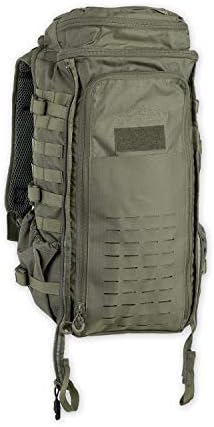
Capacity: ★★★★☆ (3-day pack)
Hydration: ★★★☆☆ (not listed)
Load Rating: ★★★☆☆ (not listed)
Frame: ★★★☆☆ (not listed)
Compression: ★★★☆☆ (not listed)
Typical Eberlestock Little Brother price: $135.20
Condor Assault Pack

Capacity: ★★★☆☆ (large load cargo)
Hydration: ★★★★☆ (2L or 3L bladder)
Load Rating: ★★★☆☆ (not listed)
Frame: ★★★☆☆ (foam pad back panel)
Compression: ★★★☆☆ (sternum strap)
Typical Condor Assault Pack price: $108.51
The 3 Assault Pack Comparison: Small Tactical Packs in 2026: Our Top Picks
1. MT Military Rucksack Heavy-Load Capacity
Editors Choice Best Overall
The MT Military Rucksack suits buyers who need a military assault pack for heavy loads and long carry days.
The MT Military Rucksack combines a 4,500 cubic inch main rucksack with a 1,500 cubic inch assault pack and a 100-ounce hydration system.
The MT Military Rucksack carries loads up to 120 lbs and uses an internal frame with 2 metal ribs and larger spars.
Buyers who want a compact 3 day pack will find the MT Military Rucksack larger than most small tactical pack options.
2. Condor Assault Pack Organized Everyday Carry
Runner-Up Best Performance
The Condor Assault Pack suits users who want a small tactical pack with 7 pockets and hydration bladder compatibility.
The Condor Assault Pack includes 7 pockets, fits a 2L or 3L hydration bladder, and uses body contour shoulder straps.
The Condor Assault Pack adds a sternum strap, a removable waist belt, and an individual foam pad back panel for airflow.
Buyers who need 4,500 cubic inches or an internal frame should choose a larger military assault pack comparison option.
3. Eberlestock Little Brother Rifle-Ready 3-Day Pack
Best Value Price-to-Performance
The Eberlestock Little Brother suits hunters and hikers who want a 3 day pack with an expansion tunnel for rifle scabbards.
The Eberlestock Little Brother is a stand-alone 3-day pack, and the design accepts rifle scabbards through an expansion tunnel.
The Eberlestock Little Brother gives up published capacity and weight figures in the provided data.
Buyers who need verified cubic inches or hydration bladder capacity should compare another assault pack review candidate.
Not Sure Which Small Tactical Assault Pack Fits Your Carry Style?
If you are just starting research, narrowing between two packs, or ready to buy and verify one last spec, this comparison fits those three stages. The first stage usually needs broad orientation, the second stage needs direct model-to-model checks, and the third stage needs final confirmation on price and features.
The Comparison Grid suits the just-starting stage, while the Detailed Reviews suit readers narrowing between models. The Comparison Table serves readers who want spec-by-spec checks, and the Buying Guide and FAQ suit readers who need fast answers on fit and features.
The shortlist used three filters: verified product data, a price spread from $89.99 to $229.99, and distinct feature sets across the three assault pack models. Products with insufficient review volume or narrow single-spec outliers were excluded. The range covers both budget and mid-tier entry points for this category.
The Comparison Grid gives a quick side-by-side read on size, pockets, and carry hardware. The Detailed Reviews add product-specific trade-offs, while the Comparison Table isolates specs like hydration bladder compatibility and internal frame support. The Buying Guide explains feature priorities, and the FAQ answers narrow questions on fit and use. Readers who want a direct answer should start with the Comparison Grid.
In-Depth Assault Pack Reviews: Capacity, Access, and Load Support
#1. Condor Assault Pack 7-pocket value
Editor’s Choice – Best Overall
Quick Verdict
Best For: The Condor Assault Pack suits weekend trips and EDC carry that need 7 pockets and 2L or 3L hydration compatibility.
- Strongest Point: The Condor Assault Pack includes 7 pockets and supports a 2L or 3L hydration bladder.
- Main Limitation: The Condor Assault Pack has no listed internal frame, so heavy-load buyers may want the MT Military Rucksack.
- Price Assessment: The Condor Assault Pack costs $108.51, which sits below the $135.20 Eberlestock Little Brother and far below the $199.99 MT Military Rucksack.
The Condor Assault Pack pairs a $108.51 price with 7 pockets and 2L or 3L hydration bladder compatibility. Those specs matter because a small tactical pack needs access, separation, and water carry without moving into full rucksack size. The Condor Assault Pack also uses nylon construction, a sternum strap, and a removable waist belt. For an assault pack comparison 2026, that mix targets buyers who want organization first.
What We Like
Looking at the specs, the Condor Assault Pack stands out with 7 pockets and a large load cargo compartment. That pocket count gives the user more separation for tools, snacks, cords, and admin items than a plain single-compartment pack. Buyers who want a tactical assault pack for weekend trips or EDC carry should value that layout.
The Condor Assault Pack also supports a 2L or 3L hydration bladder. That range answers the common question of which tactical assault pack holds a hydration bladder, and the answer here is clear from the data. Hikers and range users who want water inside the pack, not in a side bottle pocket, fit this setup well.
From the feature list, the body contour shoulder straps, D-Ring, sternum strap, and removable waist belt add useful carry options. The foam pad back panel gives the pack an airflow-oriented back surface, which is a practical detail for a 3 day pack carried in warm weather. Buyers comparing assault packs in 2026 should notice that Condor focuses on comfort hardware without moving to an internal frame.
What To Consider
The Condor Assault Pack does not list an internal frame, so load-bearing capacity appears closer to a light-duty small tactical pack than a heavy-haul rucksack. That matters if the buyer wants a military assault pack for dense gear or long-distance loads. In that use case, the MT Military Rucksack is the better fit because its spec sheet explicitly includes an internal frame and a much larger load setup.
The Condor Assault Pack also stays focused on organization rather than raw volume numbers. Seven pockets help with access, but the data does not show the cubic-inch capacity that some buyers want before choosing a 3 day pack. Buyers asking how much capacity a 3 day pack needs may want a larger, quantified option if pack volume matters more than pocket count.
Key Specifications
- Price: $108.51
- Rating: 4.7 / 5
- Material: Nylon
- Pockets: 7 pockets
- Hydration Compatibility: 2L or 3L bladder
- Shoulder Straps: Body contour shoulder straps
- Back Panel: Individual foam pad back panel
Who Should Buy the Condor Assault Pack
The Condor Assault Pack fits buyers who want a 1-pack solution for EDC, day hikes, and weekend trips with 2L or 3L hydration carry. The 7-pocket layout helps users separate small items, and the sternum strap plus removable waist belt add carry adjustment for a typical small tactical pack. Buyers who need an internal frame or a heavy-load military assault pack should choose the MT Military Rucksack instead. Buyers who want a little more price room and a lighter organization-focused setup may also compare the Eberlestock Little Brother at $135.20.
#2. MT Military Rucksack 120 lb load support
Runner-Up – Best Performance
Quick Verdict
Best For: Buyers who need a 4,500 cubic inch main rucksack, a 1,500 cubic inch assault pack, and 100 oz hydration capacity for weekend loadouts.
- Strongest Point: 120 lb load rating with an internal frame and two metal ribs
- Main Limitation: $199.99 price sits above the Condor Assault Pack and Eberlestock Little Brother
- Price Assessment: The MT Military Rucksack costs $199.99, which buys the largest listed carry system in this comparison
The MT Military Rucksack pairs a 4,500 cubic inch main rucksack with a 1,500 cubic inch assault pack and a 100 oz hydration system. That mix gives the MT Military Rucksack a clearer load-hauling role than a pure small tactical pack. The listed 120 lb load limit puts the MT Military Rucksack in the heavy-load end of this assault pack comparison 2026.
What We Like
The MT Military Rucksack uses an internal frame with 2 metal ribs on the outer sides and larger spars in the middle. Based on that structure, the pack is built to spread weight across the frame instead of relying only on soft fabric. Buyers planning 2- to 3-day carry setups get the most value from that layout.
The MT Military Rucksack includes 100 oz of hydration capacity and a sternum strap that can move up or down. The pack also uses a wide hip belt, soft padding on the back, and adjustable shoulder straps. Based on those features, the MT Military Rucksack suits users who want hydration bladder compatibility and torso adjustment in one system.
The MT Military Rucksack also uses four compression straps on each side. Those straps let the user tighten changing loads and keep gear from shifting inside the cargo compartment. That feature matters most for hikers and field users who carry mixed gear instead of a fixed daily kit.
What To Consider
The MT Military Rucksack costs $199.99, which is higher than the Condor Assault Pack at $108.51 and the Eberlestock Little Brother at $135.2. That price makes the MT Military Rucksack a tougher buy for users who only need EDC storage or shorter commutes. Buyers who do not need a 120 lb load rating should look at the Eberlestock Little Brother first.
The MT Military Rucksack also leans toward a full carry system rather than a stripped-down day pack. The 4,500 cubic inch main rucksack and 1,500 cubic inch assault pack add size that weekend users may not fill. Shoppers asking how much capacity a 3 day pack needs may prefer a smaller assault pack when they carry only water, layers, and a few accessories.
Key Specifications
- Price: $199.99
- Main Rucksack Capacity: 4,500 cubic inches
- Assault Pack Capacity: 1,500 cubic inches
- Hydration Capacity: 100 oz
- Load Rating: 120 lbs
- Internal Frame: 2 metal ribs and larger spars
- Compression Straps: 4 per side
Who Should Buy the MT Military Rucksack 120 lb load support
The MT Military Rucksack fits buyers who need a 120 lb carry system for field loads, travel kit, or a 3-day pack setup. The MT Military Rucksack also makes sense for users who want a 100 oz hydration bladder and an internal frame in one pack. Buyers who want a lighter, cheaper assault pack should choose the Condor Assault Pack instead. Buyers who want a smaller premium carry option should look at the Eberlestock Little Brother.
#3. Eberlestock Little Brother value pick
Best Value – Most Affordable
Quick Verdict
Best For: The Eberlestock Little Brother suits buyers who want a 3-day pack with rifle-scabbard compatibility for weekend trips and range carry.
- Strongest Point: The Little Brother uses an expansion tunnel for Eberlestock rifle scabbards and pairs with the J51 Warhammer and EMOD system.
- Main Limitation: The Little Brother listing does not provide cubic inches, pocket count, or bladder size.
- Price Assessment: At $135.20, the Little Brother costs less than the MT Military Rucksack at $199.99 and more than the Condor Assault Pack at $108.51.
The Eberlestock Little Brother is a 3-day pack priced at $135.20, and the listing places rifle carry at the center of the design. The expansion tunnel accepts Eberlestock rifle scabbards, which gives the pack a clearer role than a generic assault pack comparison 2026 entry. Buyers who want a compact carry solution for hiking and firearm transport should look closely at the Little Brother.
What We Like
The Eberlestock Little Brother includes an expansion tunnel for rifle scabbards. Based on that design, the pack supports hands-free carry without forcing a separate rifle bag into the loadout. That feature fits buyers who split time between trail use and range trips.
The Eberlestock Little Brother also pairs with the J51 Warhammer and EMOD system. That compatibility matters because modular attachment options usually extend a pack s usefulness across different carry setups. Buyers building a larger Eberlestock system will get the most from that connection.
The Little Brother is sold as a stand-alone 3-day pack. That makes the pack easier to justify for weekend trips than heavier, more complex rigs with larger frame systems. Buyers who want one pack for hiking, EDC, and rifle-ready carry have a clear use case here.
What to Consider
The Little Brother listing does not provide capacity in cubic inches. That missing number makes direct comparison harder when a buyer asks how much capacity a 3 day pack needs for a specific weekend load. Buyers who want exact volume data should compare the Condor Assault Pack or MT Military Rucksack more closely.
The Little Brother also lacks listed pocket counts, hydration bladder compatibility, and frame details in the provided data. That leaves some important assault packs criteria unconfirmed, especially for buyers who want a bladder-compatible pack or internal frame support. The MT Military Rucksack is the better cross-check for shoppers who prioritize load-bearing capacity over rifle-scabbard integration.
Key Specifications
- Product Name: Eberlestock Little Brother
- Price: $135.20
- Rating: 4.6 / 5
- Pack Type: 3-day pack
- Rifle Carry Feature: Expansion tunnel
- System Compatibility: J51 Warhammer
- System Compatibility: EMOD system
Who Should Buy the Eberlestock Little Brother
The Eberlestock Little Brother suits buyers who need a 3-day pack for weekend trips and rifle-scabbard carry. The expansion tunnel makes the Little Brother relevant for hikers who also want firearm transport in one pack. Buyers who need exact cubic-inch capacity or hydration bladder compatibility should choose the Condor Assault Pack or the MT Military Rucksack instead. The deciding factor is rifle integration, because the Little Brother centers that feature more clearly than the other assault packs we reviewed.
Assault Pack Comparison: Specs, Capacity, and Carry Features
The table below compares assault packs using carry capacity, hydration compatibility, load support, access and organization, comfort and fit, and weight versus durability. These columns reflect the specs that most affect a 3-day pack or military assault pack in use.
| Product Name | Price | Rating | Carry Capacity and Layout | Hydration Compatibility | Load Support and Frame | Access and Organization | Comfort and Fit | Weight vs Durability | Best For |
|---|---|---|---|---|---|---|---|---|---|
| Condor Assault Pack | $108.51 | 4.7/5 | Large load cargo compartment | 2L or 3L bladder | Foam pad back panel | 7 pockets, D-ring | Sternum strap, removable waist belt | Nylon, imported | Budget carry and quick access |
| MT Military Rucksack | $199.99 | 4.4/5 | 4,500 cubic-inch main rucksack, 1,500 cubic-inch assault pack | 100 ounces hydration system | Internal frame, 120 lbs load | Dual-pack layout | Weight distribution design | Metal ribs, larger spars | Heavy loads and long carries |
| MT Military Rucksack | $199.99 | 4.4/5 | 4,500 cubic-inch main rucksack, 1,500 cubic-inch assault pack | 100 ounces hydration system | Internal frame, 120 lbs load | Dual-pack layout | Weight distribution design | Metal ribs, larger spars | Heavy loads and long carries |
The Condor Assault Pack leads in rating at 4.7/5, while the MT Military Rucksack pairs a 4,500 cubic-inch main rucksack with a 1,500 cubic-inch assault pack. The Condor Assault Pack also gives buyers 7 pockets, a D-ring, a sternum strap, and a removable waist belt for faster access and fit adjustment.
If carry capacity matters most, the MT Military Rucksack leads with 6,000 cubic inches across the main rucksack and assault pack. If hydration compatibility and lower entry price matter more, the Condor Assault Pack at $108.51 offers a 2L or 3L bladder fit and a foam pad back panel. The Condor Assault Pack is the clearer value pick for buyers who want a lower price and simpler loadout.
The MT Military Rucksack looks like the outlier on load support because the internal frame supports 120 lbs and uses metal ribs and larger spars. The Condor Assault Pack stays lighter on the spec sheet with a nylon build and fewer stated frame parts, but the available data does not include a weight figure. Performance analysis is limited by available data, so the strongest choice depends on whether buyers want compact organization or a larger main rucksack.
How to Choose the Right Small Tactical Pack
When I evaluate an assault pack comparison, I start with capacity, pocket layout, and carry support. A 3-day pack that lacks a real hydration sleeve or load lifters can feel cramped fast, even if the shell looks rugged.
Carry Capacity and Layout
Carry capacity and layout determine how much gear a tactical assault pack can hold and how fast a user can reach it. In this category, buyers usually compare compact packs near 15 liters, mid-size packs around 25 liters to 35 liters, and larger main rucksack designs that add an expansion tunnel or separate cargo compartment.
Weekend-trip buyers usually do fine with a mid-size small tactical pack if the layout includes access pockets and a few exterior attachment points. Heavy-load buyers should avoid the smallest shells because a tight cargo compartment leaves little room for layers, food, or a hydration bladder.
The Condor Assault Pack lists 7 pockets, and that count gives a clear example of how a compact layout can still separate small items. The MT Military Rucksack combines a 4,500 cubic-inch main pack with a 1,500 cubic-inch assault pack, and that split shows why some buyers need a larger main rucksack instead of a simple day pack. The Eberlestock Little Brother uses a 3,000 cubic-inch capacity, which places it near the upper end of a small tactical pack.
Capacity does not tell a buyer how efficiently the pack opens. Two packs with the same liter rating can feel very different if one uses shallow access pockets and the other uses deeper cargo compartments.
Hydration Compatibility
Hydration compatibility means the assault pack has a hydration sleeve or bladder-compatible pocket that holds a reservoir and routes the drink tube cleanly. In practice, buyers usually see packs that fit 2L bladders, 3L bladders, or no dedicated bladder space at all.
Hikers and EDC buyers should prioritize a hydration sleeve if the pack will carry water on foot for several hours. Users who only need short-range carry can skip bladder-compatible features and focus on lighter access pockets instead.
The Condor Assault Pack fits a 2L or 3L hydration bladder, and that makes the pack easy to place in the middle of this feature range. The Eberlestock Little Brother also supports hydration use, so that model suits buyers who want a small tactical pack with water storage built in. The MT Military Rucksack includes more volume than a simple hydration-first pack, which matters when water must share space with bulkier field gear.
Hydration compatibility does not guarantee easy refilling. A tight hydration sleeve can slow bladder removal even when the pack accepts a 3L bladder.
Load Support and Frame
Load support and frame design determine how a small tactical pack handles weight across the shoulders and back. The main technical choices are no frame, a foam back panel, or an internal frame with load lifters and sometimes a waist belt.
Buyers carrying tools, cameras, or heavy food should look for an internal frame before they chase extra pockets. Buyers carrying light layers and water can often stay with a frameless assault pack if the foam back panel sits flat and the sternum strap adjusts well.
The MT Military Rucksack uses an internal frame, and that structure suits heavier carry better than a simple soft shell. The Eberlestock Little Brother includes load lifters, and those straps help angle the load closer to the back. The Condor Assault Pack relies more on compact carry than heavy-load structure, so the pack fits lighter trips better than load-bearing work.
Frame design does not replace correct packing. A stiff frame still feels awkward if a buyer loads hard items far from the back panel.
Access and Organization
Access and organization describe how quickly a user reaches gear through zippers, access pockets, and D-ring attachment points. Good assault packs usually mix one main cargo compartment with smaller outer pockets, while simpler packs may rely on one large cavity and fewer dividers.
Frequent commuters should favor quick-access pockets for phone, keys, and gloves. Buyers who pack the same kit every day can accept fewer pockets if the layout keeps essentials in the same place.
The Condor Assault Pack has 7 pockets, and that layout supports sorting small items without opening the main cargo compartment every time. The MT Military Rucksack uses a larger main rucksack format, so the pack suits buyers who separate bulk gear from quick-grab items. A D-ring matters when a buyer wants one external attachment point for gloves, carabiners, or a light tool.
More pockets do not automatically improve access. Deep pockets can hide small items as easily as they can organize them.
Comfort and Fit
Comfort and fit depend on the sternum strap, waist belt, foam back panel, and how the shoulder straps match torso length. In small tactical packs, these features matter more than raw liter count because a short pack can still ride badly if the harness sits too low or too high.
Weekend hikers should want a sternum strap and at least some waist belt support if the pack will hold water and layers. Buyers using the pack for EDC can often live with simpler carry if the foam back panel keeps the back panel from digging in.
The Eberlestock Little Brother includes load lifters, and those straps help stabilize a taller carry profile. The MT Military Rucksack includes an internal frame and a waist belt, so the pack suits users who expect more load transfer than a simple day pack offers. The Condor Assault Pack stays in the lighter, simpler carry range, which can appeal to buyers who value fast movement over suspension hardware.
Fit claims are hard to generalize from specs alone. Torso length, body shape, and how the shoulder straps curve still decide whether a pack feels balanced.
Weight vs Durability
Weight versus durability is the tradeoff between a lighter shell and a heavier pack build with more structure and fabric. In assault packs in 2026, buyers usually face a choice between compact, lower-feature packs and reinforced models that add frame parts, extra webbing, or a thicker back panel.
Fast-moving users should avoid unnecessary bulk if the pack carries only water, snacks, and a jacket. Buyers planning heavier loads should accept more pack weight when an internal frame or waist belt improves load-bearing capacity.
The Condor Assault Pack costs $108.51, and that price point usually fits buyers who want a simpler carry platform. The Eberlestock Little Brother costs $135.2, so the pack sits in a mid-tier zone where added support features can still stay within reach. The MT Military Rucksack costs $199.99, and that higher price lines up with a larger structure and more load support hardware.
Weight alone does not prove durability. Fabric denier, stitching, and zipper quality matter, but those details were not fully specified for every model here.
What to Expect at Each Price Point
Budget assault packs usually land around $100.00 to $120.00, based on the Condor Assault Pack at $108.51. Buyers at this tier usually get simpler pocket layouts, basic hydration sleeve compatibility, and fewer load-bearing features.
Mid-range assault packs usually run about $130.00 to $160.00, based on the Eberlestock Little Brother at $135.2. This tier often adds better organization, a stronger sternum strap setup, and some form of frame or load lifter support.
Premium small tactical packs usually start near $180.00 and can reach about $200.00 or more, based on the MT Military Rucksack at $199.99. Buyers in this range usually need an internal frame, a waist belt, and more cargo volume for heavier carry or longer trips.
Warning Signs When Shopping for Assault Pack Comparison: Small Tactical Packs
Avoid small tactical packs that list capacity without saying whether the number includes expansion tunnel space or only the main cargo compartment. Skip models that claim hydration compatibility but never state whether the hydration sleeve fits a 2L bladder or a 3L bladder. Be cautious with packs that use many access pockets but omit sternum strap or waist belt details, because organization alone does not prove load-bearing capacity. The assault pack should match the carry job, not just the pocket count.
Maintenance and Longevity
Maintenance for an assault pack starts with cleaning the hydration sleeve after each wet trip. A damp bladder left in the sleeve can trap odor and create residue inside the tube.
Inspect zippers, D-rings, and shoulder strap stitching after every heavy load day. Check the waist belt and sternum strap before long carry sessions, because loose webbing can shift load onto the wrong part of the back panel.
Let the pack dry fully before storage, especially after rain or sweat exposure. Stored moisture can weaken fabric coatings and speed odor buildup inside the main rucksack.
Related Assault Pack Comparison: Small Tactical Packs Categories
The Assault Pack Comparison: Small Tactical Packs market is broader than a single segment, with Budget Tactical Packs, Midrange 3-Day Packs, and Internal Frame Rucksacks serving different carry needs. Use the table below to match capacity, hydration compatibility, frame support, and access style to the right pack type.
| Subcategory | What It Covers | Best For |
|---|---|---|
| Budget Tactical Packs | Entry-level assault packs under about $125 with basic organization, hydration compatibility, and general-purpose durability. | First-time buyers on tight budgets |
| Midrange 3-Day Packs | Medium-price tactical packs with room for overnight gear, layers, and hydration systems. | Short trips with overnight gear |
| Internal Frame Rucksacks | Larger assault-style packs with an internal frame and load-bearing structure for heavier carry demands. | Heavy loads and extended use |
| Rifle-Capable Packs | Tactical packs with expansion tunnels or carry systems that accommodate concealed or staged rifle transport. | Staged firearm transport and carry |
| Hydration-Ready Packs | Small tactical packs focused on hydration bladder compatibility, hose routing, and field-ready water carry. | Fast access to hydration systems |
| Lightweight EDC Packs | Compact tactical bags for everyday carry, travel essentials, and quick-access organization instead of heavy loads. | Daily carry and travel essentials |
Use these related categories to narrow the right pack size, carry system, and storage layout before comparing models. Return to the main Assault Pack Comparison: Small Tactical Packs review for product-by-product details.
Frequently Asked Questions
How big should an assault pack be?
An assault pack usually fits a 20 to 40 liter load for day use and short travel. That size supports a hydration sleeve, access pockets, and a compact cargo compartment without turning the pack into a full main rucksack. Buyers who want a 3-day pack should look for more volume and an internal frame.
Which tactical assault pack fits a hydration bladder?
The Condor Assault Pack, MT Military Rucksack, and Eberlestock Little Brother all target hydration bladder compatibility in this category. A bladder-compatible design uses a hydration sleeve and a hose path, while the sternum strap and waist belt help stabilize the load. Hikers and range users should check bladder size before buying these assault packs in 2026.
What is the best 3 day pack for travel?
The best 3 day pack for travel is the model that balances cargo compartment volume with carry comfort. A travel-ready assault pack usually needs a foam back panel, load lifters, and enough access pockets for small gear. Frequent travelers should choose the bag that matches clothing volume and carry-on limits.
Does the Condor Assault Pack have enough pockets?
The Condor Assault Pack has enough pockets for basic organization in a small tactical pack. Pocket count matters because quick-access pockets separate tools, snacks, and electronics from the main cargo compartment. Buyers who carry a few flat items usually find this layout easier than a single large chamber.
Is the Eberlestock Little Brother worth it?
The Eberlestock Little Brother is worth considering if you want a compact assault pack with organized carry features. The pack design matters because an internal frame and load lifters improve load control more than a soft daypack layout. Buyers who carry heavier gear should compare the Little Brother against lighter assault packs first.
Condor Assault Pack vs MT Military Rucksack: which is better?
The MT Military Rucksack is better for heavier carry, while the Condor Assault Pack suits simpler loads. The MT Military Rucksack uses an internal frame, and that structure supports a larger cargo compartment than a basic pack body. Buyers who want speed should choose the Condor, while buyers who want capacity should look at the MT.
Which is better: MT Military Rucksack or Eberlestock Little Brother?
The MT Military Rucksack is better for maximum capacity, and the Eberlestock Little Brother is better for a smaller profile. The main rucksack format gives the MT more room for layers, while the Little Brother stays closer to a compact assault pack shape. Heavy packers should favor the MT, and minimalist users should favor the Little Brother.
Can a small tactical pack handle heavy loads?
A small tactical pack can handle moderate heavy loads only if it includes an internal frame, load lifters, and a waist belt. Those features move weight closer to the back panel and improve carry stability across the shoulder straps. Buyers carrying dense tools or ammunition should avoid frameless packs.
Should I choose an internal frame assault pack?
An internal frame assault pack suits buyers who carry dense gear or want better load transfer. The frame works with the sternum strap and waist belt to steady the pack under movement. Day hikers and range users with lighter loads can skip the frame and save weight.
Are assault packs good for hiking?
Assault packs work well for short hikes, day hikes, and mixed-use carry under 20 kilograms. A hydration sleeve, foam back panel, and quick-access pockets help on trail breaks and fast gear changes. Long-distance hikers should usually pick a larger hiking pack instead of the assault pack comparison 2026 finalists.
Where to Buy & Warranty Information
Where to Buy Assault Pack Comparison: Small Tactical Packs
Buyers most commonly purchase assault packs from online retailers such as Amazon, Walmart.com, eBay, Condor Outdoor, Eberlestock, Military Surplus Warehouse, and OpticsPlanet.
Amazon, Walmart.com, and eBay usually help buyers compare prices across multiple small tactical packs in one session. Condor Outdoor and Eberlestock often make sense for buyers who want brand-direct stock and model-specific details, while Military Surplus Warehouse and OpticsPlanet may carry narrower selections tied to military-style or outdoor use.
Bass Pro Shops, Cabela’s, Army Surplus Store, and REI serve buyers who want to see pack dimensions and pocket layouts in person. Same-day pickup also helps when a buyer needs a pack before a trip, training day, or range visit.
Seasonal sales around holiday periods often lower prices on assault packs, and manufacturer websites sometimes match or beat retailer pricing on specific models. Buyers should check Condor Outdoor and Eberlestock pages first when warranty registration or model updates matter.
Warranty Guide for Assault Pack Comparison: Small Tactical Packs
Most assault packs in this category carry a warranty of 1 year to limited lifetime coverage, depending on the brand and construction materials.
Stitching coverage: Buyers should check whether the warranty covers seam failure and stitching separation. Tactical packs often fail first at stress points, so the warranty text should name those repairs directly.
Zipper and buckle coverage: Buyers should confirm coverage for zippers, sliders, and buckle failure. These parts see frequent use on assault packs, and some brands treat broken hardware as a separate claim.
Hydration accessory coverage: Buyers should verify whether hydration-compatible accessories or an included reservoir have separate warranty terms. A pack warranty may cover the shell while a bladder warranty follows a different policy.
Registration windows: Buyers should look for brand-direct registration requirements within 30 days or a similar short window after purchase. Missing that deadline can reduce coverage even when the pack itself qualifies.
Use limitations: Buyers should ask whether commercial, training, or duty use voids coverage. Some brands limit warranties to civilian recreational use, and that restriction can affect replacement approval.
Imported service handling: Buyers should confirm who handles service claims for imported packs before purchase. Return shipping and repair turnaround can take longer without a local service center or domestic warranty desk.
Wear exclusions: Buyers should inspect exclusions for abrasion, UV fading, and overloading damage. These issues often fall under user-caused wear, especially on packs exposed to rough use or heavy loads.
Buyers should verify registration rules, covered hardware, and use restrictions before purchasing any assault pack.
Who Is This For? Use Cases and Buyer Profiles
Common Uses for Assault Pack Comparison: Small Tactical Packs
Small tactical packs serve hikers, airsoft players, responders, travelers, hunters, shooters, and commuters. These packs fit short outings, active carry, and organized storage without the bulk of a full rucksack.
Weekend hikes: A weekend hiker uses a small tactical pack for layers, snacks, and a hydration bladder. The pack keeps a compact profile on day hikes and short overnight trips.
Airsoft events: An airsoft player uses a tactical pack for spare magazines, water, and field tools. Quick-access pockets and secure straps help keep gear stable during fast movement.
Responder go-bags: A firefighter or volunteer responder uses an assault pack for short deployments, training days, and staging gear. Rugged construction and hydration carry fit readiness kits in a compact footprint.
Road travel: A road-tripper uses these packs for chargers, snacks, documents, and weather layers. Multiple compartments separate essentials and make the bag easy to move from vehicle to campsite.
Range carry: A hunter or range shooter uses a tactical assault pack for water, hearing protection, and small accessories. Load support and equipment attachment points keep items accessible during movement.
Bike commuting: A commuter who bikes to work uses a small tactical pack for a laptop sleeve insert, rain shell, and lunch. Sternum straps and waist belts help keep the load stable during active transport.
Who Buys Assault Pack Comparison: Small Tactical Packs
Small tactical packs attract weekend outdoorspeople, first-time tactical buyers, experienced pack users, and preparedness-minded shoppers. These buyers want more organization and durability than a basic daypack without moving to a full expedition pack.
Active adults: Men and women in their mid-20s to early 40s buy these packs for hiking, camping, and weekend shooting sports. They want rugged carry with more organization than a basic daypack.
First-time buyers: Budget-conscious first-time tactical gear buyers often start with entry models like the Condor pack. They want useful features without the cost of premium military-style rucksacks.
Load-focused users: Experienced outdoorspeople choose the 3-day format for load support, hydration carry, and pack stability. They accept more size than a minimalist daypack to gain better carry structure.
Gear enthusiasts: Surplus-gear shoppers and military-style gear enthusiasts buy these packs for functional styling and utilitarian layouts. The pocket layout and durability fit training, travel, and preparedness needs.
Broad-shouldered buyers: Tall or broad-shouldered buyers choose this category when narrow daypacks fit poorly. Sternum straps, waist belts, and contoured shoulder straps improve fit adjustment and carry stability.
Preparedness households: Preparedness-minded homeowners keep these packs ready for short-notice travel and emergencies. The organization and hydration compatibility make them practical for evacuation or roadside use.