Range Bag Terms and Specs, Explained in Plain English
When researching a range bag, it is important to distinguish between load-bearing specifications and marketing vocabulary. Terms like “tactical,” “professional-grade,” and “heavy-duty” are often used to describe aesthetic styles or general durability without providing a measurable standard. For a buyer, the most critical specs are those that define the bag’s physical capacity, the integrity of its hardware, and the specific organization of the interior. Focus on material weights, zipper types, and the construction of the base and handles to determine how much weight the bag can actually support during transport.
Where these choices show up in our reviews
These 3 have their own full review on this site, and run from $130.56 to $161.99.

Vertx A-Range Bag
$161.99 price checked August 2026
Read our full Vertx A-Range review
If you are ready to purchase, see our top picks for the best tactical range bag for shooting sports.
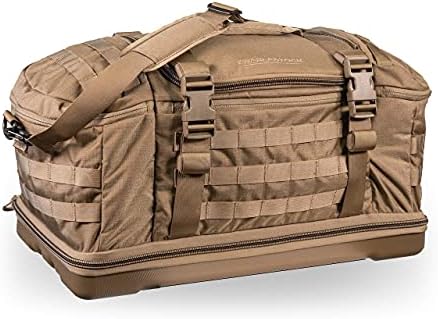
Eberlestock Bang-Bang Range Bag
$140 price checked August 2026
Read our full Bang-Bang Range Bag review
Different needs require different designs, so explore the various types of range bags available today.

Range Bag Construction and Durability Standards
- YKK Zippers – This refers to a specific brand of hardware that is the industry standard for heavy-duty use. A bag with YKK hardware is less likely to suffer a zipper failure, where the teeth separate under the weight of heavy ammunition.
- 18/10 Stainless Steel – This refers to the grade of steel used in hardware like D-rings or buckles. The “18” refers to the percentage of chromium and “10” to the percentage of nickel; higher numbers generally indicate better corrosion resistance and strength.
- MOLLE/PALS Webbing – These are standardized rows of heavy-duty nylon webbing stitched onto the exterior. They allow you to attach modular pouches or hydration carriers to the outside of the bag.
- Waxed Canvas – This is a fabric treated with a paraffin or wax coating. It provides a higher level of water resistance and abrasion resistance than standard polyester or nylon.
- Bottom Seam Reinforcement – This refers to extra stitching or a secondary material layer at the base of the bag. A reinforced base prevents a bottom seam blowout when the bag is carried by its handles while fully loaded.
- High-Denier Nylon – Denier is a unit of measure for the thickness of the individual fibers in the fabric. A higher denier number (such as 1000D) indicates a thicker, more durable material that resists tearing.
Range Bag Internal Organization and Capacity
- Internal Dividers – These are removable panels or pockets used to separate different types of gear. Adequate dividers prevent “ammo migration,” where loose rounds mix with tools or become difficult to access.
- Dedicated Ammo Pouches – These are internal compartments specifically sized for standard ammunition magazines or bulk rounds. More dedicated pouches allow for better organization and faster access during a range session.
- Load-Bearing Handles – These are handles reinforced with extra stitching or internal padding. You need load-bearing handles to ensure the bag does not tear away from the body when carrying a full load of heavy metal.
- Lining Material – This is the fabric on the inside of the bag. A durable lining prevents the interior from fraying or shredding from the friction of sliding magazines and tools in and out of the bag.
- Weight Capacity – This is the maximum weight the bag is designed to carry safely. Always check the manufacturer’s stated limit, as exceeding it can cause the zippers or handles to fail regardless of the material used.
Range Bag Material and Hardware Comparison
- Water Resistance – This refers to the bag’s ability to shed light rain or moisture. Most range bags are water-resistant rather than waterproof; for full submersion protection, you would need a dedicated dry bag.
- Hardware Finish – This describes the coating on metal components, such as matte black or brushed nickel. The finish is primarily aesthetic, though a powder-coated finish can offer better protection against scratches than raw metal.
- Padded Straps – These are shoulder straps with internal cushioning. Padded straps are better for transporting a heavy range bag over long distances to reduce pressure on the shoulder.
- Quick-Release Buckles – These are plastic or metal fasteners that can be undone with one hand. They are useful for securing the bag’s exterior compartments or the main flap.
Common Range Bag Terminology Confusions
Buyers often confuse specific terms that sound similar but offer different functional benefits. Understanding these differences helps you choose a bag that meets your specific needs.
Beginners should start by learning how a range bag works and what it is.
Water-Resistant vs. Waterproof
A water-resistant bag can withstand a light drizzle or a splash, but it will eventually leak if submerged or exposed to heavy rain. A waterproof bag uses sealed seams and specialized coatings to keep the contents dry even when fully submerged. Most range bags are water-resistant to keep the interior dry during transport in varied weather.
MOLLE vs. PALS
While often used interchangeably, MOLLE (Modular Lightweight Load-carrying Equipment) is the general system of attaching pouches, while PALS (Pouch Attachment Ladder System) refers to the specific horizontal rows of webbing. If a bag has PALS, it is compatible with MOLLE-style attachments.
Denier vs. Weight
A high denier number does not always mean the bag will be heavy, but it does mean the fabric is thicker and more durable. A 1000D nylon bag will generally be more resistant to abrasions than a 600D nylon bag, even if the total weight of the bag is similar.
Before ordering, you should confirm the specific weight limits and material standards for your location to ensure the bag meets your requirements for heavy-duty use.