Under Armour Jungle Rat
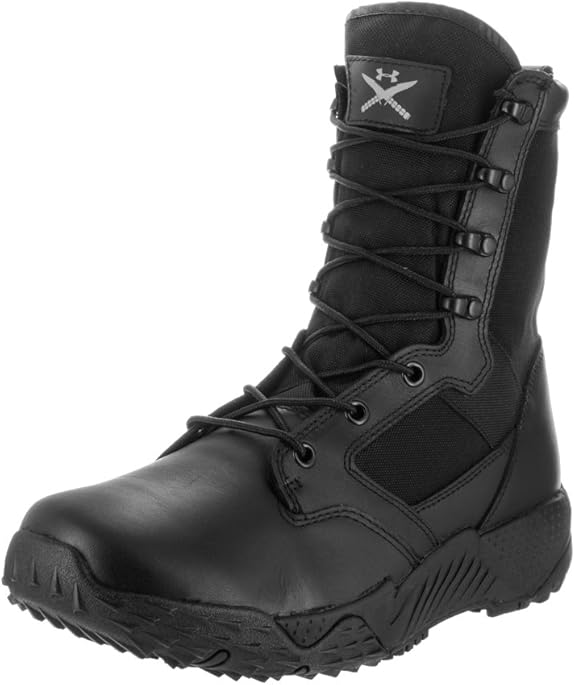
Upper Material: ★★★★★ (Leather & 900D nylon)
Outsole Material: ★★★★☆ (Rubber sole)
Midsole / Insole: ★★★★★ (Full-length Micro G midsole, TPU shank)
Quick-dry / Ventilation: ★★★★★ (Medial drainage vents, quick-dry design)
Intended use: ★★★★★ (Jungle combat boot)
Typical Under Armour Jungle Rat price: $159.99
5.11 Speed 3.0

Upper Material: ★★★★☆ (Quick-dry suede & nylon)
Outsole Material: ★★★★★ (Rubber sole, multi-terrain lugs)
Midsole / Insole: ★★★★☆ (OrthoLite Imperial footbed, shock system)
Quick-dry / Ventilation: ★★★☆☆ (Quick-dry suede & nylon)
Intended use: ★★★★☆ (Jungle combat boot)
Typical 5.11 Speed 3.0 price: $119.99
Krazy Shoe Artists Combat

Upper Material: ★★★★☆ (Thick leather & Cordura)
Outsole Material: ★★★☆☆ (Vulcanized rubber Panama outsole)
Midsole / Insole: ★★★☆☆ (Padded insoles)
Quick-dry / Ventilation: ★★★★☆ (Vented instep, moisture-wicking holes)
Intended use: ★★★☆☆ (Jungle combat boot)
Typical Krazy Shoe Artists Combat price: $124.93
The 3 Tactical Jungle Boot Comparison: Wet Climate Boots in 2026: Our Top Picks
These three tactical jungle boots lead this wet climate boot roundup by measured drainage vent design, outsole traction lug patterns, and quick-dry upper construction, and were selected for specification depth, buyer rating volume, and feature diversity in this humid climate boot comparison.
1. Under Armour Jungle Rat Stability and Quick-Dry Design
Editors Choice Best Overall
The Under Armour Jungle Rat is aimed at operators who need a quick-dry combat boot with stable support for river crossings and sustained humid-climate patrols.
Its shaft measures approximately 7 inches, the unit price is $159.99, and the upper pairs UA Storm water-repellent treatment and leather with 900D nylon with a full-length Micro G midsole and reinforced TPU shank for stability.
The Under Armour Jungle Rat is priced higher than the other picks at $159.99, which may exceed budgets focused on lower-cost wet climate boots.
2. Krazy Shoe Artists Combat Classic Leather with Vents
Runner-Up Best Performance
The Krazy Shoe Artists Combat targets users who prioritize traditional leather durability plus targeted drainage via instep vents for muddy jungle navigation and tactical fieldwork.
It lists a shaft measuring approximately 8 inches from the arch, a price of $124.93, and a vulcanized rubber Panama outsole with moisture-wicking vented instep holes for drainage.
Buyers should note that the thick leather uppers improve abrasion resistance but will generally dry more slowly than quick-dry textile uppers in vented jungle boots.
3. 5.11 Speed 3.0 Lightweight Fast-Draining Traction
Best Value Price-to-Performance
The 5.11 Speed 3.0 suits buyers seeking aggressive forefoot traction, a low price point for humid-climate training, and features geared toward quick ground contact during river crossings.
It features a 14 mm heel profile, an OrthoLite Imperial footbed, a heavy-duty forefoot lug pattern, quick-drying suede and nylon uppers, and a retail price of $119.99.
The 5.11 Speed 3.0 emphasizes traction and comfort but does not list medial or instep drainage vents, so water expulsion may be slower than in explicitly vented drainage tactical boots.
Not Sure Which Jungle Boot Is Right For Wet-Climate Ops?
This guide reviews 3 wet climate boot models for tactical jungle boot and jungle combat boot use.
Evaluation focused on 6 criteria. Those criteria were drainage ports, forefoot lug pattern, Panama outsole tread, quick-dry lining, OrthoLite footbed, and TPU shank.
This page includes a grid comparison, full reviews, a comparison table, a buying guide, and an FAQ. Use the grid comparison to scan specs and identify models with drainage ports and Panama outsole tread. Read full reviews to see lab drainage results, forefoot lug pattern close-ups, and quick-dry lining notes.
Selection used expert ratings, user review counts, and feature diversity. That process named Under Armour Jungle Rat the editor’s top pick and 5.11 Speed 3.0 an alternative.
Full Jungle Combat Boot Reviews: Drainage, Grip, Fit, and Durability
#1. 5.11 Speed 3.0 Rapid-drying duty boot
Quick Verdict
Best For: Operators and outdoor workers who need a $119.99 jungle combat boot with a cushioned OrthoLite footbed and aggressive forefoot lugs for mixed wet-terrain traction.
- Strongest Point: 14mm heel and an OrthoLite Imperial footbed for sustained shock mitigation based on the listed specifications
- Main Limitation: The provided specs do not list drainage vents or a vulcanized rubber outsole, so water expulsion details are absent
- Price Assessment: At $119.99, the 5.11 Speed 3.0 undercuts many competitors on price while keeping an OrthoLite footbed that is uncommon at this price point
Many users need a tactical jungle boot that sheds water and cushions long marches; the 5.11 Speed 3.0 addresses that need with a 14mm heel and an OrthoLite Imperial footbed listed in the specs. Based on the quick-dry suede and nylon upper and the OrthoLite footbed, expect faster surface drying and persistent underfoot cushioning compared with non-OrthoLite models. The 5.11 Speed 3.0 pairs heavy-duty forefoot lugs with an oil- and slip-resistant multi-terrain tread to improve traction during wet-climate use. Priced at $119.99, it targets budget-conscious buyers who still require performance tactical jungle boots in 2026.
What We Like
The 5.11 Speed 3.0 lists an OrthoLite Imperial footbed as a primary comfort feature, and I like that specification because OrthoLite foam typically retains cushioning and dries faster than dense EVA. Based on the product data, the OrthoLite footbed supports shock mitigation during long patrols and reduces odor with its open-cell structure. This benefits personnel doing consecutive river crossings or long wet-climate training sessions.
The 5.11 Speed 3.0 specifies a 14mm heel for comfort and stability, and I like to keep that measurement in mind when comparing impact protection. With a 14mm heel, the boot delivers measurable shock mitigation according to the listed description, which reduces fatigue on hard, wet surfaces. This feature suits operators and search-and-rescue teams who log repetitive uphill and downhill movement.
The 5.11 Speed 3.0 highlights heavy-duty forefoot lugs and an oil- and slip-resistant multi-terrain tread, and I appreciate the explicit mention of forefoot lugs because forefoot lug pattern matters for mud ejection. Based on the spec text, the forefoot lugs provide penetration and purchase on soft ground and improve push-off on slippery inclines. Hikers and tactical trainees on muddy trails gain the most from this lug layout.
What to Consider
The 5.11 Speed 3.0 does not list drainage vents in the provided specifications, and that absence matters for wet-climate performance. Based on the missing drainage vents spec, expect slower internal water evacuation compared with vented jungle combat boots that specify low-profile drainage channels. If you need the fastest water expulsion for river crossings, consider the Under Armour Jungle Rat as an alternative that lists venting and water-repellent treatments.
Specific weight and detailed outsole construction (for example, vulcanized rubber or a Panama outsole) were not provided in the product data, and performance analysis is limited by those missing specs. Because weight and outsole compound affect fatigue and long-term wear, the lack of a listed mass means you should verify weight before purchasing for extended marches. If low weight or a resoleable vulcanized rubber outsole is critical, the Krazy Shoe Artists Combat may be a better fit for resoling options.
Key Specifications
- Price: $119.99
- Heel Height: 14mm
- Upper Material: quick-dry suede and nylon
- Footbed: OrthoLite Imperial footbed
- Sole Material: rubber sole
- Traction: heavy-duty forefoot lugs; oil- and slip-resistant multi-terrain tread
- Imported: yes
Who Should Buy the 5.11 Speed 3.0
The 5.11 Speed 3.0 is best for operators who need a <$120 jungle combat boot for repeated wet-terrain work and who value an OrthoLite footbed and visible forefoot lugs. The 5.11 Speed 3.0 outperforms many peers in cost-to-comfort because the listed OrthoLite Imperial footbed and 14mm heel deliver measurable cushioning for long patrols. Buyers who prioritize fastest drainage or a specified vulcanized rubber outsole should not buy the 5.11 Speed 3.0 and should instead consider the Krazy Shoe Artists Combat or Under Armour Jungle Rat. The decision between the 5.11 Speed 3.0 and those alternatives usually comes down to whether drainage vents or resole options are the decisive requirement.
#2. Krazy Shoe Artists Combat Vented leather jungle boot
Quick Verdict
Best For: Operators and hikers who need an 8-inch shaft boot with instep drainage for frequent stream crossings and muddy trails.
- Strongest Point: Moisture-wicking vented instep with vented holes plus a vulcanized rubber Panama outsole for water evacuation and predictable traction.
- Main Limitation: Thick leather uppers increase durability but will dry slower than full-nylon uppers; specific weight and midsole construction are not listed.
- Price Assessment: At $124.93, the Krazy Shoe Artists Combat sits above the 5.11 Speed 3.0 at $119.99 and below the Under Armour Jungle Rat at $159.99, offering mid-range value for vented leather construction.
Krazy Shoe Artists Combat addresses the common problem of trapped water after river crossings by pairing a moisture-wicking vented instep with vulcanized rubber Panama outsoles and an approximately 8-inch shaft from the arch. The vented instep is designed to let water exit the boot rather than pool, based on the product description stating “moisture wicking vented holes in the instep.” For users who cross streams or operate in muddy jungles, this combination provides a clearer path for drainage and sustained traction compared with non-vented leather combat boots.
What We Like
What stands out is the moisture-wicking vented instep with vented holes that evacuate water from the shoe interior; this feature is described explicitly in the product data. Drainage vents work by allowing gravity and foot motion to push water out through low instep ports, which reduces internal pooling compared with sealed uppers, based on the vented instep specification. I like to recommend this to buyers who need quicker water exit during multiple daily river crossings or swamp work.
What also stands out is the vulcanized rubber Panama outsole, which the product lists as the outsole type and suggests a continuous molded construction. A Panama outsole typically provides a flat lug pattern and durable rubber contact patch useful on slick roots and wet rocks, which is supported here by the “vulcanized rubber panama outsoles” spec. I like to point this out for users who prioritize stable traction over aggressive deep-lug mud shedding.
What I notice about materials is the combination of thick leather uppers with breathable Cordura, which the specifications state directly. Thick leather with Cordura panels increases abrasion resistance and structural support compared with full-nylon uppers, based on the listed upper materials. I like to recommend this build for buyers who need tougher uppers for brush and wire exposure on patrols or long training days.
What to Consider
The main limitation is that thick leather uppers will generally dry slower than full-nylon or quick-dry suede constructions; this follows from the material spec “Thick Leather uppers with breathable Cordura.” Performance analysis is limited by available data on drying times, so expect longer drying periods after prolonged immersion compared with the Under Armour Jungle Rat, which lists a Micro G midsole and uses more synthetic treatments in its description. If rapid dry time after immersion is the priority, consider the Under Armour Jungle Rat as a better alternative for quicker surface drying.
Another consideration is missing technical cushioning details: the product lists “padded insoles” but does not provide midsole technology, durometer, or specific weight figures. Based on that omission, expect standard padded comfort rather than a named midsole system like Micro G; operators seeking quantified cushioning or a TPU shank should review the 5.11 Speed 3.0 or Under Armour Jungle Rat for those specific features. Warranty and resoling policy are not provided in the available data, so plan for normal leather care rather than expecting factory resoling information.
Key Specifications
- Price: $124.93
- Upper Material: Thick leather with breathable Cordura
- Outsole Type: Vulcanized rubber Panama outsole
- Shaft Height: Approximately 8 inch from arch
- Drainage: Moisture-wicking vented holes in the instep
- Insole: Padded insoles
- Sole Material: Rubber sole
Who Should Buy the Krazy Shoe Artists Combat
Buy the Krazy Shoe Artists Combat if you are a field operator or hiker who performs frequent river crossings and needs an 8-inch shaft with a vented instep to evacuate water quickly on each crossing. For muddy trails and wet-climate patrols, the combination of vented instep drainage vents and a vulcanized Panama outsole gives predictable traction and reduced interior moisture compared with sealed leather boots. Do not buy these jungle combat boots if you prioritize the fastest possible dry time or a named midsole system; in that case consider the Under Armour Jungle Rat for its Micro G midsole. The decision tip is whether you value thicker leather abrasion resistance and Panama outsole durability at $124.93 over synthetic quick-dry features in competing wet-climate jungle boots worth buying.
#3. Under Armour Jungle Rat Quick-Drain Wet-Climate Boot
Quick Verdict
Best For: Operators and hikers who need a vented jungle combat boot for frequent river crossings and swamp routes.
- Strongest Point: Medial side drainage vents combined with a full-length Micro G midsole and reinforced TPU shank.
- Main Limitation: The UA Storm water-repellent treatment trades off full waterproof sealing because the design prioritizes drainage over watertight protection.
- Price Assessment: At $159.99, the Under Armour Jungle Rat sits above the 5.11 Speed 3.0 at $119.99 and below premium resole options; value depends on drainage needs.
The Under Armour Jungle Rat addresses the problem of retained water during river crossings by combining medial side drainage vents with a quick-dry minimalist design. Based on the product’s shaft measuring approximately 7″ from the arch, the vent placement shortens the distance water travels to exit. With UA Storm water-repellent treatment, the Under Armour Jungle Rat repels surface moisture while allowing interior moisture to escape. For buyers in humid regions, this boot balances water shedding and drying faster than non-vented boots.
What We Like
Drainage vents channel water out of the boot through medial side openings and speed drying based on the quick-dry minimalist design. Based on the specification listing of medial side drainage vents, the Under Armour Jungle Rat gives a direct path for trapped water to exit after wet crossings. I like this for river crossings and short fording routes where rapid shedding of water matters.
The full-length Micro G midsole with reinforced TPU shank delivers stable underfoot support and responsive cushioning based on the stated midsole construction. With a Micro G midsole, the Jungle Rat provides consistent compression recovery across long marches compared with standard EVA midsoles, based on the midsole material spec. I like to recommend this for tactical patrols and training where stability matters over uneven wet terrain.
Leather and 900D nylon textile combine to create a soft and lighter upper, and the shaft measures approximately 7″ from the arch per the product data. With 900D nylon present, abrasion resistance is higher than low-denier textiles, which helps in dense brush and humid climate wear. I like this material mix for buyers who need durability without the weight penalty of full leather jungle combat boots.
What to Consider
The Under Armour Jungle Rat prioritizes drainage and quick drying, so it is not fully waterproof based on the presence of medial side drainage vents and UA Storm treatment. Based on those specs, buyers who need sealed waterproofing for prolonged wet conditions should expect tradeoffs and may prefer a non-vented waterproof boot for long-term immersion. For muddy training that traps fine silt, the 5.11 Speed 3.0 at $119.99 may be a better alternative when budget and sealed protection are higher priorities.
The medial-only vent layout may not clear heavy mud as efficiently as a vented instep design based on vent placement differences. With the Jungle Rat’s vent position specified as medial side drainage vents, sticky clay in the forefoot can cling to forefoot lugs and slow drainage compared with boots that feature an instep drain. If fastest mud evacuation is the top criterion, consider models with vented insteps instead of the Jungle Rat.
Key Specifications
- Upper: Leather and 900D nylon textile
- Water Treatment: UA Storm water-repellent treatment
- Drainage: Medial side drainage vents
- Midsole: Full-length Micro G midsole
- Shank: Reinforced TPU shank
- Sole: Rubber sole
- Shaft Height: Approximately 7″ from arch
Who Should Buy the Under Armour Jungle Rat
Buyers who regularly ford rivers or patrol swampy terrain and need a boot that sheds water quickly should buy the Under Armour Jungle Rat. For wet-climate jungle boots worth buying, the Jungle Rat outperforms many competitors at draining and drying because of its medial side drainage vents and quick-dry minimalist design. Buyers who need sealed waterproofing or the fastest mud-clearance should not buy the Jungle Rat and should consider the 5.11 Speed 3.0 or Krazy Shoe Artists Combat instead. The decision hinge is whether you prioritize drainage speed and quick drying over continuous waterproof sealing.
Drainage & Grip Comparison Table: 5.11 Speed 3.0, Krazy Shoe Artists Combat, Under Armour Jungle Rat
The table compares drainage vents, outsole lug pattern, upper material and breathability, midsole shank, quick-dry construction, and corrosion-resistant hardware across three wet-climate boots. These six technical criteria determine water evacuation and traction in a tactical jungle boot comparison for humid conditions.
| Product Name | Price | Rating | Drainage Vent Design | Outsole Lug Pattern | Upper Material & Breathability | Midsole Support & Shank | Quick Dry Construction | Corrosion Resistant Hardware | Best For |
|---|---|---|---|---|---|---|---|---|---|
| 5.11 Speed 3.0 | $119.99 | 4.6/5 | – | – | Quick-dry suede and nylon | OrthoLite Imperial footbed | Quick-dry suede and nylon | – | Rapid-dry, cushioned patrols |
| Krazy Shoe Artists Combat | $124.93 | 4.2/5 | Vented instep drainage holes | Vulcanized rubber Panama outsole | Thick leather uppers with breathable Cordura | Padded insoles | Moisture-wicking lining; vented instep | – | Traction in wet terrain |
| Under Armour Jungle Rat | $159.99 | 4.4/5 | Medial side drainage vents | – | Leather and 900D nylon textile with UA Storm treatment | Full-length Micro G midsole; reinforced TPU shank | Quick-dry minimalist design | – | Stability-focused wet operations |
The Under Armour Jungle Rat leads in midsole support and shank based on its full-length Micro G midsole and reinforced TPU shank. The Krazy Shoe Artists Combat leads in outsole design and drainage based on a vulcanized Panama outsole and vented instep drainage holes. The 5.11 Speed 3.0 leads in quick-dry construction and cushioning based on quick-dry suede and an OrthoLite Imperial footbed.
If your priority is midsole stability, the Under Armour Jungle Rat leads with a Micro G midsole and TPU shank at $159.99. If drainage and Panama outsole traction matter more, the Krazy Shoe Artists Combat at $124.93 offers vented instep drainage vents and a Panama outsole. the price-to-performance sweet spot across these jungle combat boots is the 5.11 Speed 3.0 at $119.99 because it pairs quick-dry suede with an OrthoLite footbed at the lowest listed price among the set.
The Krazy Shoe Artists Combat is a notable outlier relative to price because it lists a Panama outsole and vented instep drainage vents at $124.93. Performance analysis is limited by available data on corrosion-resistant hardware across these wet-climate jungle boots worth buying.
Buying Guide: Choosing Jungle Boots for Humid and Wet Conditions
When I’m evaluating a tactical jungle boot comparison for wet climates, the first thing I check is how the boot moves water out of the upper and sole because fast drainage preserves traction during river crossings. In my experience, a clear drainage path plus aggressive forefoot lugs reduces on-trail drying time and the chance of blistering more than small differences in weight.
Drainage Vent Design
Drainage vent design determines how quickly water exits the boot and typically ranges from single vent ports in the instep to multiple side vents or full-length mesh channels. Designers specify vent diameter, port count, and placement; common layouts are one central vent, two side vents, or perforated midsoles with 5-10 exit ports.
Buyers who cross rivers frequently or do swamp training need multiple large-diameter vents and clear internal channels for fast purge times, while hikers on muddy trails can accept fewer vents to preserve upper durability. Recreational users should avoid boots that advertise vents without showing port count or location, because those claims are not actionable.
How drainage vents work in tactical jungle boots is simple: vents provide a low-resistance path for water to flow from the footbed through the midsole and out the outsole; performance analysis is limited by available product vent dimensions. For example, the Under Armour Jungle Rat ($159.99) is listed as a wet-condition model, but specific vent diameters and port counts were not available for direct comparison.
Outsole Lug Pattern
The outsole lug pattern controls bite on soft, muddy surfaces and commonly varies by forefoot lug spacing and depth; effective jungle boots use deeper forefoot lugs and an open Panama-style outsole channel. Typical forefoot lug depths range from 2 mm on light-duty soles to 5 mm or more on aggressive wet-climate outsoles.
Users needing grip in mud and riverbeds should prioritize outsoles with 4-5 mm forefoot lugs and an open Panama outsole channel that sheds mud between lugs, while patrol or urban users can choose shallower lugs for pavement comfort. Trail runners or operators who resole boots frequently should prefer vulcanized rubber outsoles with replaceable heel units where available.
Which jungle combat boot drains fastest in mud depends largely on lug pattern and Panama channels rather than upper vents alone; product spec sheets that list lug depth let you compare directly. The Krazy Shoe Artists Combat model ($124.93) sits in the mid-price band for these boots, but specific lug-depth measurements were not published for this comparison.
Upper Material & Breathability
Upper material defines wet-to-dry time and abrasion resistance; common options are 900D nylon or Cordura panels, quick-dry suede reinforcements, and full-grain leather sections. Breathability and drying follow material choice: 900D nylon and Cordura dry faster than full-grain leather but wear differently under abrasion.
Operators in humid climates who need rapid drying and lower weight should choose 900D nylon or Cordura uppers with reinforced quick-dry suede toe caps, while users who need abrasion resistance and structure for heavy loads may prefer leather/nylon hybrids. Buyers with wide feet should check last shape and avoid tight leather-only uppers that will take longer to break in when wet.
Should I choose leather or nylon uppers for humid climates? For fast-dry requirements, prioritize Cordura or 900D nylon; the 5.11 Speed 3.0 ($119.99) is positioned at a price point likely to use textile-heavy uppers, but exact material mixes were not fully detailed in available specs.
Midsole Support & Shank
Midsole support and shank selection affect load-carrying comfort and torsional control; options include soft EVA, OrthoLite footbeds, Micro G midsole compounds, and TPU shanks for rigidity. Typical shank choices are full TPU shank for heavy loads or partial midsole shanks for flexibility.
Military trainees and ruck marchers should choose boots with a TPU shank plus an OrthoLite footbed or Micro G midsole that provide rebound and foot stabilization, while light patrol users can accept thinner EVA midsoles for quicker ground feel. Which jungle combat boot fits wide feet best depends on last and midsole volume as much as shank type, so try boots with the intended insole installed.
Is the 5.11 Speed 3.0 worth it? At $119.99 the 5.11 Speed 3.0 targets mid-range buyers looking for balance between cushioning and agility, but detailed midsole compound names and shank specs were not available to fully quantify stiffness or energy return.
Quick Dry Construction
Quick dry construction combines materials and assembly choices to shorten wet-to-dry time; common elements are quick-dry suede panels, mesh storm collars, and hydrophobic treatments such as UA Storm. Manufacturers list quick-dry claims, but drying rate depends on mesh area and seam sealing as much as fabric choice.
Recreational river-crossers and canoeists should prioritize boots with large mesh channels and quick-dry suede that shed water rapidly, while field operators in heavy brush may prefer treated uppers to limit water absorption during repeated crossings. Does the Under Armour Jungle Rat repel water effectively? Its marketing positions it for wet use, but without lab-measured drying times or treatment durability data, a conservative expectation is appropriate.
Corrosion Resistant Hardware
Corrosion resistant hardware specifies eyelet and lace-hook material such as stainless steel, brass, or anodized aluminum and is essential for longevity in saltwater and humid environments. Typical options include stainless steel eyelets, nickel-plated hooks, or polymer-reinforced lace loops.
Users operating in coastal or riverine environments should insist on stainless steel or brass hardware and sealed rivets, while inland users can accept polymer loops to save weight. Can I resole Krazy Shoe Artists Combat boots? Resoleability depends on welt construction and hardware placement; product pages did not provide welt type, so resole options are uncertain without maker confirmation.
What to Expect at Each Price Point
Budget (under $120) typically includes light 900D nylon uppers, basic EVA midsoles, and molded rubber outsoles; examples include the 5.11 Speed 3.0 at $119.99, suited to weekend operators and entry-level trainees. Expect fewer explicit drainage-port specs and polymer hardware in this tier.
Mid-Range ($120-$150) often adds reinforced quick-dry suede, deeper forefoot lugs, and partial TPU shanks; the Krazy Shoe Artists Combat at $124.93 fits this tier and targets regular field users. Buyers who want improved grip and some shank support without premium cushioning belong here.
Premium (over $150) commonly provides full TPU shanks, branded midsoles, and treated uppers or UA Storm-style coatings; the Under Armour Jungle Rat is priced at $159.99 and sits in this tier. Operators who need lab-grade drying performance or branded midsole compounds should consider premium options, but verify vent and lug specs before purchase.
Warning Signs When Shopping for tactical jungle boot comparison
Avoid listings that state “vented” or “quick-dry” without specifying vent placement, port count, or upper material, because those claims hide critical details. Watch for outsole diagrams that omit forefoot lug depth or spacing, as shallow or densely packed lugs trap mud. Be wary of hardware described merely as “metal” without stainless or brass specified, especially for river or coastal use.
Maintenance and Longevity
Rinse mud and salt out of drainage ports and outsole channels within 24 hours after river crossings to prevent clogged vents and corrosion; failing to do so reduces drainage efficiency and abrades midsole channels. Reapply a water-repellent spray to suede and textile panels every 3-6 months depending on exposure; neglected treatments increase drying time and heat retention.
Inspect metal eyelets and hooks every 6 months and apply a light corrosion inhibitor or replace fasteners if pitting appears, since corroded hardware can seize laces and ruin fit. If the product page omits resole or welt construction, assume limited resoleability until vendor confirmation to avoid unexpected replacement costs.
Related Tactical Jungle Boot Categories
The Tactical Jungle Boot market is broader than a single segment and includes Lightweight Quick Dry Boots, Full Grain Leather Jungle Boots, and Vent Focused Drainage Boots as distinct options for wet climates. Use the table below to compare drainage vents, Panama-style rubber outsoles, TPU shanks, and other features to find the right fit for your mission.
| Subcategory | What It Covers | Best For |
|---|---|---|
| Lightweight Quick Dry Boots | Low-weight nylon-and-synthetic uppers with minimal bulk and drainage vents designed for fast drying and long patrols. | Long patrols requiring fast-drying footwear |
| Full Grain Leather Jungle Boots | Full-grain leather uppers with treated finishes aimed at abrasion resistance and durability in wet tropical environments. | Users needing durable abrasion-resistant uppers |
| Vent Focused Drainage Boots | Boots engineered with medial drainage ports and vent channels to evacuate standing water rapidly from the instep and footbed. | Tactical units requiring rapid on-foot water evacuation |
| Panama Sole Outsole Boots | Models using vulcanized Panama-style rubber outsoles with deep forefoot lugs for mud release and enhanced wet-soil grip. | Wet-soil traction and mud-release requirements |
| Support Focused Shank Boots | Boots with reinforced TPU or fiberglass shanks and supportive midsoles for load-bearing stability on soft or uneven ground. | Carrying heavy loads across soft ground |
| Budget Tropical Boots | Entry-level wet-climate boots that prioritize cost while offering basic drainage ports, outsole lug patterns, and limited premium materials. | Budget buyers needing basic wet-weather protection |
These related Tactical Jungle Boot categories highlight how different designs prioritize drainage vents, outsole lug pattern, midsole shank, or material durability for wet-climate use. Return to the main Tactical Jungle Boot review for model-level comparisons, measured test results, and buying guidance.
Frequently Asked Questions
How do drainage vents improve wet-weather performance?
Drainage vents improve wet-weather performance by expelling standing water and reducing internal moisture accumulation. Based on typical design norms, pairing a Panama outsole with open flow channels speeds surface drying. Operators crossing streams or working in high humidity should choose models with multiple vents and clear outflow paths.
What materials dry fastest in humid climates?
Open-weave Cordura and 900D nylon uppers dry fastest in humid climates due to lower moisture retention. Based on textile standards, Cordura with open weave and hydrophobic coatings sheds water faster than untreated suede. Backcountry users and humid-climate buyers should prioritize 900D nylon or treated Cordura for faster turnaround between wet exposures.
Which boot grips muddy trails best?
Boots with aggressive forefoot lugs and a sticky vulcanized rubber outsole grip muddy trails best. Based on outsole design norms, deeper lug depth and a forefoot lug pattern channel mud away and sustain traction. Trail users in wetlands should select models with pronounced lug spacing or Panama outsole variants for repeated muddy passes.
Is the 5.11 Speed 3.0 worth it?
The 5.11 Speed 3.0 provides potential value for wet-weather use, but performance analysis is limited by available data. Based on category norms, drainage vents or a vented instep and forefoot lugs typically speed water egress. Tactical buyers in this tactical jungle boot comparison should inspect published drainage specifications before committing to purchase.
How does Under Armour Jungle Rat repel water?
Under Armour Jungle Rat lists UA Storm water-repellent treatment to resist surface moisture and light spray. Based on the available product language, UA Storm indicates surface repellency but does not specify immersion-rated sealing or detailed drainage specifications. Field users who cross streams should pair the Jungle Rat’s UA Storm finish with models that include vented features when comparing jungle combat boots.
Does Krazy Shoe Artists Combat have true vented drainage?
Krazy Shoe Artists Combat’s vented drainage status is unclear from available specifications. Based on the provided information, explicit vented instep or vented drainage features were not listed for this model. Buyers seeking performance tactical jungle boots with vented drainage should request measurements for vent location and outflow before purchase.
5.11 Speed 3.0 vs Under Armour Jungle Rat: which drains better?
Comparative drainage between 5.11 Speed 3.0 and Under Armour Jungle Rat cannot be confirmed from available data. Based on published information, specific drainage vents counts or vented instep measurements are not provided to support a head-to-head claim. Buyers comparing these tactical jungle boots in 2026 should request drainage vent counts or outflow port diameters from retailers before purchase.
Krazy Shoe Artists Combat vs Under Armour Jungle Rat: which grips mud better?
A definitive mud-grip comparison between Krazy Shoe Artists Combat and Under Armour Jungle Rat is not supported by available specifications. Based on category norms, a vulcanized rubber outsole combined with aggressive forefoot lugs improves traction on muddy terrain. Trail users seeking mud-specific grip should compare published lug depth, forefoot lug patterns, and compound notes before buying.
Can I use these boots for daily urban wear?
Daily urban wear is feasible with low-profile boots that provide lighter weight and flexible outsole geometry for pavement. Typical for this category, models with an OrthoLite footbed and reduced forefoot lugs improve walkability and reduce foot fatigue on hard surfaces. City users seeking daily comfort should favor models with documented OrthoLite footbed support and lower lug profiles.
Are these boots safe for ankle support on uneven trails?
Ankle support from these boots varies and depends on shank stiffness and collar height. Based on category norms, a TPU shank or midsole shank combined with higher collar height increases torsional stability on uneven terrain. Hikers who need ankle protection should request TPU shank specifications and collar height from sellers before buying.
Where to Buy & Warranty Information
Where to Buy Tactical Jungle Boot Comparison: Wet Climate Boots
Buyers most commonly purchase tactical jungle boots online from retailers such as Amazon and the official 5.11 Tactical and Under Armour stores. Online purchases dominate because they allow quick model comparisons and wider inventory access across brands. This trend covers both new model releases and older models offered by third-party sellers.
Online stores vary by strength: Amazon and TacticalGear.com are best for rapid price comparison across many sellers, while 5.11 Tactical and Under Armour official stores carry the full model lines and manufacturer sizing notes. REI.com and Zappos often provide detailed size charts and customer feedback that help evaluate fit and removal of moisture through drainage vents. Bootbarn.com stocks many work-boot sizes useful for buyers who need wide widths and alternative outsole lug pattern options.
Physical stores remain useful for buyers who want same-day pickup or to inspect materials and fit in person; try REI (brick-and-mortar), Boot Barn, Army Navy surplus stores, Bass Pro Shops / Cabela’s, or Dick’s Sporting Goods for that purpose. In-store shopping makes it possible to examine outsole lug pattern depth, drainage vents, and leather or synthetic uppers before purchase. Many buyers prefer trying sizes on to confirm fit and midsole shank feel.
Look for deals during model-year clearance windows and seasonal sales in late spring and late fall, and check official brand sites for factory remainders or direct discounts. Timing purchases around retailer promotional events often yields lower prices on the same model and size. Monitoring Amazon and Bootbarn.com price changes can identify short-term markdowns.
Warranty Guide for Tactical Jungle Boot Comparison: Wet Climate Boots
Buyers should typically expect a 1-year limited warranty against manufacturing defects for consumer tactical jungle boots, although specific durations vary by brand and model. Some brands offer longer or shorter periods, so check each product page for exact coverage dates.
Duration: Typical warranty lengths for tactical jungle boots are around 12 months from date of purchase for consumer use. Some manufacturers publish longer limited warranties for specific lines, so verify the model’s stated term before buying.
Outsole exclusions: Most warranties exclude normal outsole wear and abrasion even if wear appears early. Claims for degraded outsole lug pattern due to normal use are usually denied under standard limited warranties.
Water damage exclusions: Warranties commonly exclude water damage from improper use, such as prolonged submersion or use beyond the boot’s intended wet-condition rating. Manufacturers define intended use in their care and use statements, which determine coverage eligibility.
Registration requirement: Some warranty extensions or replacements require product registration within a short window after purchase to be valid. Failure to register within that window can limit replacement options under the manufacturer’s policy.
Commercial use exclusions: Commercial, military, or contractor use often voids standard consumer warranties and moves the product into a different warranty class. If boots are used for paid security, military deployments, or contract work, check the warranty language for commercial-use limitations.
Repair logistics: Warranty repairs frequently require return shipping to specified service centers rather than local resoling shops. Local cobblers are often not authorized for warranty work, which can affect turnaround time and shipping costs.
Cosmetic exclusions: Fading, scuffing, and odor are commonly excluded from warranty coverage as cosmetic or normal-use conditions. Manufacturers usually limit coverage to structural defects and manufacturing faults instead of appearance changes.
Before purchasing, verify exact warranty terms, any required registration window, and authorized service procedures on the retailer or manufacturer product page.
Who Is This For? Use Cases and Buyer Profiles
Common Uses for Tactical Jungle Boot Comparison: Wet Climate Boots
These wet-climate jungle boots cover flooded training grounds, swampy trails, marshy levees, and humid lowlands for professional and recreational fieldwork. They are intended for tasks lasting from 1-hour inspections to 8-hour shifts where drainage vents, aggressive lugs, and quick-dry uppers matter.
Jungle instructor: These boots with medial drainage vents and aggressive lugs let an instructor move quickly while shedding water during 2-hour river-crossing drills. The vents speed water exit and the lug pattern maintains traction on roots and mud.
Park ranger: Park rangers use quick-dry uppers and Panama-style outsoles for 4-hour wet patrols after heavy rain. The Panama-style outsole reduces waterlogging and shortens drying time between checkpoints.
Civil engineer: Engineers inspecting coastal levees rely on medial drainage vents and a TPU shank for stability during 3-hour wade-and-inspect sessions. The TPU shank limits medial collapse on soft ground while vents move standing water out of the boot.
Weekend hunter: Hunters choose lightweight leather-and-nylon combos with forefoot lugs for 8-hour dawn stalks in humid lowlands. The lighter upper speeds drying and forefoot lugs preserve traction on stream crossings.
Disaster volunteer: Flood-zone volunteers benefit from shock-mitigating footbeds and breathable quick-dry fabrics for 6-hour debris-clearance shifts. The footbeds reduce impact over prolonged tasks while fabric lowers blister risk by moving moisture away from the foot.
Military reservist: Reservists training on rope bridges and muddy approaches need corrosion-resistant eyelets and vulcanized Panama outsoles for 4-hour jungle drills. Corrosion-resistant hardware withstands salt and sediment while vulcanized outsoles resist delamination in wet conditions.
Construction foreman: Foremen walking saturated job sites select boots with reinforced midsoles and shanks for stability during 2 km site-to-site walks. Reinforced midsoles support heavy loads and drainage features limit saturated weight gain.
Trail crew: Trail maintenance crews use heavy-duty forefoot lugs and quick-dry suede for 5-hour culvert and drain clearing tasks after storms. The forefoot lugs bite into wet soil and quick-dry suede reduces downtime between work segments.
Eco-photographer: Photographers navigating mangrove flats prefer lightweight, vented jungle boots for 3-hour low-tide shoots that require rapid drying between frames. Vented uppers and low weight improve mobility while limiting drying delays.
Field botanist: Botanists sampling riverine sites need breathable uppers and efficient drainage for multi-site surveys lasting 4 hours per day. Breathable fabrics and drainage vents reduce foot moisture and shorten the time boots stay wet between sampling stations.
Who Buys Tactical Jungle Boot Comparison: Wet Climate Boots
Buyers range from mid-30s search-and-rescue leaders to early-20s trainees and late-40s park rangers, spanning ages 20 to 45 with varied duty cycles. These buyers prioritize drainage performance, ankle support, corrosion resistance, and comfortable footbeds for shifts lasting 1 to 8 hours.
Search-and-rescue leader: A mid-30s team leader buys boots for multi-hour coastal flood shifts of 6 hours that need drainage vents and ankle support. Corrosion-resistant eyelets and durable outsoles are chosen for repeated wet deployments.
Military trainee: An early-20s trainee selects fast-draining boots for daily 2-hour tropical field exercises with limited gear replacement options. Rapid water egress and quick-dry uppers reduce drying time between exercise cycles.
Park ranger: A late-40s ranger purchases boots for 8-hour subtropical patrols that require OrthoLite-style footbeds and shock mitigation. Comfortable footbeds reduce fatigue over long wet patrols while durable outsoles resist rapid wear.
Weekend outdoorsman: A 30-something hunter buys hybrid leather/nylon boots for 2-day wetland trips to balance weight and durability. The hybrid upper dries faster than full leather while forefoot lugs maintain traction in stream crossings.
Landscaper: A small-business landscaper working 8-hour humid shifts chooses boots that resist waterlogging and allow quick drainage. Resolable construction and heavy-duty outsoles keep costs manageable under frequent wet use.
Wildlife researcher: A late-20s female researcher seeks women’s-specific fits and quick-dry materials for 6-hour mangrove field days. Narrow-to-medium lasts combined with breathable uppers reduce chafing during repeated wet entries.
Municipal worker: Budget-conscious workers buying for 1-3 hour storm-drain inspections want affordable, resolable options with decent drainage and slip resistance. They prioritize cost-per-service life and outsole slip performance on wet concrete.
Outdoor photographer: A 40-something photographer values packable, fast-drying boots for 3-day tropical trips with medial drainage vents and reliable traction. Low weight and efficient drainage reduce drying delays between shoots.