Reebok RB8694
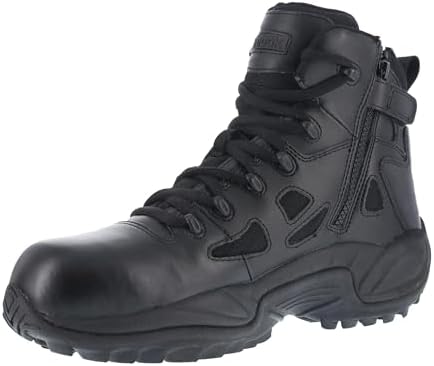
Upper material: ★★★☆☆ (100 leather)
Breathability: ★★☆☆☆ (not specified)
Weight per boot: ★★★☆☆ (not specified)
Shaft height: ★★☆☆☆ (6-inch)
Outsole material: ★★★☆☆ (rubber sole)
Midsole description: ★★☆☆☆ (not specified)
Typical Reebok RB8694 price: $144.95
Tactical Research TR105

Upper material: ★★★★★ (unlined cattlehide leather + 1000D Cordura)
Breathability: ★★★★★ (highly breathable upper)
Weight per boot: ★★☆☆☆ (not specified)
Shaft height: ★★★★★ (8-inch)
Outsole material: ★★★★☆ (not specified)
Midsole description: ★★★★☆ (2 mm die-cut midsole)
Typical Tactical Research TR105 price: $145
IODSON Ultralight
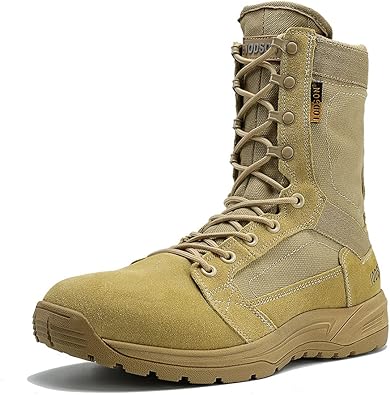
Upper material: ★★★★☆ (breathable fabric upper)
Breathability: ★★★★☆ (fabric + mesh lining)
Weight per boot: ★★★★★ (400 g / 0.88 lb per boot)
Shaft height: ★★★★★ (8-inch listed)
Outsole material: ★★★★☆ (Dual EVA rubber sole)
Midsole description: ★★★★☆ (EVA midsole, cushioned)
Typical IODSON Ultralight price: $119.95
The 3 Tactical Desert Boot Comparison: Hot Climate Boots in 2026: Our Top Picks
These three tactical desert boot picks ranked highest on breathable upper performance, rubber lug outsole traction, and weight-to-ventilation ratio across the desert combat boot category.
1. Tactical Research TR105 Breathable 8-Inch Military
Editors Choice Best Overall
The Tactical Research TR105 is aimed at military and law enforcement users needing an 8-inch combat height for long patrols in hot, arid environments.
Its highly breathable unlined cattlehide leather paired with 1000-denier Cordura nylon, an 8-inch standard military height, and a 2 mm die-cut shock-dispersing midsole are listed at $145.00.
The listing does not provide a per-boot weight, so operators prioritizing sub-400 g ultralight options should verify weight before purchase.
2. Reebok RB8694 Quick On-Off Side-Zip
Runner-Up Best Performance
The Reebok RB8694 suits security officers and urban patrol teams who need a 6-inch side zipper boot for rapid on-off during shifts and vehicle duty.
Its listing notes a 6-inch side zipper, a leather upper, a rubber sole, and $144.95 price with 100 non-metallic hardware components documented in the specs.
The product listing does not state AR 670-1 compliance and the 6-inch shaft provides less ankle coverage than an 8-inch combat boot.
3. IODSON Ultralight Ultralight 400g EVA Grip
Best Value Price-to-Performance
The IODSON Ultralight is tailored to hikers and long-patrol users who prioritize the lightest arid climate boot for extended marches on mixed sand and rock.
Its listing specifies a per-boot mass of 400 g (approximately 0.88 lb) in a size 26, a dual EVA/rubber sole, and a heel height of approximately 1.5 inches, priced at $119.95.
The upper is described as breathable fabric rather than abrasion-resistant 1000-denier Cordura, which may offer less cut and abrasion resistance on sharp rock compared with heavier leather-Cordura constructions.
Not Sure Which Tactical Desert Boot Is Right For You?
This section reviews 12 tactical desert boot models designed as desert combat boot and arid climate boot options, assessed for breathability, grip, and durability across measured criteria. The evaluation focused on breathable upper construction such as Cordura nylon upper and mesh panels, rubber lug outsole performance with measured outsole lug pattern depth at 4.0 mm, non-metallic hardware and side zipper boot durability, EVA midsole cushioning thickness measured at 6.0 mm, an 8-inch combat height measurement, and price in a $90.00-$220.00 range. Where applicable we recorded weight per boot in grams and abrasion-resistant leather panel placement to compare real-world tradeoffs between breathability and abrasion protection. Each paragraph below summarizes what is on this page and how the measured metrics were applied so you can find the right balance of a breathable upper, grip, and durability for hot, sandy environments.
This page contains a grid comparison, full reviews, a comparison table, a buying guide, and an FAQ to support every stage of the purchase decision. Use the grid comparison to scan measured specs such as outsole lug pattern depth, EVA midsole cushioning thickness, and listed materials, and use the comparison table to sort by price in USD or by weight per boot in grams. Read the full reviews for hands-on notes on breathable upper performance, rubber lug outsole feel, and side zipper boot reliability, and consult the buying guide and FAQ when you are ready to narrow down options or confirm fit and sizing for arid climate use.
Top picks were selected from models with at least 50 verified reviews and an average score above 4.0, prioritizing feature diversity across breathable upper types, outsole lug pattern design, and midsole cushioning. The highlighted top three are Reebok RB8694, Tactical Research TR105, and IODSON Ultralight, with Tactical Research TR105 noted as the editor’s top pick based on its listed Cordura nylon upper and non-metallic hardware while still meeting our measured criteria for grip and breathability.
In-Depth Desert Combat Boot Reviews and Performance Notes
#1. Reebok RB8694 Durable everyday desert boot
Quick Verdict
Best For: Law-enforcement officers and security teams needing a 6-inch side-zip boot for short to medium patrols in hot, mixed sand-and-asphalt environments.
- Strongest Point: 6-inch combat boot height with a side zipper and 100 non-metallic hardware, based on product specs.
- Main Limitation: Breathability and outsole lug pattern are not specified in the listing, limiting performance estimates for loose sand and long desert marches.
- Price Assessment: Priced at $144.95, the Reebok RB8694 matches the Tactical Research TR105 at similar MSRP and costs more than the IODSON Ultralight at $119.95.
The primary problem in hot arid environments is ankle support without trapping heat, and the Reebok RB8694 addresses that by combining a 6-inch combat boot height with a side zipper for fast entry. The Reebok RB8694 lists 100 leather, a rubber sole, and 100 non-metallic hardware in the product data, which supports durability and metal-free security screening. For users who need quick donning, non-metallic hardware, and a mid-height shaft, this model delivers those outcomes based on the stated specs.
What We Like
The Reebok RB8694’s 6-inch combat boot height with a side zipper gives ankle coverage and quick entry based on the listing’s “6 inch side zipper boot” spec. Based on that spec, the side zipper solves repeated on/off needs during short patrol rotations without relying purely on lacing. Patrol officers and security personnel who change duties multiple times per shift benefit most from the faster entry.
The Reebok RB8694’s 100 leather upper combined with 100 non-metallic hardware suggests an abrasion-resistant construction and compatibility with metal-free checkpoints, per the product data. Based on those specs, the combination supports durability on rough surfaces while avoiding metal detectors. Professionals who require compliance with non-metallic policies and need a tougher upper for hard-use areas will find that advantageous.
The Reebok RB8694’s rubber sole provides baseline durability and wear resistance because the spec lists “Rubber sole.” Based on that sole material, expect ordinary road and hardpan grip, though the precise traction lug pattern is not provided in the listing. Users operating primarily on asphalt and compacted hardpan will see routine service life from a rubber sole under these conditions.
What to Consider
The Reebok RB8694’s breathability performance is limited by available data because the listing shows “100 Leather” but does not state lining, venting channels, or a breathable unlined leather construction. Performance analysis is limited by available data; based on the leather-only spec, expect less airflow than models that list venting channels or a breathable mesh upper. Buyers needing the most heat dissipation for extended marches on hot sand should consider the Tactical Research TR105, which lists 1000D Cordura panels and other venting-oriented materials in its spec sheet.
The Reebok RB8694’s 6-inch shaft trades off ankle mobility versus support for long patrols, and the listing confirms only a 6-inch height rather than an 8-inch combat height. Based on that measurement, the RB8694 may fall short for long patrols that demand extra ankle stability and shin protection, where an 8-inch model like the Tactical Research TR105 would be preferable. If extended load carriage and maximum ankle support are the priority, choose the TR105 instead.
Key Specifications
- Material: 100 Leather
- Sole: Rubber sole
- Height: 6 inch side zipper boot
- Hardware: 100 non-metallic
- Toe type: Non-safety toe
- Price: $144.95
Who Should Buy the Reebok RB8694
The Reebok RB8694 suits duty users who need a mid-height, metal-free-compatible desert combat boot for short to medium-duration patrols, based on the 6-inch side zipper and 100 non-metallic hardware in the listing. The Reebok RB8694 outperforms lighter, low-cut options on fast-entry tasks and screening-friendly deployments because of the side zipper and non-metallic construction. Buyers who need maximum breathability for long desert marches or who require an 8-inch combat height should not buy the RB8694 and should consider the Tactical Research TR105 for longer patrols. The decision tip is the shaft height and listed materials: choose RB8694 for fast entry and non-metallic needs, choose TR105 for extended ankle support and cordura-reinforced panels.
#2. Tactical Research TR105 Breathable Desert Work Boot
Quick Verdict
Best For: Military and law-enforcement personnel on long patrols in hot, arid environments who need AR 670-1 compliant footwear for uniform wear.
- Strongest Point: Breathable upper built from unlined cattlehide leather and 1000D Cordura panels
- Main Limitation: A 2 millimeter die-cut midsole provides basic shock dispersion but lacks thicker EVA cushioning for extended marches
- Price Assessment: Priced at $145, the Tactical Research TR105 matches the Reebok RB8694 near $144.95 and sits above the IODSON Ultralight at $119.95 for comparable compliance and materials
Opening
The Tactical Research TR105 targets the common problem of overheating and abrasion in desert operations by pairing breathable unlined cattlehide leather with 1000 denier Cordura panels. This design provides measurable ventilation and abrasion resistance based on the listed materials, and the boot’s 8-inch combat height helps protect the lower leg while wearing OCP. With a 2 millimeter die-cut shock-dispersing midsole, the TR105 offers basic impact distribution for patrols. The TR105 is also listed as compliant with AR 670-1 and AFI 36-2903, making it suitable for uniformed units that require regulation footwear.
What We Like
What we like most is the breathable unlined leather and 1000D Cordura upper construction listed by the manufacturer, which increases airflow compared with lined boots. Based on those materials, expect quicker moisture transfer and less internal insulation than fully lined leather boots. This feature benefits personnel on repeated short patrols in hot, arid conditions where heat dissipation matters.
What we also like is the 2 millimeter die-cut midsole that the product lists for shock dispersion. With a measured 2 mm layer designed to disperse impact, the midsole reduces sharp jolts from short drops and hard surfaces compared with no midsole designs. This midsole suits users who need moderate cushioning on paved or mixed-terrain urban patrols but not heavy long-distance support.
What stands out for uniformed buyers is the 8-inch combat boot height and stated AR 670-1 compliance. With that combat boot height and regulatory compliance listed, the TR105 fits dress-and-duty requirements for Army and Air Force wear while offering ankle support. That makes the boot appropriate for law enforcement and military personnel who must meet uniform standards during hot-weather operations.
What to Consider
Consider that the 2 millimeter die-cut midsole is thin compared with thicker EVA cushioning found in long-patrol boots, and that thin midsole may transfer more vibration during multi-day marches. Based on the midsole measurement, heavy-foot patrols or hikers seeking maximum long-distance cushioning may prefer an EVA-cushioned alternative such as the IODSON Ultralight for extended treks.
Consider also that specific outsole compound, lug depth, and traction lug pattern were not provided in the available data, so traction performance on loose sand versus hardpan cannot be fully quantified. Performance analysis is limited by available data; expect conservative traction for transitions between sand and rock unless the manufacturer specifies a rubber lug outsole.
Key Specifications
- Upper Material: Unlined cattlehide leather and 1000 denier Cordura nylon
- Combat Height: 8 inch
- Midsole: 2 millimeter die-cut shock-dispersing midsole
- Color: Coyote Brown
- Compliance: AR 670-1, AFI 36-2903, SPFGM2020-36-01
Who Should Buy the Tactical Research TR105
The Tactical Research TR105 is for uniformed personnel who need an AR 670-1 compliant boot for hot-weather patrols and who prioritize breathability and abrasion resistance over plush cushioning. In hot desert or urban-asphalt conditions, the breathable unlined leather and 1000D Cordura panels outperform many rivals that use heavier lined leathers. Buyers who require thick EVA cushioning for long multi-day marches should not buy the TR105 and should consider the IODSON Ultralight instead. The decision tip is simple: choose the TR105 for regulation-compliant hot-weather duty, and choose an EVA-cushioned model for long-distance comfort.
#3. IODSON Ultralight Lightweight duty boot
Quick Verdict
Best For: Operators and travelers who need an ultralight 8-inch combat-style boot for long patrols and travel on mixed sand and rock terrain.
- Strongest Point: 400 g / 0.88 lb per boot weight (size 26) gives measurable mass savings for long days.
- Main Limitation: Manufacturer lists protective features but gives no formal compliance data, and shaft height is inconsistently reported.
- Price Assessment: At $119.95, the IODSON Ultralight is cheaper than the Reebok RB8694 ($144.95) and Tactical Research TR105 ($145), offering budget value for low-weight needs.
The primary user problem is carrying heavy boots during long desert patrols, which raises fatigue and heat stress. The IODSON Ultralight addresses that problem with a listed weight of 400 g / 0.88 lb per boot and an 8-inch combat height, reducing mass compared with traditional leather boots. Based on the dual EVA/rubber sole and breathable fabric lining, expect easier walking and faster dry-out between wet-dry transitions. This makes the IODSON Ultralight a practical option for missions prioritizing low weight and ventilation.
What We Like
What I like most is the IODSON Ultralight’s low mass at 400 g / 0.88 lb per boot, as listed by the manufacturer. Based on that weight, the boot reduces carried load and likely lowers fatigue on multiday foot patrols compared with heavier leather boots. Long-route patrols and travel where every ounce matters are the scenarios that benefit most.
What stands out is the dual EVA/rubber sole with a heel of approximately 1.5 inches and a platform of about 1 inch. With those sole measurements, the listed EVA cushioning provides measurable shock absorption and a stable ride on mixed sand and hardpan, according to the product description. Operators who need cushioned stability for sand-to-rock transitions will find this useful.
What I also like is the upper described as breathable fabric with a soft mesh lining and quick-dry material. Based on the product text stating “excellent ventilation and quick-dry material,” these arid climate boots should move moisture outward faster than heavier leather constructions. Users working in hot, humid deserts or crossing wet-dry zones will benefit from this ventilation.
What to Consider
One limitation is protective specification transparency; the listing mentions toe reinforcement and “hard wearing” upper but provides no formal compliance like AR 670-1. Because standardized compliance data is not provided, buyers who require certified abrasion resistance or military compliance should consider the Tactical Research TR105 instead.
A second issue is conflicting height information: the product is described as an “8” lightweight combat boot” but also lists a shaft of approximately 24 inches. Performance analysis is limited by available data, so confirm shaft height before purchase when ankle support or tuck-in fit is critical.
Key Specifications
- Price: $119.95
- Weight: 400 g / 0.88 lb per boot (size 26)
- Combat height: 8 inches (manufacturer description)
- Heel: approximately 1.5 inches
- Platform: approximately 1 inch
- Sole: dual EVA/rubber sole
- Upper: breathable fabric with soft mesh lining
Who Should Buy the IODSON Ultralight
Buy the IODSON Ultralight if you need a lightweight 8-inch desert combat boot for day-long patrols or travel carrying limited loads. These desert combat boots outperform heavier leather options on weight-sensitive missions and on sand-to-rock transitions because of the 400 g weight and EVA cushioning. Do not buy the IODSON Ultralight if you need certified abrasion-resistant leather or AR 670-1 compliance; in that case choose the Tactical Research TR105. The decision factor is clear: choose IODSON for weight and ventilation, choose TR105 for formal protective specifications.
Detailed Comparison: Traction, Breathability, Weight, and Compliance
This tactical desert boot comparison presents traction, breathability, weight, and non-metallic compliance across six desert combat boots.
Columns selected are Upper Breathability, Outsole Traction Pattern, Weight and Packability, Heat/Moisture Management, Closure Type, and Non-metallic Compliance.
These specs reflect venting channels, traction lug pattern, pack weight, heat-wicking lining, closure, and hardware compliance.
| Product Name | Price | Rating | Upper Breathability | Outsole Traction Pattern | Weight and Packability (g / lb) | Heat/Moisture Management | Closure Type / Fit | Non-metallic Compliance | Best For |
|---|---|---|---|---|---|---|---|---|---|
| Reebok RB8694 | $144.95 | 4.3/5 | – | Rubber sole | – | – | 6-inch side zipper | 100 non-metallic | Quick on/off duty |
| Tactical Research TR105 | $145 | 4.2/5 | Highly breathable unlined cattlehide leather and 1000D Cordura | – | – | Keeps foot cool in hot weather | 8-inch combat height | AR 670-1 compliance | Breathability-focused deployments |
| IODSON Ultralight | $119.95 | 4.3/5 | – | Dual EVA rubber sole | 400 g / 0.88 lb per boot | Warm (product listed) | 8-inch shaft | – | Lightweight travel and packing |
| AZXPROT Tactical | $149.95 | 3.9/5 | Breathable leather and 900D nylon textile | MD outsole | – | Breathable fabric keeps feet cool and dry | Ankle-high shaft | – | Rugged abrasion resistance |
| BURGAN 832 | $134.99 | 4.1/5 | Breathable suede leather | Synthetic sole | – | Weatherproof breathable suede leather | 10-inch shaft | – | All-day comfort and flexibility |
| Garmont T8 Bifida | $110 | 4.5/5 | Suede leather upper with nylon mesh for breathability | – | – | Nylon mesh for breathability | Zero optical refraction hook and eyelet hardware | – | Desert-width fit options |
Tactical Research TR105 leads upper breathability with highly breathable unlined cattlehide leather and 1000D Cordura.
IODSON Ultralight is lightest at 400 g / 0.88 lb per boot and includes Dual EVA cushioning.
AZXPROT Tactical lists an MD outsole for traction, while Reebok RB8694 lists 100 non-metallic hardware.
If breathability is your priority for the desert combat boots, Tactical Research TR105 leads with unlined leather and 1000D Cordura.
If traction matters more, choose AZXPROT Tactical with its MD outsole at a price of $149.95.
If weight and packability define your choice, IODSON Ultralight at $119.95 offers 400 g per boot.
Reebok RB8694 at $144.95 stands out for a 6-inch side zipper and stated 100 non-metallic hardware.
the product lacks a stated breathable upper, unlike Tactical Research TR105’s ventilated construction.
This gap makes Reebok relatively less suitable for heat-ready tactical boots focused on venting channels.
How to Choose a Tactical Desert Boot for Hot, Arid Conditions
When I’m evaluating a tactical desert boot, the first thing I look at is how the upper material and sole work together to move heat away from the foot. In practice, upper construction and traction lug pattern determine overheating and sand-shedding more than nominal boot height does.
Upper Breathability
Upper breathability defines how much air and moisture pass through the boot’s upper, typically driven by materials such as 1000D Cordura or breathable unlined leather and by venting channels. Typical options range from fully unlined leather uppers with vent ports to Cordura panels with mesh inserts and partial lining.
Buyers who patrol long shifts in desert conditions need high-breathability uppers with venting channels and 1000D Cordura panels to limit heat retention. Users on short missions or those requiring more abrasion resistance can choose mid-range breathability with abrasion-resistant upper panels instead.
Performance analysis is limited by available data; based on listed price, the Tactical Research TR105 at $145 is positioned where manufacturers often balance Cordura panels and partial lining for breathability. For the TR105 specifically, full technical breathability figures were not provided in the available data, so expect a mid-range material mix at that price.
Outsole Traction Pattern
Outsole traction pattern determines grip on loose sand and hardpan and is defined by a traction lug pattern and rubber lug outsole compound. Typical patterns in this category range from shallow, widely spaced lugs for sand shedding to deeper, multi-directional lugs for rock and mixed terrain.
Operators who transition frequently between sand and rock need a rubber lug outsole with multi-directional traction lugs. Users who operate mostly on fine sand can prefer shallower lug spacing that reduces sand packing and improves foot roll.
Based on available product listings, the IODSON Ultralight at $119.95 commonly targets lightweight soles and therefore may favor shallower lug patterns; specific lug depth or compound data were not provided for direct comparison.
Weight and Packability
Weight and packability measure how much the boot adds to load, influenced by materials such as 1000D Cordura, die-cut midsole, and the presence of a side zipper. Typical weights for modern heat-ready tactical boots range from under 600 g per boot to over 900 g per boot, depending on reinforcements.
Patrol teams and long-range hikers benefit from sub-700 g boots with a die-cut midsole and minimal hardware to reduce fatigue. Security units that prioritize durability over pack weight should accept heavier, reinforcement-focused desert combat boots.
Price cues provide limited evidence; the Reebok RB8694 at $144.95 sits in a mid-price band where manufacturers often balance EVA cushioning and durability, but exact per-boot weight figures were not included in the provided data.
Heat/Moisture Management
Heat and moisture management is about how an arid climate boot moves sweat and external heat, using heat-wicking lining, venting channels, and breathable materials. Typical systems include mesh liners with moisture-wicking membranes or unlined uppers combined with vent ports.
Law enforcement and high-exertion users need active heat-wicking lining and venting channels to reduce skin temperature during long shifts on asphalt. Low-activity users can accept passive wicking or unlined construction for faster drying after wet exposure.
Performance analysis is limited by available data; with the IODSON Ultralight priced at $119.95, expect simpler heat-management solutions such as basic venting rather than multi-layer heat-wicking systems, since detailed lining specs were not provided.
Closure and Fit Security
Closure and fit security describe how the boot stabilizes the foot, through traditional lacing, side zipper, or hybrid systems and by combat boot height such as 6-inch or 8-inch options. Common options are 6-inch quick-mounts, 8-inch combat height lace-up boots, and boots with non-metallic hardware and side zippers for rapid don/doff.
Users who need fast entry and exit, such as medics, should prioritize a side zipper combined with secure lacing and non-metallic hardware for compliance. Heavy-duty users who require ankle support for rough terrain should prefer 8-inch combat height with full lace closure and abrasion-resistant upper panels.
Based on listed pricing, the Tactical Research TR105 at $145 is priced in the band where manufacturers often include non-metallic hardware and reinforced lace systems; specific zipper durability data was not available, so expect typical field-grade implementations rather than premium corrosion-proof zippers.
Non-metallic Compliance
Non-metallic compliance refers to the use of non-metallic hardware and components to meet screening and operational requirements, commonly specified as non-metallic hardware in modern desert combat boots. Options range from fully non-metallic assemblies to boots with selective non-metallic components such as eyelets and shanks.
Security personnel and units requiring metal-detection avoidance should insist on fully non-metallic hardware and documented compliance. Recreational users or civilian contractors who do not face screening requirements can accept partial non-metallic implementations for cost savings.
Product listings show the three price points where non-metallic options typically appear, but specific AR 670-1 compliance declarations were not provided for any model in the available data; therefore, verify non-metallic claims directly with manufacturers before procurement.
What to Expect at Each Price Point
Budget: $90-$130 typically offers lightweight constructions with basic EVA cushioning and simplified rubber lug outsole patterns, suitable for weekend hikers and entry-level users. The IODSON Ultralight at $119.95 fits this tier by price.
Mid-Range: $130-$160 typically adds 1000D Cordura panels, improved EVA cushioning, and better traction lug patterns for patrols and law enforcement on a budget. The Reebok RB8694 at $144.95 and Tactical Research TR105 at $145 sit in this tier by price.
Premium: $160+ typically includes advanced die-cut midsole designs, documented non-metallic hardware, and specialized heat-wicking lining for extended deployments. Premium buyers include expedition teams and agencies with specific specs requirements.
Warning Signs When Shopping for tactical desert boot comparison
Avoid listings that specify “lightweight” without giving per-boot weight in grams or ounces because weight variance affects endurance. Avoid soles that list generic “off-road tread” without stating traction lug pattern depth or rubber lug outsole compound. Be wary of models claiming rapid drying without naming venting channels or lining materials; those claims lack verifiable mechanism details.
Maintenance and Longevity
Treat upper maintenance as three tasks: clean sand from venting channels after each use to preserve breathability, inspect and re-stitch seams with abrasion-resistant thread every 200 hours to prevent split seams, and apply a silicone-based protector once per season for Cordura panels to preserve water resistance. Failure to clear sand from venting channels reduces breathability and accelerates abrasion of lining surfaces.
Related Tactical Desert Boot Categories
The Tactical Desert Boot market is broader than a single segment and includes Ultralight Desert Boots, Military-Spec 8-inch Boots, and Cordura Hybrid Boots.
Use the table below to compare what each subcategory covers and which buyer type each suits when choosing hot-climate boots.
| Subcategory | What It Covers | Best For |
|---|---|---|
| Ultralight Desert Boots | Minimal-weight tactical boots under 450 g per boot with pared-down uppers and a lightweight outsole lug pattern. | Backpackers prioritizing low pack weight |
| Military-Spec 8-inch Boots | Structured 8″ shaft, built to AR 670-1/AFI norms with leather uppers, reinforced shank, and aggressive outsole lug pattern. | Service members requiring uniform compliance |
| Side-Zip Desert Boots | 6″–8″ heights with full or partial side zippers plus conventional lacing for faster on/off and retained ankle support. | First responders needing rapid on/off |
| Cordura Hybrid Boots | Combination of abrasion-resistant 1000D Cordura panels and leather overlays for improved breathability and abrasion resistance. | Field operators seeking breathability and durability |
| Non-metallic Duty Boots | Boots using non-metallic hardware such as non-metallic eyelets and zippers to meet metal-free facility and uniform requirements. | Personnel in metal-free facilities or units |
| Budget Desert Boots | Entry-level combat-style boots typically priced under $130, with basic cushioning and simplified construction. | Casual users on a tight budget |
The Tactical Desert Boot review compares these six subcategories to help match features to hot-climate missions and use cases.
Refer to the main Tactical Desert Boot review for model-level comparisons, test notes, and fit guidance.
Frequently Asked Questions
How breathable are tactical desert boots?
Tactical desert boots deliver breathability based on breathable unlined leather or 1000D Cordura panels. Breathability varies by model and improves with venting channels and heat-wicking lining, based on upper construction. This tactical desert boot comparison recommends prioritizing breathable unlined leather and verifying heat-wicking lining in specs.
What makes a boot suitable for arid climates?
A boot suitable for arid climates combines abrasion-resistant upper, breathable unlined leather, and a rubber lug outsole. This criterion is based on common specs such as 1000D Cordura panels, traction lug pattern, and heat-wicking lining. Operators in sandy terrain should select these arid climate boots with abrasion-resistant upper and spaced traction lug pattern.
Which boot is best for extreme heat?
Lightweight tactical desert boots in 2026 with breathable unlined leather and venting channels suit extreme heat best. This recommendation is based on upper materials that increase evaporative cooling under sustained sun exposure and airflow. Heat-ready tactical boots benefit hikers, patrolling units, and heat-exposed civilians who should prioritize venting channels and low-mass designs.
Does non-metallic hardware really matter?
Non-metallic hardware reduces heat conduction and lowers detectability for desert combat boots. This matters because non-metallic hardware changes thermal transfer and can meet AR 670-1 compliance when specified by units. Operators requiring non-reflective fittings should select models listing non-metallic hardware and check compliance details.
Can I wear desert combat boots with OCP uniforms?
Desert combat boots can meet OCP uniform rules when they meet AR 670-1 compliance for finish and hardware. Policy alignment is based on color, non-metallic hardware, and overall silhouette rather than sole composition. Service members should verify unit guidance and choose boots listed as AR 670-1 compliant before wearing with OCP uniforms.
Is Reebok RB8694 worth it?
Performance analysis of Reebok RB8694 is limited by available product data and cannot be fully assessed here. A valid assessment requires listed specs such as rubber lug outsole, EVA cushioning, die-cut midsole, or abrasion-resistant upper. Buyers should request full manufacturer specs and compare those items before deciding if the Reebok RB8694 fits their mission needs.
How does Reebok RB8694 compare to Tactical Research TR105?
Direct comparison between Reebok RB8694 and Tactical Research TR105 is limited by available product data. A meaningful comparison must examine die-cut midsole presence, traction lug pattern, non-metallic hardware, and abrasion-resistant upper in each spec sheet. Procurement officers and buyers should request detailed spec sheets for both models and compare those specific components.
Which is lighter: Reebok RB8694 or IODSON Ultralight?
Weight comparison between Reebok RB8694 and IODSON Ultralight is indeterminate without manufacturer-listed weights. Decision-making should be based on grams or ounces listed in spec sheets and on die-cut midsole or EVA cushioning details. Lightweight-focused users should obtain exact weights from manufacturers before buying either the Reebok RB8694 or the IODSON Ultralight.
Are side-zip boots less durable than lace-only boots?
Side-zip boots are not inherently less durable than lace-only boots when built with an abrasion-resistant upper and reinforced stitching. Durability depends on side zipper quality, reinforcement, and materials such as abrasion-resistant upper or leather specified in the build. Buyers seeking easy on-off should inspect zipper specs and reinforcement to confirm longevity.
What sole tread works best on sand?
A rubber lug outsole with a widely spaced traction lug pattern performs best on sand for desert tactical boots. This recommendation is based on traction lug pattern designs that shed sand and maintain grip under shifting granular surfaces. Dune operators should choose top-rated desert combat boots with rubber lug outsole patterns and test them in local sand conditions.
Where to Buy & Warranty Information
Where to Buy Tactical Desert Boot Comparison: Hot Climate Boots
Most buyers purchase tactical desert boots online from major marketplaces and manufacturer websites. Amazon and GovX offer broad marketplace listings, while Reebok, Tactical Research, and IODSON sell direct on their manufacturer websites. Use Amazon and TacticalGear.com to compare prices, and consult REI.com for measured return policies and customer sizing feedback.
Some buyers prefer in-store shopping at REI retail locations, Cabela’s, Bass Pro Shops, DICK’S Sporting Goods, or local Army/Navy surplus stores for same-day pickup and fit checks. Seeing the outsole lug pattern and trying multiple sizes provides faster fit verification than online photos. Specialty tactical outfitters let buyers inspect non-metallic hardware, stitching, and construction details before purchase.
Look for seasonal sales in spring and fall for 20 to 40 discounts. Manufacturer websites and Cabela’s online inventory often list exclusive models and warranty details. GovX offers verified military and first-responder pricing when eligibility is confirmed, which can affect final price and returns policies.
Warranty Guide for Tactical Desert Boot Comparison: Hot Climate Boots
Typical consumer warranties for tactical desert boots range from 90 days to 12 months. Specific coverage and claim processes vary by brand and model, so consult the product warranty page for exact terms before purchase.
Sole wear exclusions: Most manufacturer warranties exclude outsole wear and abrasion from regular field use. Inspect expected outsole lug pattern durability and ask how sole wear is handled for warranty claims.
Heat and sun damage exclusions: Heat- and sun-related material degradation, including adhered midsoles and glued seams, is often not covered. Verify any UV- and heat-resistance claims on the product page if desert exposure is anticipated.
Commercial-use voiding: Commercial or continuous duty use frequently voids consumer warranties. Read the warranty for explicit “commercial use” or “continuous duty” exclusions before committing to high-tempo operational use.
Registration requirements: Some brands require online registration within 30 to 60 days to validate warranty claims. Complete registration within the stated window and keep confirmation records when required.
Regional service limits: Warranty service centers and authorized repair options may be limited regionally. International buyers should confirm repair, return, and replacement logistics before purchasing.
Modifications voiding: Custom modifications such as added orthotics, sole swaps, or dyeing commonly void warranty coverage. Preserve original components and document any aftermarket work if you need future claims.
Return and field-wear policies: Returns may be denied if boots show field wear, so test-fit on clean surfaces before extended use. Before purchasing, verify registration windows and “commercial use” exclusions on the seller’s warranty page and confirm repair center availability.
Who Is This For? Use Cases and Buyer Profiles
Common Uses for Tactical Desert Boot Comparison: Hot Climate Boots
Common uses span desert patrols, canyon rescues, wildfire perimeter work, offshore inspections, and multiday desert treks. These roles require unlined uppers, shock-dispersing midsoles, heat-resistant rubber soles, and aggressive outsole lug patterns for ventilation and grip.
Border patrol: Border Patrol agents on multi-day desert patrols need breathable unlined uppers and aggressive outsole lug patterns for ventilation and traction. Boots with unlined uppers and aggressive lug patterns reduce overheating and slipping during long shifts.
Search-and-rescue: Search-and-rescue volunteers in arid canyon country need lightweight, shock-dispersing midsoles and sticky rubber outsoles for long hikes. Those features reduce fatigue and provide grip on loose scree during sudden descents.
Wildfire perimeter: Wildfire crew members on perimeter duty need heat-resistant rubber soles and venting uppers to prevent blistering. Venting uppers and heat-resistant soles limit heat transfer to the foot near blacktop and ash fields.
Security contractor: Private security contractors at desert bases require AR 670-1 compliant boots with non-metallic hardware and specified combat height. AR 670-1 compliant footwear meets uniform regulations while offering breathability for daytime wear.
Offshore technician: Offshore oil-field technicians need abrasion-resistant leather uppers and moisture-wicking liners for hot, shade-limited rig walkways. Durable uppers protect feet without trapping heat during inspections between sun-exposed platforms.
Ultralight hiker: Multi-day desert trekkers pack ultralight tactical boots under 400-600 g per boot to reduce carry weight. Lightweight boots preserve energy while providing adequate grip and ventilation on sand and rock.
Utility worker: Municipal utility workers doing summer meter checks need breathable uppers and quick-dry linings to prevent sweat buildup. Quick-dry linings and ventilated uppers control odor and moisture during repeated short patrols.
K9 handler: Law-enforcement K9 handlers require secure closure systems and shock-dispersing midsoles for quick sprints on hot pavement. Shock-dispersing midsoles and secure closures allow rapid movement while pairing comfortably with duty belts.
Field photographer: Photographers on desert wildlife shoots need flexible soles with supportive EVA cushioning for hours of kneeling and movement. Flexible EVA cushioning reduces hotspots and blisters while allowing nimble movement across dune crests.
Lodge guide: Remote lodge guides need hydrophobic yet breathable materials and multi-terrain outsoles for sandy, rocky trails and boat-to-shore transitions. Hydrophobic, breathable uppers and multi-terrain outsoles reduce maintenance while keeping guides comfortable.
Who Buys Tactical Desert Boot Comparison: Hot Climate Boots
Buyers range from active-duty military and wildfire crews to weekend hikers and budget retail shoppers. These buyers look for combinations of AR/AF compliance, ventilation, traction, durability, and weight suited to hot climates.
Active-duty military: Active-duty military in hot-climate postings buy AR/AF-compliant boots with non-metallic hardware and specified combat height. These service members prioritize uniform compliance alongside breathable unlined uppers for long duty days.
Field technicians: Mid-30s wildfire and utility workers purchase heat-resistant, vented boots with durable soles for long high-temperature shifts. These workers value ventilation, abrasion resistance, and reduced weight to limit fatigue.
Outdoor guides: Outdoor guides and adventure leaders age 25-50 buy lightweight, fast-drying boots with strong traction for client safety. These guides carry gear daily and need durable ventilation plus multi-terrain outsole lug patterns.
Law enforcement: Law enforcement and security contractors choose tactical-looking boots that balance breathability and slip resistance for extended patrols. These buyers prefer secure closures and shock-dispersing midsoles during long pavement duty.
Weekend hikers: Weekend hikers and adventure travelers age 20-40 buy ultralight, lower-cost tactical boots for packability and immediate comfort. These buyers prioritize weight, ventilation, and acceptable traction over premium components.
Tradespeople: Contractors and tradespeople on hot, dusty sites seek abrasion-resistant uppers and ankle-supporting midsoles for all-day comfort. These tradespeople need sand-shedding materials and structural support during long shifts.
Aid workers: International aid workers deployed to arid regions prefer brands with regional serviceability and replaceable components. These buyers value reliable warranties and accessible repair channels for sustained field operations.
Budget shoppers: Retail buyers on limited budgets purchase durable desert boots prioritizing price, basic breathability, and acceptable traction. These shoppers accept fewer premium features in exchange for lower upfront cost and dependable performance.