For most heavy duty boots, a functional tread depth ranges from 3 mm to 6 mm depending on the specific work environment. You should select a depth that matches your surface requirements, as a boot with insufficient depth will slip on loose material while a boot with excessive depth may lack the necessary surface contact for stable walking.
Recommended Outsole Tread Depth by Use Case
| Use Case | Recommended Outsole Tread Depth | Why this number |
|---|---|---|
| Warehouse and Indoor Logistics | 3 mm – 4 mm | Smooth floors require a shallower tread to maximize surface contact and prevent “tripping” on deep lugs. |
| Construction and General Site Work | 4 mm – 6 mm | This range provides a balance of grip on gravel, dirt, and debris while maintaining a flat enough base for standing on beams. |
| Mud and Soft Soil Environments | 6 mm – 8 mm | Deeper lugs are necessary to penetrate soft surfaces and provide mechanical “bite” to prevent the boot from sliding. |
| Heavy Forestry or Off-Road Mining | 8 mm+ | Extreme terrain requires aggressive, deep lugs to clear thick mud and provide traction on steep, unstable inclines. |
Heavy Duty Boots we have reviewed in detail
From $119.95 to $264.95: the 3 in this category we have reviewed in full.
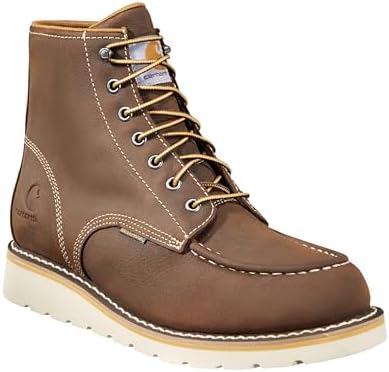
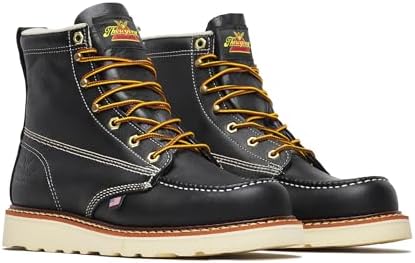
Thorogood American Heritage 6 Moc Toe Work Boots
If you are on your feet all day, see our comparison of the best heavy duty boots for long shifts.
$264.95 price checked August 2026

KEEN Utility Lansing Mid Height Work Boots
$119.95 price checked August 2026
Read our full KEEN Lansing Boots review
For those needing non-steel options, explore our guide to the best heavy duty boots for soft toe work.
Risks of Under-Provisioning or Over-Buying Outsole Tread
The Risk of Under-Provisioning
Under-provisioning occurs when you select a boot with a tread depth below the threshold required for your specific surface. If you work on loose gravel or wet mud with a 3 mm tread, the lugs will fail to penetrate the surface, causing the boot to slide like a smooth skate. This lack of mechanical grip increases the risk of slips and falls, as the rubber cannot find purchase in the debris.
In wet conditions, a shallow tread also loses its effectiveness quickly. As mud or water fills the shallow grooves, the boot becomes slick. You need enough depth to ensure that even when the tread is partially filled with material, there is still enough open space to provide grip.
The Cost of Over-Buying Tread
Over-buying refers to selecting a boot with much deeper lugs than your work environment requires. While it may seem like a safety advantage, excessive tread depth has a direct impact on your mobility and the longevity of the boot. For a worker primarily on flat, concrete warehouse floors, a 10 mm lug creates an unstable walking surface. The “high points” of the lugs act like small stones under your foot, reducing the actual surface area in contact with the floor.
This lack of surface area can lead to increased fatigue as your stabilizer muscles work harder to keep your balance. Furthermore, deep lugs on hard surfaces wear down faster because the pressure is concentrated on the tips of the lugs rather than distributed across a flat sole. You end up replacing the boots sooner because the aggressive tread “shaves off” against the concrete.
The Mistake of Optimizing for Depth Instead of Compound
The most common mistake buyers make with outsole tread depth is assuming that a deeper lug automatically equals better traction. Many buyers choose the most aggressive-looking boot available, believing it will provide the most safety, while ignoring the material of the outsole itself.
Consider looking at heavy duty boot alternatives if traditional footwear doesn’t meet your specific requirements.
You should be optimizing for the friction coefficient of the rubber compound rather than just the depth of the lugs. A 6 mm lug made of a hard, low-friction compound will often perform worse on wet surfaces than a 4 mm lug made of a softer, high-traction compound. The depth provides the “bite” into the ground, but the material provides the “grip” against the ground.
When evaluating, look for the material specifications of the outsole. A soft, oil-resistant compound will provide better stability on slick surfaces than a hard, high-durability compound, regardless of how deep the tread is cut into that rubber.
How Outsole Tread Depth Interacts with Other Specs
The Impact of Sole Stiffness
Outsole tread depth interacts directly with the stiffness of the midsole and outsole. A boot with very deep, aggressive lugs often requires a stiffer sole to support the structural integrity of the lugs. If the sole is too flexible, the deep lugs can fold or “roll” under your weight, which compromises your balance and causes the tread to wear unevenly.
If you require a boot for high-mobility tasks where you need to pivot frequently, a very deep tread may be limited by the stiffness required to maintain those lugs. You must balance the need for depth with the required flexibility of the boot’s construction.
The Relationship Between Tread and Wear Life
Tread depth is also a function of the material’s durability. A boot with a 6 mm tread depth will have a longer functional life than a 3 mm tread, but only if the rubber is hard enough to resist abrasion. In high-wear environments like asphalt work, a soft rubber compound will see its tread depth disappear rapidly, regardless of how deep it was when new.
If your work involves constant sliding or abrasion against abrasive surfaces, you must prioritize a high-durability rubber that can maintain its tread depth over time. A deep tread that wears down to a flat surface in three months provides no long-term value or safety.
The rest of our Heavy Duty Boot guides
- The Heavy Duty Boots That Work Best for Industrial Safety
- Which Heavy Duty Boots Are Best for Tactical Use Under $150?
- Best Heavy Duty Boots for Heavy Outdoor Work
- Heavy Duty Boots for Long Shifts Compared
- Choosing the Best Heavy Duty Boots for Soft Toe Work
- The Heavy Duty Boots That Work Best for Steel Toe Safety